The Fairy Owl (Micrathene Whitneyi) is the lightest owl in the world, although the Long-bearded Owl and the Tamaulipas Pygmy Owl are also quite small. It is also the smallest owl in the world. This little owl is about 12-14 cm long (about the size of a can of soda) and weighs between 35-55 grams. Its main plumage (flight feathers) extends almost beyond its tail. Its legs are quite long and often appear bow-legged. It has pale yellow eyes, thin white "eyebrows," and a grey beak with a pointed tip. Fairy owls often roost in woodpecker holes in cacti. They also nest in natural tree cavities. They are nocturnal and primarily feed on insects.
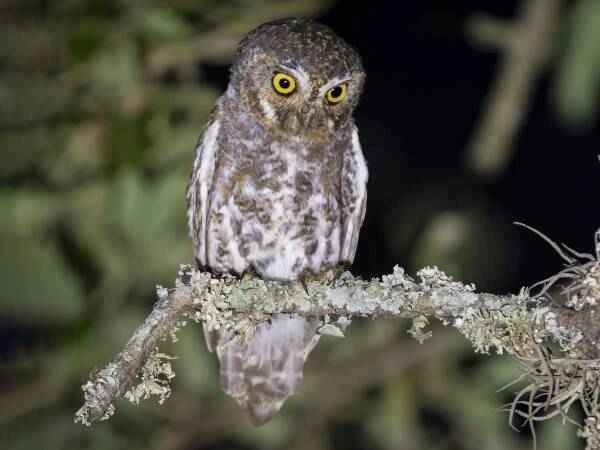
They are small, compact birds with yellow eyes, short tails, no ear hair, and heads larger than average.
Elf owls like to nest in ancient woodpecker holes and similar burrows in trees and cacti.
Its diet includes insects such as crickets, beetles, moths, grasshoppers, cicadas, stick insects, wasps, spiders, small lizards, rodents, and scorpions. Not bad for a small raptor.
Like most birds, the male marks his territory at the start of the breeding season to attract females by demonstrating his territory through song. He sings inside the nest and feeds the female to show what a great father he will be.
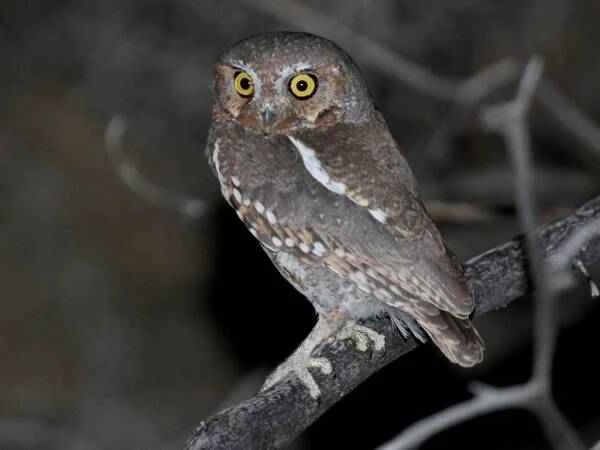
Once paired, fairy owls will nest together for survival, surrounding any potential predators such as snakes, mammals, and larger owls. They produce one brood each breeding season.
Elf owls are known for their unique housekeeping practices: they will catch a thread snake (a type of snake) and bring it back to their nest so they can eat any parasites that might harm their young owls. Tree ants are also welcome into the nest to perform the same task.
When the elven owl catches a stinging creature such as a scorpion or wasp, it uses its beak to manipulate the prey, removing unwanted body parts such as stings or wings, and neutralizing them before handing the prey over to its chicks.
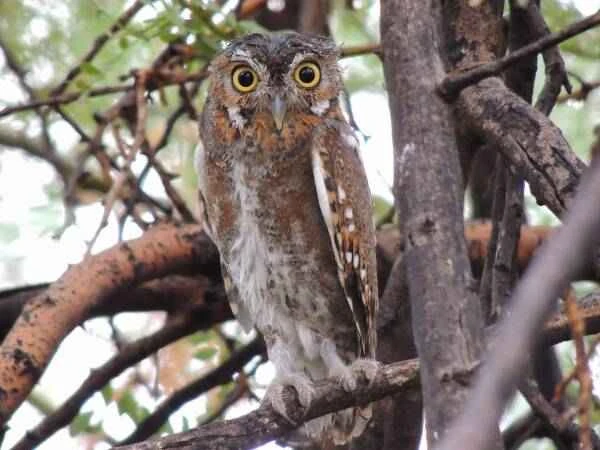
The elfin owl is also the smallest bird of prey in the world.
As is well known, owls migrate in large flocks, and their migration patterns vary depending on the group and habitat location.
Elf owls feign death when caught, an adaptation that encourages predators to loosen their grip so the owl can escape.
The elven owl is also known for its territoriality. Territories are established by the male and defended jointly by both males and females, with the male tending to consider his chosen mate as territory to be defended. This defense is usually accomplished through song. During the breeding season, elven owls are monogamous and breed in pairs, but may appear in small groups during migration and when hunting predators. Both adult birds and chicks are vulnerable to predation by other birds of prey such as jays, eagles, and owls.
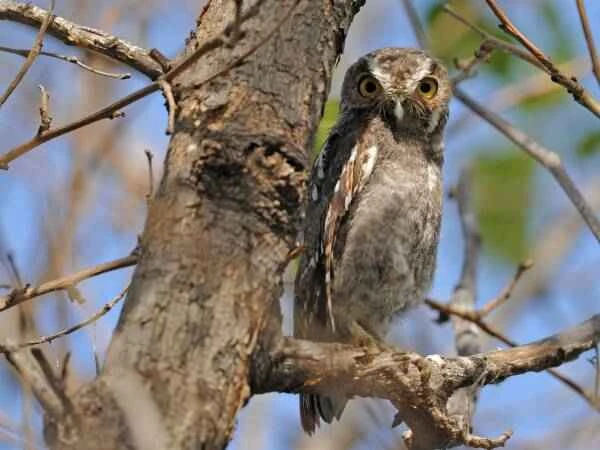
Elf owls have a lifespan of 3 to 6 years; in captivity, they can live up to 10 years. The most common causes of death for these owls are predation, exposure, and competition between and within species.
Hunting is primarily nocturnal. For this, they typically fly in straight lines, but use arcs when near their nests and when traveling to and from their roosts. Like some birds, they live in cacti, utilizing the shade and climate they provide.
In recent years, the number of fairy owls has continued to decline due to the ongoing loss of their native habitat, particularly in the California desert. To date, fairy owls are not considered a globally endangered species, but they are listed as “endangered” in California because the total number of fairy owls in the United States is less than 150,000. California has implemented captive breeding programs in an attempt to increase this number, while many environmental and governmental agencies are working to protect their riparian and desert homes.