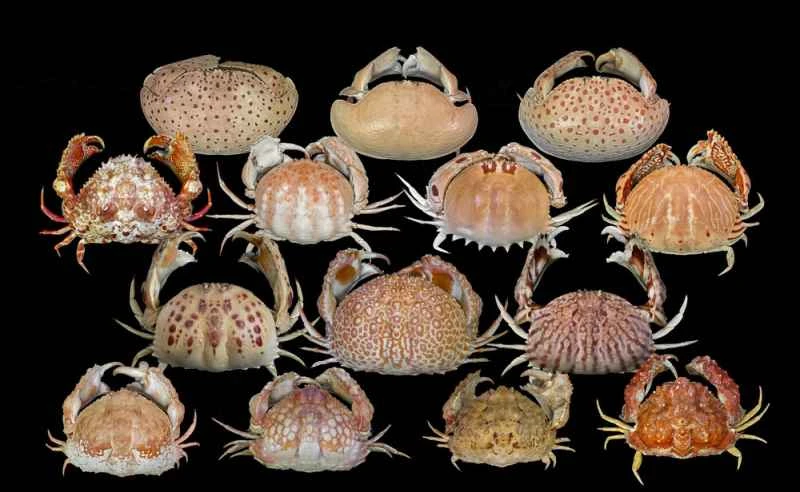
Bread crab is a common and delicious type of crab, named for its bread-like shape. Its meat is tender and juicy, rich in roe, and has a complex and chewy texture. In biological classification, both the yellow crab and the flat-backed crab belong to the bread crab category. So, what kinds of bread crabs are there? Common ones include the carefree flat-backed crab, the common yellow crab, the chief yellow crab, the rolled-up flat-backed crab, the rooster flat-backed crab, the goat flat-backed crab, the shield-shaped flat-backed crab, the liver-leaf flat-backed crab, the humpbacked yellow crab, and the Pacific yellow crab. Below, we've compiled a list of ten delicious bread crabs for you. Let's take a look at the classification and related information about bread crabs!
1. Carefree Steamed Bun Crab
Eye socket ring spot/claw-foot round spot, distributed in the tropical waters of the eastern Indo-western Pacific.
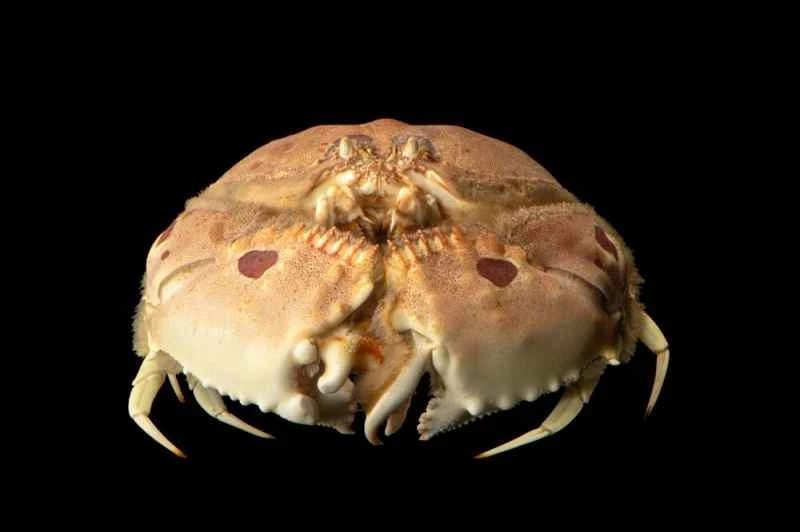
The spotted mantis crab, also known as the eye-spotted mantis crab, is one of the most common species of bread crab. It is widely distributed in the tropical waters of the eastern Indochina and western Pacific Ocean, mainly including Korea, Japan, Indonesia, Singapore, the Mergui Archipelago, the Persian Gulf, the Red Sea, Taiwan, and Guangdong, Hainan, and Fujian provinces of mainland China. It usually inhabits sandy or muddy bottom waters from the intertidal zone to a depth of 150 meters.
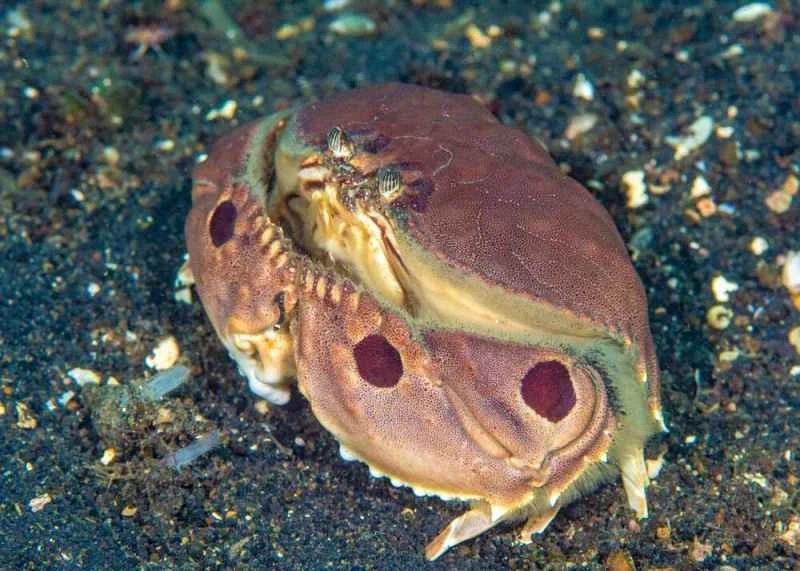
The carapace of the spotted mantis crab is approximately 51.5 mm long and 77 mm wide. Its carapace is smooth, with 15 sharp triangular spines along both the posterior and lateral edges. Its eye sockets have purplish-red ring-shaped spots, and its claws and arms each have a purplish-red circular spot on the outer side. Despite its hard shell and relatively small amount of meat, its flesh is very tender and delicious, making it quite popular.
2. Common Yellow Crab
Carapace reddish-brown / knuckles black; distributed in the North Sea / Mediterranean Sea
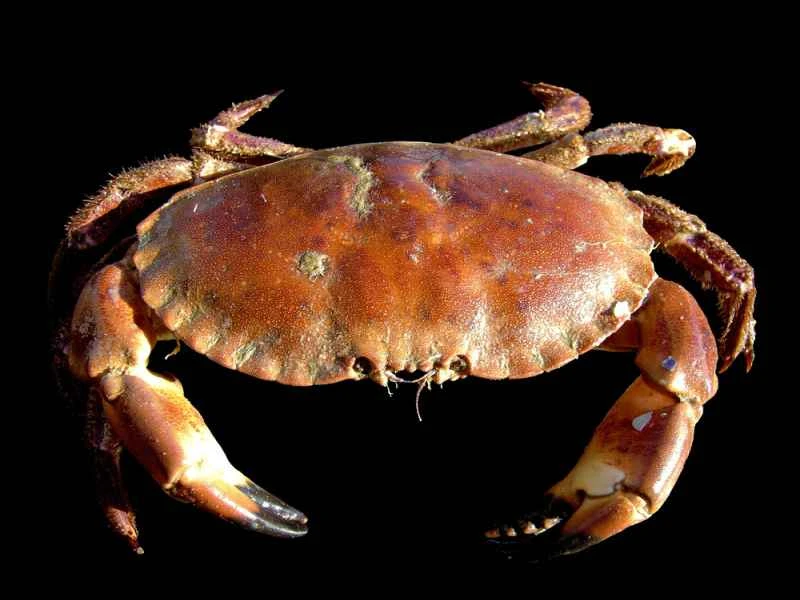
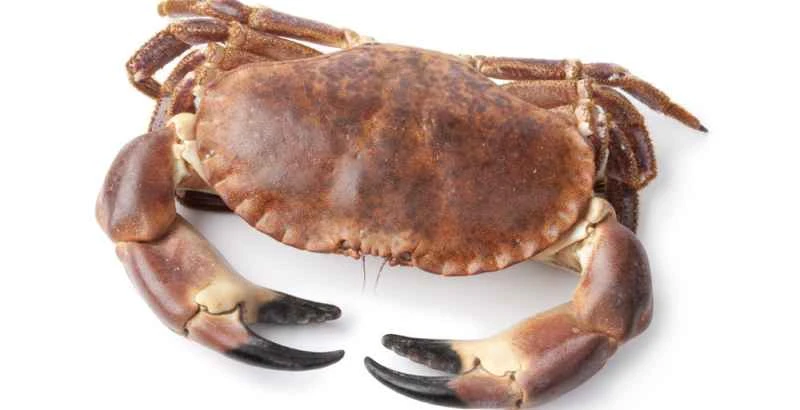
The common yellow crab belongs to the family Azollidae and the genus Azollidae, and is one of the ten most common bread crabs. Its carapace is reddish-brown, while juvenile crabs are purplish-brown, sometimes with white spots. The crab's digits are black, and its walking legs have bristles. Generally, female crabs are larger than males, and those sold in the market are usually females.
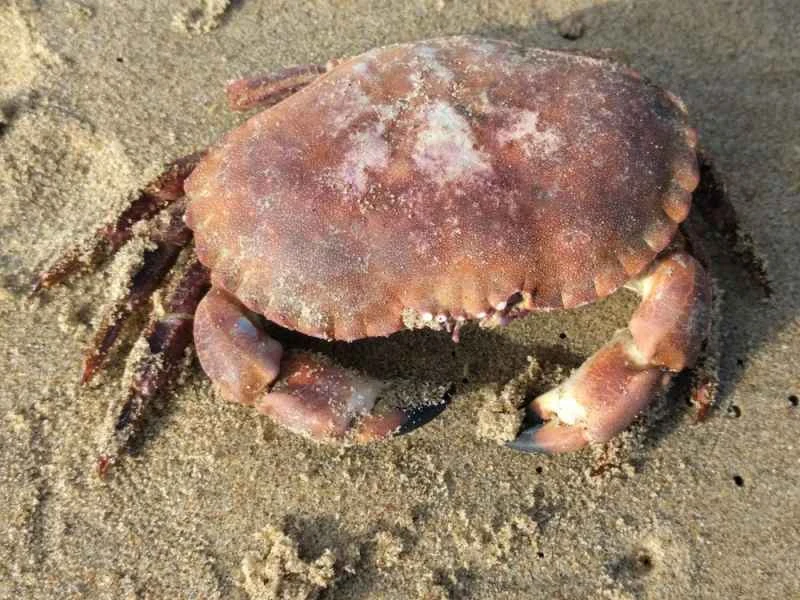
Common zodiac crabs are mainly distributed in the North Sea, the Mediterranean Sea, and the North Atlantic, with a habitat ranging from Norway in the north to North Africa in the south. To protect the health of the population, the UK prohibits the harvesting of crabs that are too small, requiring them to be at least 11.5 cm long. In Norway, areas north of Rogaland County are only allowed to harvest crabs larger than 13 cm, while areas south of Rogaland require them to be at least 11 cm long.
3. Chief Zodiac Crab
White chelicerae/serrated phalanges, distributed in the United States/Canada
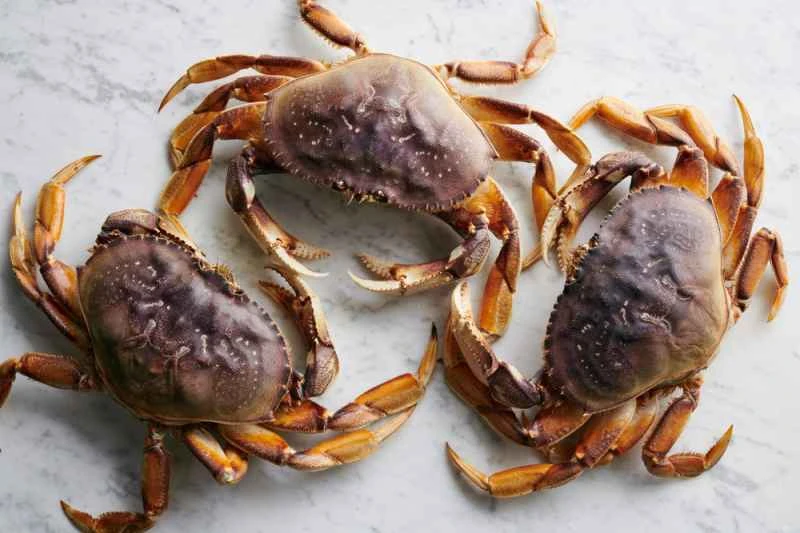
The Dungeness crab (also known as the king crab) is a delicious crab, also called the gem crab due to its large size. Additionally, because regulations only allow the capture of males, it is also called the prince crab. Dungeness crabs are primarily found in North America, with 70% of the catch coming from Washington, Oregon, California, and Alaska. They can also be caught year-round in British Columbia, Canada.
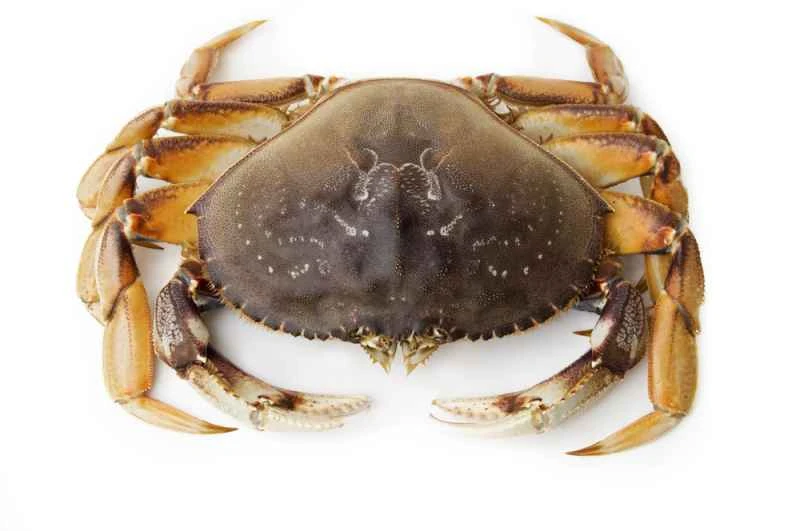
The chief zodiac crab can reach a diameter of 25 centimeters and weigh an average of about 700 grams. Its carapace is reddish-brown or purple, and its fingertips are white. The outer edge of its antennae is serrated. It has a meat yield of up to 24% and tastes delicious. It is an important commercial crab species along the northeastern Pacific coast.
4. Rolled-up crab bun
Smooth shell/spotted stripes, distributed in Tokyo Bay/Indian Ocean
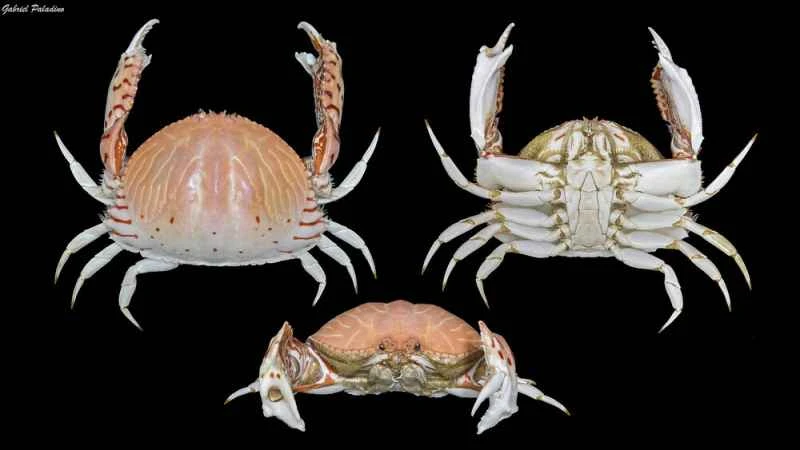
The folded bun crab is a common type of bread crab, belonging to the genus *Ceratophorus* in the family Ceratophoridae. Its carapace is about 10 cm wide, shaped like a bulging bun, with a smooth surface covered in brownish-red spots of varying sizes. Its anterior lateral edge is serrated, while the posterior lateral edge has four sharp spines of varying sizes, with brownish-red tiger stripes between them. The posterior edge also has three to seven broad, sharp spines, and the dorsal edge of the claws also has six to seven spines.
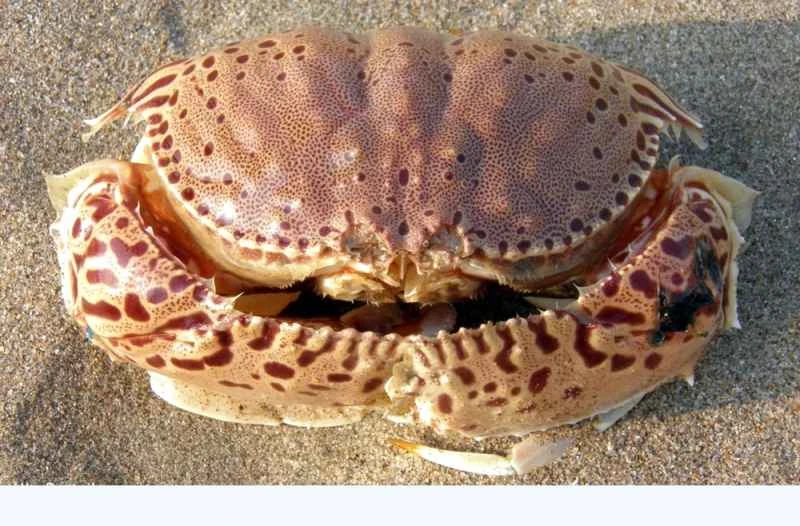
The folded mantis crab is mainly distributed south of Tokyo Bay and in the Indian Ocean region, including Japan, Australia, Indonesia, Thailand, India, Sri Lanka, and Taiwan and Hainan Island in my country. They typically inhabit sandy bottoms at depths of 30 to 100 meters. Their meat is tender, extremely delicious, and highly nutritious.
5. Rooster-shaped steamed buns and crabs
Distributed along the Atlantic coast
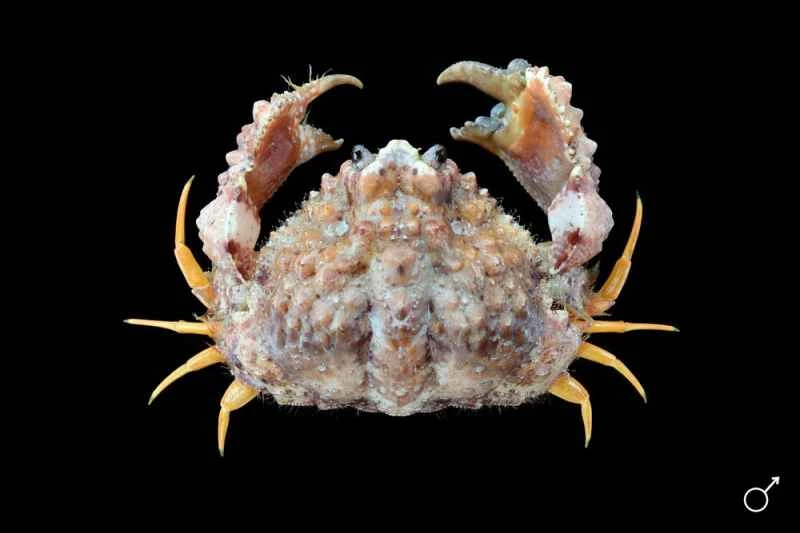
The rooster-shaped bread crab is a common type of bread crab, widely distributed along the Atlantic coast. This bread crab is mainly found in Japan, Brazil, the Philippines, Indonesia, Sri Lanka, India, and the Xisha Islands of my country. It typically inhabits coral reefs or sandy bottom areas at depths of 20-100 meters and exhibits strong adaptability.
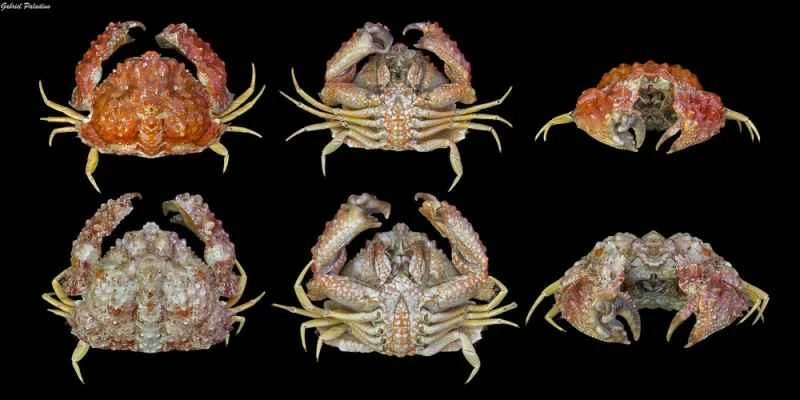
The cephalothorax of the rooster-shaped mantis crab is narrower at the front and wider at the back. The anterior half of its surface has serrated projections, while the posterior half has a scale-like structure. Its forehead is prominent. Its chelipeds are asymmetrical, with short hairs along the edges, and its walking legs are smooth and short. Both males and females have a narrow, strip-shaped abdomen, and the telson is a long triangle. The cephalothorax is approximately 42 mm long and 55 mm wide.
6. Goat meat buns with crab
Distributed in China/Japan/Australia
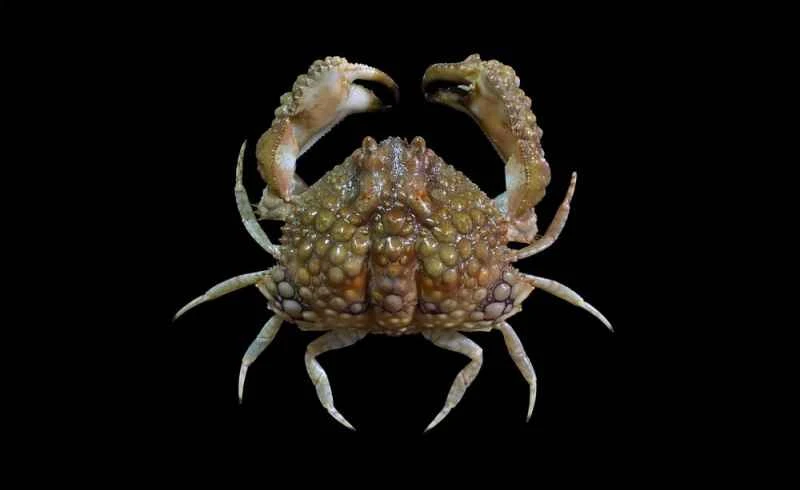
The goat crab, named for its claws resembling goat horns, is a popular species of bread crab. Its carapace has a distinctly raised dorsal surface with clearly defined sections; short hairs are present on the edges and inner sides of the cheek regions near the base of the claws. Its claws are asymmetrical and robust, with the outer side of the long segments mostly smooth, while a ring of hair-like ridges appears near the tip. The first pair of walking legs is relatively long, with subsequent legs progressively shorter and smoother, all hidden beneath the scutes.
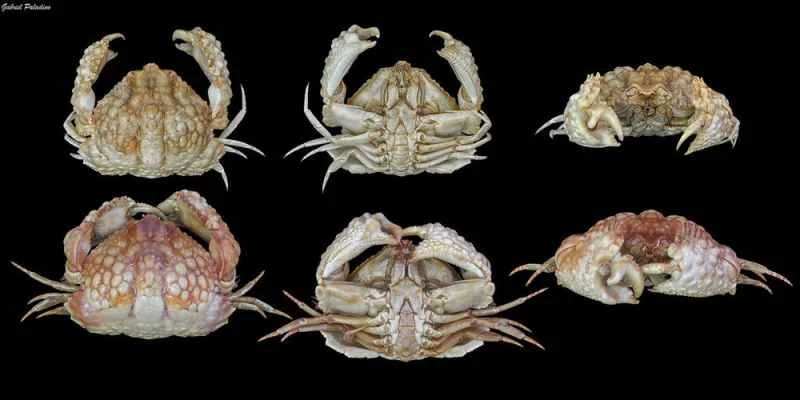
According to available data, the goat crab is mainly distributed in the East China Sea and South China Sea in China, while internationally it can be found in Japan, Australia, New Guinea, and Indonesia. They typically inhabit shallow waters, ranging from 15 to 119 meters in depth, with a bottom consisting mainly of coarse sand, small pebbles, or rocks.
7. Shield-shaped mantis crab
Distributed in South Korea/Southeast Asia/Australia
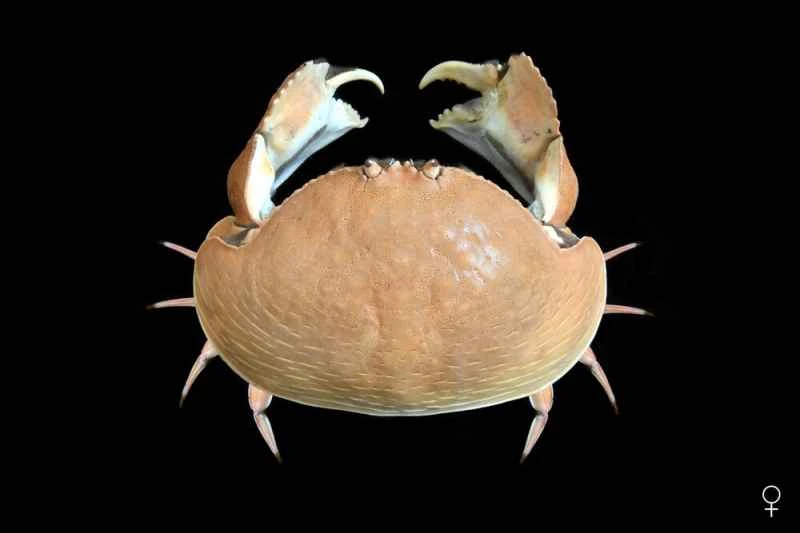
Which type of bread crab is the best? The shield crab is considered to have an exceptionally delicious flavor. Fresh shield crabs are perfect for steaming; once steamed and served with dipping sauce, they offer an exquisite taste.
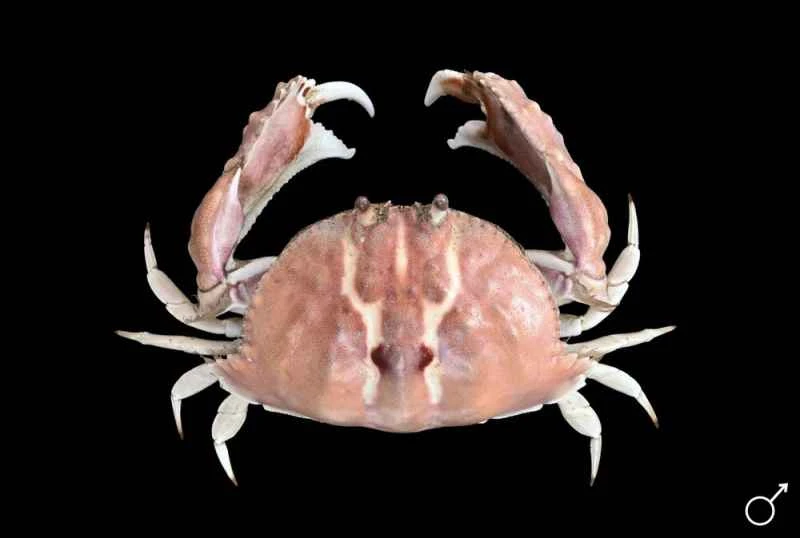
This crab has a raised back with five distinct longitudinal ridges, the three in the middle being more prominent than the ones on the sides. When its two large claws are closed, there is a large space in the middle, while the small claws close completely without gaps, and the inner edge has small teeth.
The shield-shaped mantis crab is widely distributed, commonly found in the waters of South Korea, Australia, and Southeast Asia, while in China it is mainly concentrated in Guangdong, Guangxi, Hainan, and the Spratly Islands.
8. Liver Leaf Bun Crab
Distributed along the southeast coast of Africa/Arabian Gulf
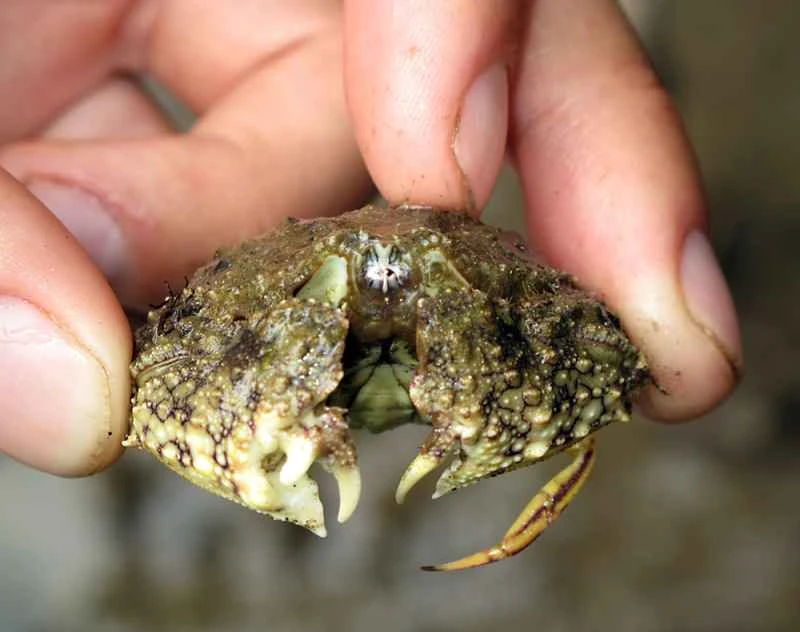
The liver crab (Hemiberlesia lataniae) is renowned for its delicious meat and high ecological value, playing a vital role in controlling shellfish populations. It is mainly distributed along the southeastern coast of Africa, the Arabian Gulf, and the Red Sea, with significant production areas also in Japan, South Korea, Australia, New Zealand, the Hawaiian Islands, and the Philippines. This crab inhabits sandy or shell-like bottoms in the intertidal zone to depths of up to 100 meters.
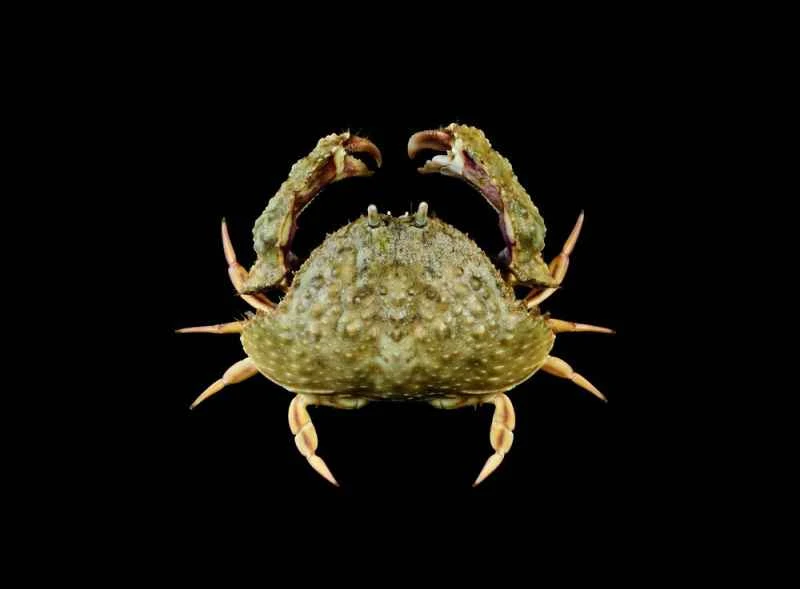
The carapace of the liver-leaf crab is approximately 40 mm long and 67 mm wide, with a smooth inner side and a dorsal surface covered with fine granules. Its chelipeds are robust and asymmetrical, with the right cheliped being significantly larger. The posterior margin of the long segment is densely covered with short hairs, and the end protrudes outward, resembling a leaf shape. The carpal segments are inverted triangular.
9. Yellow Crab with a convex back
Distributed in Korea/Japan/China
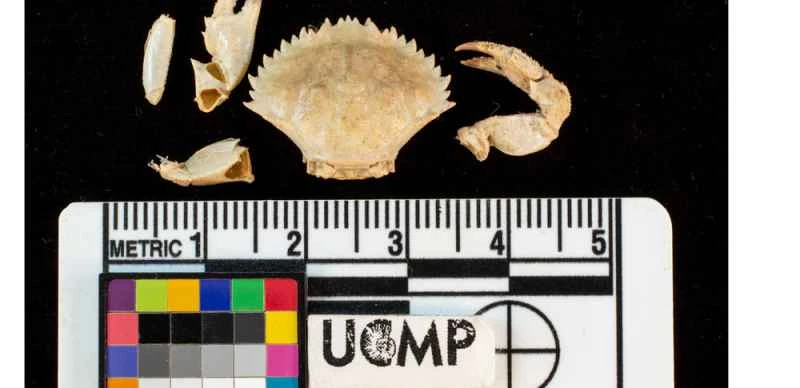
The mongoose crab (Syngonium spp.) belongs to the family Syngonidae and the genus Syngonium. It is mainly distributed in Korea, Japan, and the Liaodong Peninsula of mainland China. They typically inhabit muddy or sandy bottoms or seabed environments with a mixture of shells and sand at depths of 30 to 100 meters.
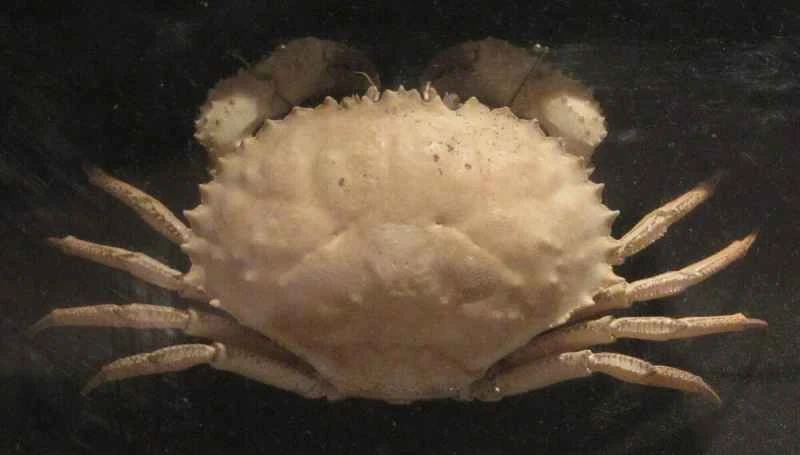
The carapace of the Elaphe carapace is 19 mm long and 21 mm wide, and is rhomboid in shape with distinct regional features. The raised parts of the surface are covered with fine granules. Its forehead is relatively narrow, with a more prominent central section and triangular sides. The carpus and propodus of the chelipeds are covered with fine spines and soft hairs. The spines on the outer side of the propodus are arranged in longitudinal rows, while the dactyls of the walking legs are slender and longer than the propodus.
10. Pacific Zodiac Crab
Distributed along the Pacific coast of North America

The Pacific yellow crab is a well-known species of brown crab, mainly distributed in the intertidal waters along the Pacific coast of North America, with major production areas including San Francisco, California, and Washington state in the United States. They inhabit shallow waters, reaching depths of up to 100 meters.
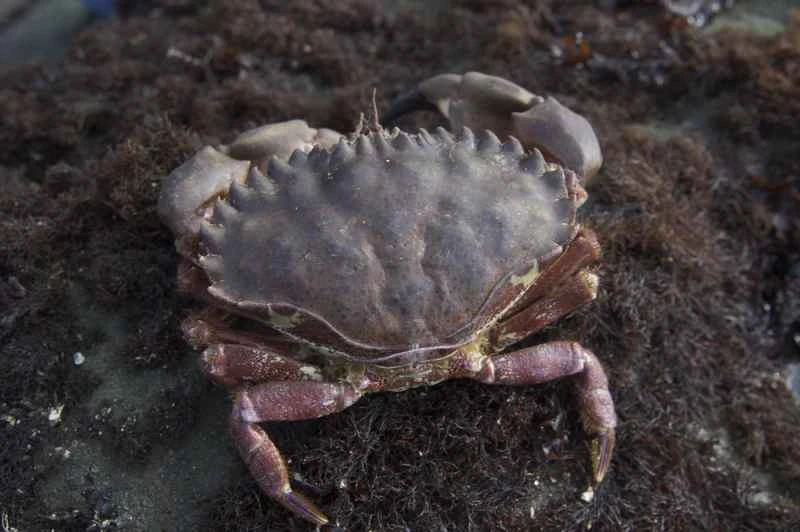
The carapace of the Pacific zodiacal crab can reach 155 mm in width, while the female's maximum width does not exceed 145 mm. Its carapace is widest at about one-eighth of its length, giving it a robust overall appearance. The carapace is typically dark red or brown, sometimes orange or gray, while the ventral side is white with red spots. They have strong, black claws, and their legs are almost always covered in fine hairs when walking.
This top ten ranking of brown crabs is primarily based on the characteristics and quality of common brown crabs, while also taking into account public awareness and other relevant internet rankings. This list aims to provide you with a comprehensive recommendation and is for reference only. If you have any questions, please feel free to discuss them in the comments section.