In July of this year, boaters spotted a strange, enormous figure swimming in an artificial lake in the Central Park of Ruzhou City, Pingdingshan, Henan Province. The figure was about 1 meter long, had a very long mouth, and sharp teeth were faintly visible inside. It appeared to be very ferocious.

Experts identified the strange fish as an alligator gar, an invasive species, based on its characteristics. This incident drew serious attention from the local government, which organized a search and rescue team. However, the efforts were unsuccessful, leading to the decision to drain Yunchan Lake starting July 26th using pumps and other equipment to locate the endangered alligator gar and prevent its further invasion. According to staff, Yunchan Lake contains 200,000 to 300,000 cubic meters of water. The decision to drain the lake began around July 26th, and by yesterday, the lake was essentially dry. Local media reported that the alligator gar's location has been pinpointed, and it is expected to be caught today.

This morning, local authorities organized personnel to retrieve the alligator gar that was still in Yunchan Lake.
So, what exactly is the alligator gar, and what harm does it cause to the ecological environment? According to experts from the Pingdingshan City Fisheries Department in Henan Province, the alligator gar belongs to the order Alligatoridae, family Alligatoridae, and genus Alligator. The alligator gar is the largest of all gar species, reaching lengths of up to 3 meters. Because the alligator gar has no natural predators in my country's ecological environment, it causes serious damage to the ecosystem, the most direct impact being a decline in the total number of fish in lakes.
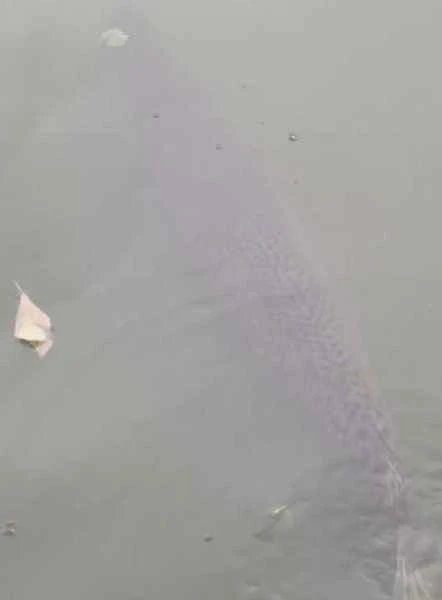
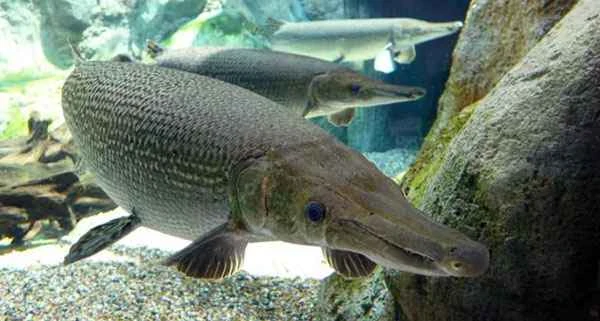
Experts explain that the alligator gar, also known as the "water killer," is ferocious and primarily preys on fish. It is an invasive species in my country. The alligator gar has a distinctive appearance: a long, cylindrical body, a protruding snout with a short, crocodile-like snout, and two rows of dagger-like teeth on its upper and lower jaws. The alligator gar discovered in Ruzhou City, based on its size, can swallow a 25-centimeter-long fish in one bite; a single alligator gar can even devour fish from an entire lake.
Jia Tao, a senior aquatic engineer at the Henan Academy of Fishery Sciences, said: "The alligator gar is native to North America and has been officially listed as an invasive species in China. This fish has a characteristic of growing very fast. If there is enough food, it can grow about 70 or 80 centimeters in a year, and it is normal for it to grow two or three meters in a few years. It is a predatory fish, and it can basically swallow anything smaller than half its body length. As a result, it may destroy all kinds of fish and aquatic animals in the pond."

According to staff from the Ruzhou government, most of the other fish in Yunchan Lake in Ruzhou Central Park have already been eaten, and the immediate priority is to catch this particular fish. This type of fish may bite people when food is scarce, and children playing in shallow water could also be bitten. Furthermore, regarding the presence of alligator gar in the artificial lake, experts from the Pearl River Fisheries Research Institute of the Chinese Academy of Fishery Sciences explained that alligator gar are native to North America and were later introduced to my country as ornamental fish. Some consumers buy them out of curiosity, but alligator gar grow very quickly, and they are usually released into the water when their tanks become too large. Additionally, some people specifically buy them for release.
In fact, with the increasing frequency of trade and personnel exchanges in my country in recent years, the spread of invasive alien species has become more diversified and covert, seriously affecting the sustainable development of my country's ecological environment, agriculture, animal husbandry, and fisheries. Various parties have been pushing for the implementation of management measures for invasive alien species. On August 1st of this year, the "Management Measures for Invasive Alien Species," jointly issued by the Ministry of Agriculture and Rural Affairs, the Ministry of Natural Resources, and the Ministry of Ecology and Environment, officially came into effect. This is my country's first management measure specifically for the prevention and control of alien species. The measures clearly state that no unit or individual may introduce, release, or discard alien species without approval. Those who introduce, release, or discard alien species without approval will be punished in accordance with Article 81 of the "Biosafety Law of the People's Republic of China," and those suspected of committing crimes will be transferred to judicial organs for criminal prosecution. However, the alligator gar is not currently included in the list of invasive alien species. Experts say that the latest list of invasive alien species will be released soon, and the alligator gar is expected to be included. Once alligator gar is listed, it will be impossible to introduce or trade them at will, nor will it be allowed to raise or discard them at will.
Currently, over 660 invasive species have been identified in my country. However, these "foreign visitors" are readily available for sale on e-commerce platforms at low prices. This has become a significant pathway for invasive species.
How are invasive alien species identified? How can the list be adjusted in a timely manner to prevent them from entering the country through strict institutional measures, and how can a comprehensive prevention network be established during implementation? Gu Dang'en, associate researcher at the Pearl River Fisheries Research Institute of the Chinese Academy of Fishery Sciences, provides his interpretation.
Gu Dang'en, associate researcher at the Pearl River Fisheries Research Institute of the Chinese Academy of Fishery Sciences, said: "It must have been introduced from abroad first, because the regulation in this area was not strict in the past. Then it entered our country, because in the ornamental fish market, many people may buy it through e-commerce or from other places. Alligator gars have no economic value at all. We must strictly prohibit its entry into our country, and we should not farm or trade it. Now, we have to drain a lake and a river for a single fish, which is too costly. We still need to start from the source, from the introduction to trade. In addition, we must strictly prohibit the release of animals into the wild. Many alien species are caused by human release, such as red-eared sliders and alligator gars. Currently, alligator gars are on the latest list of alien species and will be listed as a key managed alien species. In the future, its introduction and trade will be strictly controlled."
Adult alligator gars can reach 3 meters in length and weigh 200 kilograms. Their scales are very hard, and a chainsaw is sometimes needed to process them. The ovaries of adults are highly poisonous, and the eggs they lay are also highly poisonous. Although their meat is edible, improper handling can still contaminate the fish with toxins.
Furthermore, alligator gars have no natural predators in China, and if they are not eradicated, the entire lake's ecosystem will be affected. Alligator gars are virtually invincible in China's river basins; when hungry, they may devour all fish in their habitat.
If this alligator gar was abandoned by a pet owner, it just goes to show how irresponsible some people are. If it was caused by a group that releases animals into the wild, I'd love to release thousands of volts of electricity into the lake. Finally, I hope this alligator gar is caught soon.