The Great Black-eared Nightjar is the kind of bird that can spark the imagination of any lucky eyewitness. While many birds are well-known for their vibrant plumage or distinctive calls, the Great Black-eared Nightjar is far more mysterious. This nocturnal predator lives in the shadows, relying on its unique adaptations to hunt and navigate in complete darkness. Yet, despite its enigmatic nature, we can still learn about the Great Black-eared Nightjar from many angles—from its hunting techniques and nocturnal behavior to its cultural symbolism and conservation status.
The large-eared nightjar (Lyncornis macrotis) is a species of nightjar in the family Lyccidoptera. It is found in southwestern India and parts of Southeast Asia. This nightjar is very large, with long stripes on its wings and tail, and long ear hairs. It often lies flat on its back. It has white stripes on its throat, but not on its wings or tail.

appearance
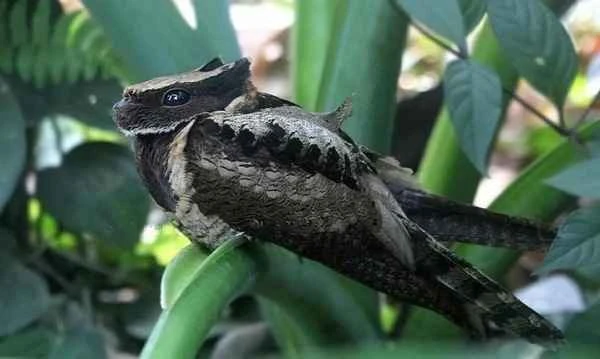
The Great Black-eared Nightjar has distinctive physical features, most notably its large, broad ear feathers, which make it visually unique. Its body is greyish-brown, and its feathers provide excellent camouflage, allowing it to blend into its environment at night or in concealed roosts, avoiding detection by predators. The Great Black-eared Nightjar's feathers often have spots or stripes, which also contribute to its camouflage in the wild.
Head : Its head has a pair of prominent, large ear feathers that are spread out in a distinctive shape. These ear feathers are not only ornamental but also related to its ability to hunt at night and locate prey.
Eyes : The eyes are relatively small but very sensitive, and can adapt to low-light environments, helping it to move around at night.
Tail : The tail is relatively long and has a broad shape, which helps to provide better maneuverability during flight.
Weight and size
Weight : Adult big-eared nightjars weigh approximately 60-90 grams.
Body length : Its body length is about 30-34 cm, which is a medium-sized nightjar.
Wingspan : The wingspan is approximately 70-80 centimeters, enabling it to fly nimbly in the air and capture prey.
life
The lifespan of a big-eared nightjar is typically five to seven years in the wild. In favorable habitats and with fewer predators, they can sometimes live even longer. Nevertheless, like many nocturnal birds, many big-eared nightjars perish young due to predators, resulting in a relatively short actual lifespan.
Reproduction
Breeding season : The breeding season for the big-eared nightjar usually occurs in spring and summer, and they typically choose relatively quiet locations to breed.
Nests : These nightjars typically build their nests on the ground, near the base of grass, bushes, or trees. Their nests are simply designed, usually concealed by piling up dead leaves and grass.
Breeding season : The female bird usually lays 2 to 3 eggs in the nest and incubates them together. The incubation period is about 18-20 days.
Young bird growth : The hatched birds grow under the protection of their parents and learn how to forage independently at night.
How to observe the Great Earled Nightjar: Habitat and Habits
If you're an avid birdwatcher, or simply interested in nocturnal creatures, learning how to spot the Great Black-eared Nightjar is a well worth the challenge. These birds are very elusive and difficult to find, but understanding their habits and preferred habitats can increase your chances of seeing them.
Habitat preferences of the big-eared nightjar
Large-eared nightjars typically inhabit areas where dense forests meet open ground. These areas include forests, scrublands, and grasslands, often a mixture of trees and shrubs. Their nests are usually located on the ground, hidden in tall grass or piles of dead leaves, helping them avoid predators. Large-eared nightjars have a high demand for flying insects such as moths and beetles, so they are often found in areas with abundant insect populations.
Besides forests, the big-eared nightjar also inhabits rocky slopes, farmland, and even areas near wetlands, where the habitat provides abundant hunting opportunities and refuge.
Best time to observe the big-eared nightjar
The Great-eared Nightjar is a nocturnal bird, meaning the best time to observe it is at dusk or night. Their peak activity usually occurs after sunset, but they can also be seen at dawn. Because of their excellent camouflage, the Great-eared Nightjar can be difficult to spot except by listening for their calls.
Patience is required when observing this bird. The Great-eared Nightjar typically remains still during the day, blending into its environment, and only becomes active and begins to forage at dusk.
Large-eared Nightjar: Nocturnal Foraging and Hunting Behavior
One of the most captivating features of the Great Black-eared Nightjar is its ability to hunt in the dark; its nocturnal activity is one of the most fascinating aspects of its behavior. Unlike diurnal predators, the Great Black-eared Nightjar relies on a unique set of adaptations to survive and hunt at night.
Night-hunting techniques of the big-eared nightjar
The big-eared nightjar is an insectivorous bird that primarily feeds on flying insects, including moths, beetles, and ants. Its large beak allows it to catch insects in flight, and its flying ability enables it to soar easily in the dark. It uses a technique called "aerial hunting," similar to that of bats, where it opens its beak while in flight to catch its prey.
Besides its excellent flying skills, the Great-eared Nightjar also possesses highly developed hearing. Its large ears help it detect the faint sounds of insects in the dark, accurately locating its prey, even those invisible to the naked eye. This powerful hearing allows the Great-eared Nightjar to hunt without relying on sight, making it a silent hunter of the night.
Predation Behavior: Hunters in the Silent Night
The Great-eared Nightjar is highly dependent on its surroundings when hunting. They typically wait quietly in their roosting area, only making a move when prey approaches. When insects get close, the Great-eared Nightjar swoops down with astonishing speed, precisely capturing its prey in mid-air.
This stealthy hunting method makes the Great Nightjar one of the most effective nocturnal predators. By catching the abundant insects available at night, it plays a vital role in maintaining ecological balance and controlling pest populations.
The natural enemy of the big-eared nightjar
Birds of prey <br/>Birds of prey are among the most direct predators of the Great-eared Nightjar. Despite their exceptional flying skills, the Great-eared Nightjar can still become prey for larger birds of prey.
Eagles : Some birds of prey, such as eagles and falcons, may prey on the young of the Great Black-eared Nightjar, especially before they can fly independently. Adult Great Black-eared Nightjars are less likely to be preyed upon by adult birds of prey because of their strong flying ability, but their nests and young birds are often at risk of being preyed upon by eagles.
Owls : As nocturnal birds of prey, owls live at the same time of day as big-eared nightjars, making them potential rivals and predators. Owls possess excellent night vision and hunting skills, and may attack other birds that are also active at night.
Snakes <br/>Snakes, especially those that inhabit forests, grasslands, or bushes, can pose a threat to the Great Earled Nightjar. Snakes are adept at moving silently on the ground and can sometimes ambush near the Great Earled Nightjar's nest, threatening hatching chicks or newly emerged chicks.
Mammals <br />In some areas, small mammals such as foxes and raccoons may also be predators of the big-eared nightjar. These nocturnal animals can easily approach nightjar nests on the ground to steal eggs or prey on chicks.
Foxes : Foxes are usually active at dusk and night. They are good at hunting and may prey on the eggs or immature chicks of the big-eared nightjar.
Raccoons : Raccoons are also nocturnal animals. With their flexible forelimbs and strong foraging ability, they can often find bird nests, especially those birds that nest on the ground.
Large Reptiles <br/>In some regions, especially tropical and subtropical areas, the big-eared nightjar may face threats from large reptiles. For example, certain large lizards or chameleons may lurk near their habitat and attack hatchlings.
Human Activities <br/>While humans are not direct predators, human activities pose a significant threat to the survival of the Great Black-eared Hawk. Habitat destruction, deforestation, agricultural expansion, and urbanization have led to habitat loss. Overdevelopment and pollution have further deteriorated their habitat, indirectly exacerbating the threat from predators.
How to protect the big-eared nightjar from predators?
Habitat protection : Protecting the habitat of the Great Earled Nightjar, reducing deforestation and land development can reduce the chances of predation by natural enemies, and also help maintain species diversity.
Establishing protected areas : Establishing bird sanctuaries can prevent the Great Black-eared Nightjar from encountering too many external threats, especially those caused by human activities.
Artificial nests : Providing safe artificial nests for the Great Earled Nightjar helps protect them from ground predators during incubation and chick rearing.
While the Great Black-eared Nightjar's unique nocturnal hunting skills and camouflage abilities allow it to evade some predators, it still faces threats from natural predators such as birds of prey, snakes, and small mammals. Furthermore, habitat loss and human activity are also hidden enemies of its survival. Therefore, protecting its habitat and reducing predation pressure are crucial to ensuring the long-term survival of this species.
The relationship between the big-eared nightjar and the ecological environment
In the habitat of the Great Black-eared Nightjar, it plays an important role as a natural pest controller. The balance of insect populations is crucial to the health of the ecosystem, and the Great Black-eared Nightjar helps maintain this balance by preying on insects.
Ecological role of the big-eared nightjar
By preying on moths, beetles, and other insects, the Great-eared Nightjar helps prevent these species from overpopulating and harming plants, crops, and other wildlife. This makes the Great-eared Nightjar play a vital role in its natural habitats, such as forests. In areas rich in Great-eared Nightjar habitat, insect populations tend to be more balanced, which is beneficial for plant growth and the survival of other animal species.
Nature's Pest Controller: The Contribution of the Big-eared Nightjar
In agricultural areas, the Great-eared Nightjar helps reduce the use of chemical pesticides by naturally regulating insect populations. This is especially important for organic farming, where reducing pesticide use is a key objective. The Great-eared Nightjar is undoubtedly a natural ally in the ecosystem, and its presence helps maintain a healthy ecological environment.
Large-eared Nightjar: Calls and Singing Habits
One of the most distinctive features of the Great Black-eared Nightjar is its call. Although this bird is more known for its silent hunting skills, its calls also play an important role in its behavior, especially during the breeding season.
Understanding the call of the big-eared nightjar
The call of the Great Black-eared Nightjar is deep and repetitive, often echoing through the night sky. The male typically uses this call to attract females and to assert its territory. Its call is often described as a soft "cooing" sound, occasionally accompanied by a high-pitched whistle or a series of trills.
During the breeding season, male birds sing frequently, and their calls can be heard at any time of night. These calls help the males assert their presence, attract females, and warn other males not to enter their territory.
Why do big-eared nightjars call at night?
The Great-eared Nightjar's nocturnal calls are part of its courtship and territorial defense. Because this bird is primarily nocturnal, its calls are perfectly suited to travel through the quiet night air. The Great-eared Nightjar relies on these calls to communicate with other birds of its species, helping to maintain social structures during the breeding season.
Cultural Symbolism and Legends of the Big-eared Night Hawk
Due to its nocturnal habits and mysterious calls, the Great Nightjar plays an important symbolic role in many cultures. Numerous legends around the world relate to this bird, which is regarded as a mysterious or even supernatural creature.
The symbolic meaning of the big-eared nightjar
In some cultures, the big-eared nightjar is seen as a guardian of the night, protecting those who travel under the stars. Its ability to move freely in the darkness symbolizes wisdom and guidance. People believe that seeing or hearing the call of a big-eared nightjar may bring protection, good fortune, or revelation of the unknown.
The image of the big-eared night hawk in folk legends
Some cultures associate the big-eared nightjar with the spiritual world, considering it a messenger between life and death. Its deep call is believed to convey messages or foreshadow changes, and some legends say that those who hear the call of the big-eared nightjar will experience a major turning point in their lives.
Big-eared Nightjar: Conservation and Future Prospects
Like many nocturnal species, the Great Black-eared Nightjar faces threats such as habitat loss, climate change, and human development. Protecting its natural habitat is crucial to ensuring the continued survival of this fascinating bird.
Conservation status of the Great Eared Nightjar
Currently, the habitat of the Great Black-eared Nightjar is threatened by deforestation and urbanization. In response, many environmental organizations have begun taking action to help restore its habitat by establishing nature reserves and forest restoration projects.
Looking to the future: Conservation prospects for the Great-eared Nightjar
Despite facing numerous challenges, the Great Black-eared Nightjar still maintains healthy populations in some areas. Through global conservation efforts, we can expect to see this elusive hunter of the night sky thrive in the wild in the future.
Ten interesting facts
The ear feathers of the Great-eared Nightjar : Its large and distinctive ear feathers are not only a distinctive feature, but also help it improve the accuracy of its nighttime hunting. These ear feathers help it detect the sounds of its prey, especially the flight sounds of insects.
Nocturnal hunters : The big-eared nightjar is a typical nocturnal bird. They are active at dusk and night, and usually roost in hidden places and remain still during the day.
Exceptional flight ability : Their long, wide wings allow them to fly silently through the night sky, making them ideal for aerial hunting.
Exceptional hearing : The big-eared nightjar has very sensitive ears, which can accurately detect the sounds of flying insects in the dark, helping it to forage in completely dark environments.
Distinctive Call : The Great-eared Nightjar's call is deep and soft, typically used to declare territory and attract mates. Males call especially frequently during the breeding season.
They feed on insects : primarily preying on flying insects, especially moths and beetles. Because their diet consists mainly of insects, they play a crucial role in controlling pest populations.
Excellent camouflage : The feathers of the big-eared nightjar are well-suited to blend into its environment, especially in the grass and forest floor where it roosts, making it almost impossible to spot.
Migratory behavior : Although not all big-eared nightjars migrate, in some areas they migrate to warmer places as the seasons change.
Cultural Symbolism : In many cultures, nightjars represent mystery and freedom. In some regions, they are considered guardians of the night or messengers of the spirit.
Habitat threats : The population of the Great Black-eared Nightjar has declined in some areas due to habitat loss and human disturbance. Protecting its habitat is crucial to ensuring its survival.
The Great Black-eared Nightjar is a mysterious, fascinating, and vital bird. Its nocturnal lifestyle, stealthy hunting techniques, and cultural symbolism make it a cherished presence for bird lovers and nature observers. By paying greater attention to its habitat conservation and ecological role, we can ensure the Great Black-eared Nightjar continues to exist and soar through the night skies in the future.