If you've heard of "zombie ants," you're probably familiar with the brain-eating fungus that erodes the brains of fire ants. The story of how this fungus controls ant behavior is not only fascinating but also showcases the wonder and horror of nature. This article will delve into this infamous brain-eating fungus—Ophiocordyceps unilateralis—and how it turns fire ants into unwitting hosts.
What are the brain-eating fungi of fire ants?
The brain-eating fungus of fire ants, scientifically known as *Ophiocordyceps unilateralis*, is a type of fungus that specifically parasitizes ants, especially fire ants. This fungus is notorious for its ability to infect ants and manipulate their behavior in an extremely cruel way. Once an ant is infected, the fungus gradually takes control of its body, eventually turning the ant into a "zombie" until it dies.
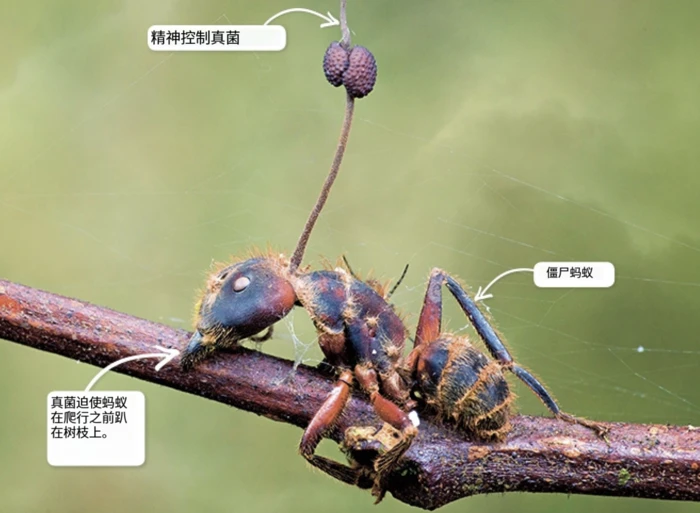
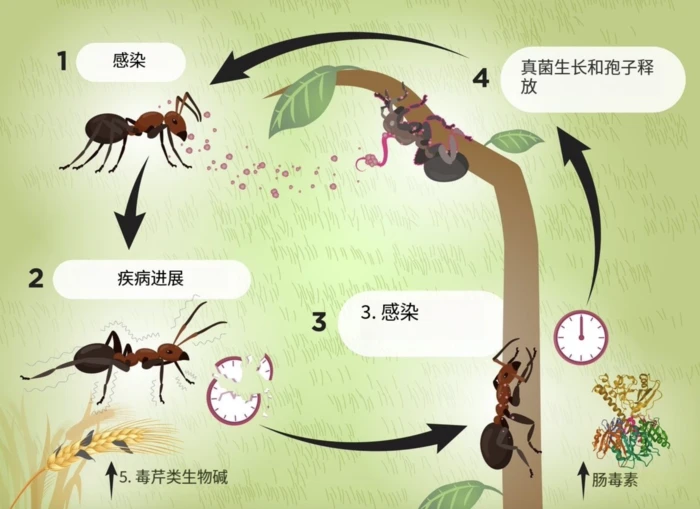
At the onset of infection, ants come into contact with fungal spores. The spores invade the ant's body, begin to grow, and eventually take control of the ant's central nervous system. The fungus manipulates the ant's behavior, forcing it to climb plants or trees and attach itself tightly to leaves or branches with its mandibles. Once the ant settles down, the fungus kills it and continues to grow, producing spores that fall to the ground, ready to infect other unsuspecting ants.
How does the zombie fungus affect fire ants?
The infection process of **Ophiocordyceps unilateralis** is like something out of a horror movie. After infection, the fungus controls the behavior of ants, forcing them to leave the colony, seek higher ground, and attach themselves to plants—a behavior known as "death bite." Infected ants will bite onto a leaf or twig until they die.
Then, the fungus kills the ant and begins to grow, producing a fungal column extending from the ant's head. This column releases spores that fall to the ground, ready to infect other ants. The fungus does not immediately kill the host, but instead uses the ant as a dispersal tool to spread itself to the most desirable locations.
Life cycle of Cordyceps fungi
To better appreciate the life cycle of **Cordyceps fungi**, we need to understand their parasitic survival strategy. The life cycle begins with an ant unknowingly becoming infected with fungal spores. These spores attach to the ant's body, penetrate its exoskeleton, and begin to grow inside. The fungus then begins to consume the ant's body, eventually taking control of its central nervous system and forcing it to climb higher.
Once the ant reaches a high point and firmly attaches itself, the fungus kills it and grows a pillar-like structure from the ant's head. This structure releases spores, which fall to the ground and are picked up by other ants, starting the next round of infection. The fungus does not immediately destroy its host but uses the ants as "transportation vehicles" to carry itself to the optimal location for spore dispersal.
How Ophiocordoses Infects Ants: The Art of Parasitism
Oficordossis is one of the most iconic parasitic fungi in nature. What's particularly fascinating is how it controls the behavior of its host through chemical processes. The fungus appears to have evolved specific chemicals that interact with the ant's brain, thereby controlling its movements. This parasitic control ensures that the fungus can find optimal locations to spread its spores and infect other ants.
Interestingly, *Ophiocordyceps unilateralis* appears to affect only specific species of ants, such as fire ants. This selective parasitism demonstrates how fungi adapt to different ecosystems and evolve infection methods that target specific ant species.
Parasitic Control of Death: The Ants' Last Moments
Once the fungus successfully controls the ant's body, it uses the ant's body to promote its own reproduction. Infected ants can remain on the plant for up to a week until they die, at which point a fungal column grows from the ant's head, releasing spores that fall to the ground. These spores are picked up by other ants, continuing the infection.
This phenomenon of parasitically controlling the body and behavior of ants is like something out of a movie, but it's also an evolutionary masterpiece. By using ants as "carriers" to spread spores, fungi ensure the widespread dissemination of spores.
The role of Cordyceps fungi in the ecosystem
While the brain-eating fungus of fire ants may seem terrifying, it actually plays a vital role in the ecosystem. Cordyceps fungi help control ant populations, preventing them from overpopulating and disrupting the balance of local ecosystems. By specifically parasitizing ants, the fungus helps regulate the insect populations, ensuring they don't over-occupy the environment.
Furthermore, ant parasites are also part of nature's balance. This relationship between fungi and insects reminds us that while parasitic species may seem harmful, they also play a vital role in the survival of ecosystems.
The global phenomenon of cordyceps parasitizing ants
Officinalis doesn't just parasitize fire ants. It infects many different species of ants and other insects worldwide. While fire ants are one of its most well-known hosts, other ant species, such as leafcutter ants, are also susceptible to this terrifying parasitic fungus. The fungus has evolved into multiple species that specifically target different ant species, demonstrating its ability to adapt to and infect a variety of hosts.
Can brain-eating fungi infect other animals?
While brain-eating fungi are best known for their effects on ants, especially fire ants, scientists are also exploring their effects on other animals. Some species of cordyceps fungi infect caterpillars, beetles, and even spiders, controlling their behavior much like they do with ants. In fact, the concept of "zombie insects" is not limited to ants; many parasitic fungi have evolved the ability to control the behavior of their hosts, creating "zombie-like" organisms to further their reproductive purposes.
Frequently Asked Questions: All questions about fire ant brain-eating fungi
What are the brain-eating fungi of fire ants?
The brain-eating fungus of fire ants is Ophiocordyceps unilateralis, a parasitic fungus that infects ants and controls their brain behavior, forcing the ants to climb to high places and bite plants until they die and release spores.How do Cordyceps fungi control fire ants?
The fungus releases chemicals that manipulate the ant's brain, forcing it to climb to a high place and bite the plant until it dies.Do other animals also experience the effects of brain-eating fungi?
Yes, in addition to ants, the Cordyceps fungus can also infect insects such as caterpillars, beetles, and spiders, controlling their behavior in a manner similar to its effect on fire ants.
The story of fire ants' brain-eating fungi is a chilling yet fascinating chapter in nature's history. **Ophiocordyceps unilateralis**, a fungus, is one of nature's most terrifying and intelligent organisms, playing a crucial role in the ecosystem by controlling ant behavior to ensure its own reproduction.