When we talk about the common ancestor of mammoths and elephants, we enter a fascinating world full of prehistoric giants and their evolutionary stories. Mammoths and elephants belong to the same family—the Elephantidae—and their shared history dates back millions of years. So, which species connect these modern behemoths with the extinct mammoth? Let's explore their lineage and how they are linked.
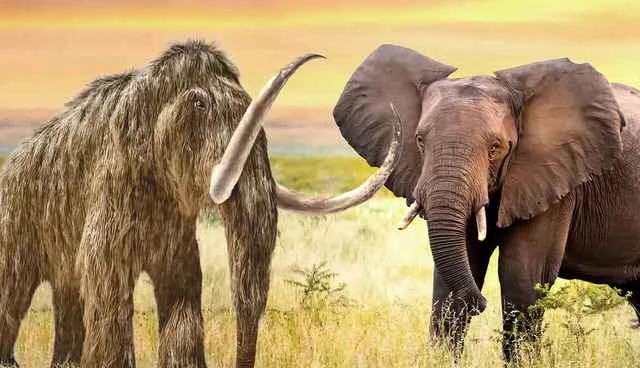
mammoths and elephants
Family tree of mammoths and elephants
Mammoths and elephants are very closely related animals, both belonging to the elephant family (Elephantidae). The elephant family includes:
Modern elephants: African savanna elephant (Loxodonta africana), forest elephant (Loxodonta cyclotis), Asian elephant (Elephas maximus).
Mammoths: The most famous is the woolly mammoth (Mammuthus primigenius), and there are also species such as the Colombian mammoth (Mammuthus columbi).
Their common ancestor lived millions of years ago and evolved into the diverse species we see today.
Key Ancestor: Primelephas
The most recent common ancestor of mammoths and modern elephants is considered to be the genus *Primelephas*, an extinct genus that lived during the Late Miocene, between 7 and 5 million years ago.
**Primelephas gomphotheroides** is considered the direct ancestor of mammoths and modern elephants.
This ancestor shared similar characteristics with modern elephants, but it was not adapted to cold climates like the mammoth.
The genus *Protozoa* eventually diverged into two evolutionary paths:
Mammuthus (genus) (mammoth)
The genera *Elephas* and *Loxodonta* (modern elephants)
The Evolution of Mammoths
The genus *Mammuthus* includes several mammoth species, the most representative of which is the woolly mammoth (*Mammuthus primigenius*).
Adaptations: In order to survive the Ice Age, mammoths evolved thick fur, fat reserves on their backs, and long, curved tusks.
Timeline: Mammoths first appeared around 5 million years ago and went extinct around 4,000 years ago, with some of them surviving longer on Wrangel Island in the Arctic.
Modern elephants: Survivors of the elephant family
Today, the elephant family is represented by only three modern elephant species:
African savanna elephant (Loxodonta africana)
African forest elephant (Loxodonta cyclotis)
Asian elephant (Elephas maximus)
These elephants share many physical characteristics and behaviors with their mammoth ancestors, including tusks and long trunks.
Common characteristics of mammoths and elephants
Mammoths and elephants share many striking similarities, thanks to their common ancestor:
Ivory: Both have elongated incisors used for digging, protecting themselves, or engaging in social interactions.
Long nose: A multifunctional "long nose" is used not only for grasping food and drinking water, but also for expressing emotions.
Social behavior: Both live in female-dominated groups and are highly social animals.
Despite their many similarities, their adaptations differed greatly. Mammoths were adapted to cold climates, while modern elephants were adapted to warmer environments.
Fossil evidence and genetic links
Fossil records and genetic studies have confirmed the kinship between mammoths and elephants.
DNA sequencing shows that Asian elephants are more closely related to mammoths than to African elephants.
Research indicates that mammoths and Asian elephants diverged approximately 6 million years ago.
The extinction of mammoths
The extinction of mammoths was due to a combination of factors:
Climate change: After the end of the Ice Age, temperatures rose, and the cold habitats that mammoths were adapted to decreased.
Human hunting: Early humans hunted mammoths in large numbers to obtain food, fur, and bones.
Modern elephants face similar threats today, highlighting the importance of protecting them.
What can we learn from mammoths and elephants?
Understanding the shared history of mammoths and elephants not only helps us better understand evolution, climate adaptation, and species conservation, but also reminds us of the vulnerability of species and the impact of environmental change.
Frequently Asked Questions: Mammoths and Elephants
What was the closest relative of the mammoth?
The Asian elephant (Elephas maximus) is the closest relative of the woolly mammoth (Mammuthus primigenius).When did mammoths and elephants diverge from their common ancestor?
Mammoths and modern elephants diverged from their common ancestor, the genus *Protozoa*, approximately 6 million years ago.Is there a plan to resurrect mammoths?
Yes, scientists are exploring extinction rebirth projects, aiming to revive mammoth characteristics by utilizing Asian elephant DNA and advanced genetic technology.
Understanding the most recent common ancestor of mammoths and elephants not only deepens our understanding of their evolutionary history but also provides valuable experience for the conservation of modern elephants and other endangered species. These awe-inspiring animals, both past and present, bear witness to the resilience and adaptability of nature. Let us learn from their history to protect the elephant family today!