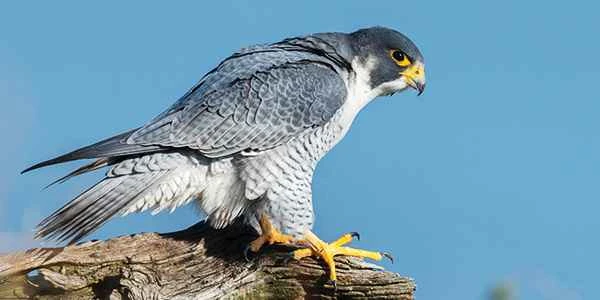
The peregrine falcon, a fast, elegant, and agile bird of prey, often attracts the attention of bird enthusiasts and conservationists. So, what is the peregrine falcon's protection status? What is its protection level? In this article, we will delve into the peregrine falcon's protection level, the threats it faces, and how we can contribute to its conservation.
What level of protection does the peregrine falcon have? Analysis of the peregrine falcon's protection status.
The peregrine falcon (scientific name: *Falco peregrinus*) is a Class II protected animal in China. According to the *Wildlife Protection Law of the People's Republic of China*, the state classifies wild animals into different protection levels. Class I protected animals are the most protected species, while Class II protected animals are those requiring special attention.
Peregrine falcon protection level
According to the Wildlife Protection Law of the People's Republic of China and related regulations, the peregrine falcon is listed as a Class II protected animal. This means that although the peregrine falcon does not face the same extreme survival threats as Class I protected animals, it still needs effective protection measures to avoid threats such as human hunting and habitat destruction. According to Li Deming's (2018) research in "Bird Conservation and Ecological Restoration," the peregrine falcon, as one of the birds of prey, plays an important role in controlling the ecosystem, therefore its protection is equally significant.
International conservation status of peregrine falcons
Globally, the conservation status of peregrine falcons is not entirely uniform. According to BirdLife International, the global peregrine falcon conservation status is rated "Least Concern." This means that the peregrine falcon population is relatively stable worldwide, but still faces certain threats in some regions. In China, although the peregrine falcon population is stable, its conservation remains crucial due to factors such as habitat loss and environmental pollution.
Peregrine Falcon Habitat and Threats
The peregrine falcon is a highly adaptable bird that typically inhabits high mountains, cliffs, and buildings. However, with the acceleration of urbanization and the reduction of its natural habitat, the peregrine falcon's habitat is facing serious threats.
Habitat loss
As cities expand, peregrine falcon habitats are gradually being destroyed, especially in some mountainous and coastal areas. Zhou Ying (2019) points out in Urban Ecology and Wildlife Conservation that large-scale development and construction activities during modern urbanization have seriously affected bird habitats, and peregrine falcons are therefore threatened.
Environmental pollution
Environmental pollution is another major factor threatening the survival of peregrine falcons. Peregrine falcons feed on other birds and small mammals, and pollutants, especially pesticides and heavy metals, can affect their health through the food chain. For example, pesticide residues and water pollution directly impact the quantity and quality of their prey, thus affecting the peregrine falcon's food chain and leading to a decline in its population.
Illegal hunting and human threats
Although peregrine falcons are not commonly hunted, illegal hunting and the bird trade in some areas still threaten their populations. Chen Jianping (2020) mentions in his book "Wildlife Conservation and Law" that in some places, peregrine falcons still face the risk of illegal hunting due to the lack of effective protection measures.
The necessity and measures for peregrine falcon protection
Although the peregrine falcon, a Class II protected animal, faces less severe threats than Class I protected animals, it remains an important component of the ecosystem. Protecting the peregrine falcon is not only for the survival of the species, but also for maintaining ecological balance. The following are some important conservation measures:
Strengthen habitat protection and restoration
To protect peregrine falcons, the first step is to strengthen habitat protection. During urbanization, efforts should be made to minimize habitat destruction and implement ecological restoration measures to restore their natural habitats. For example, artificial nesting platforms and cliffs can be used to provide roosting sites.
Reduce environmental pollution
Reducing environmental pollution's impact on peregrine falcons is crucial. Governments and environmental organizations should intensify efforts to control pollution, especially agricultural pollution and industrial emissions. Limiting pesticide use and strengthening water quality management can indirectly protect the peregrine falcon's habitat.
Strengthen legal supervision and law enforcement
Strengthening legal protections for wildlife is crucial to ensuring the survival of peregrine falcons. Governments should intensify their crackdown on illegal hunting to effectively protect the peregrine falcons' habitats and living environments. Simultaneously, public awareness should be raised, enabling more people to understand the peregrine falcon's legal status as a Class II protected animal and its ecological value.
Conclusion: What level of protected animal is the peregrine falcon?
In summary, the peregrine falcon is a Class II protected animal , meaning that while it doesn't face the same survival pressures as Class I protected animals, it still requires our full attention and protection. With increasing threats such as habitat loss, environmental pollution, and illegal hunting, the conservation of the peregrine falcon remains a serious issue. By strengthening habitat protection, reducing environmental pollution, and enhancing legal oversight, we can ensure the effective improvement of the peregrine falcon's living environment, thereby safeguarding the future of this beautiful bird.
References:
Li Deming (2018). Bird Conservation and Ecological Restoration. Beijing: Science Press.
Zhou Ying (2019). Urban Ecology and Wildlife Conservation, Shanghai: Environmental Press.
Chen Jianping (2020). Wildlife Conservation and Law, Guangzhou: Guangdong People's Publishing House.