The evolutionary history of the giant panda is a legendary tale spanning 8 million years. As one of the oldest species on Earth, the giant panda has undergone a long evolutionary process, resulting in the five main species we know today: the Ailuropoda melanogaster, the Qinling subspecies of giant panda, the nominate subspecies of giant panda, the white panda, and the brown panda. This article will delve into the evolutionary history of the giant panda, revealing the evolutionary mysteries of this rare species.
I. Early Panda: The Ancient Ancestor of the Giant Panda
1.1 The discovery of the first panda
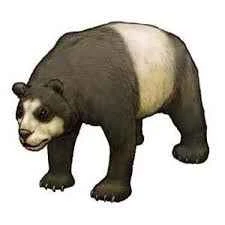
The earliest known ancestor of the giant panda (Ailurarctos lufengensis) lived during the late Miocene epoch, approximately 8 million years ago. In 1985, Chinese scientists discovered fossils of Ailurarctos lufengensis at Shihuba in Lufeng, Yunnan Province, providing important evidence for the study of the giant panda's origin.
1.2 Characteristics of the Early Panda
The early panda was relatively small, weighing about 30-50 kg, making it quite petite compared to modern giant pandas. Their dental structure already showed early signs of adaptation to a bamboo diet, but their diet was likely more extensive, including fruits and small animals.
1.3 The ecological niche of the early panda
The early panda lived in subtropical forests, coexisting with various ancient apes and other mammals. They were likely primarily terrestrial, but retained some arboreal abilities, an adaptation that laid the foundation for later evolution.
II. Qinling subspecies of giant panda: a unique mountain adaptor
2.1 Discovery of the Qinling subspecies
The Qinling subspecies of giant panda (Ailuropoda melanoleuca qinlingensis) is a unique subspecies discovered in the Qinling Mountains in the 1990s. Compared with the nominate subspecies, the Qinling subspecies exhibits significant morphological and genetic differences.
2.2 Characteristics of the Qinling subspecies
The Qinling subspecies is smaller in size, with a more rounded skull and brown or light brown fur. Their dental structure shows a special adaptation to high-altitude environments, and their bite force is slightly lower than that of the nominate subspecies.
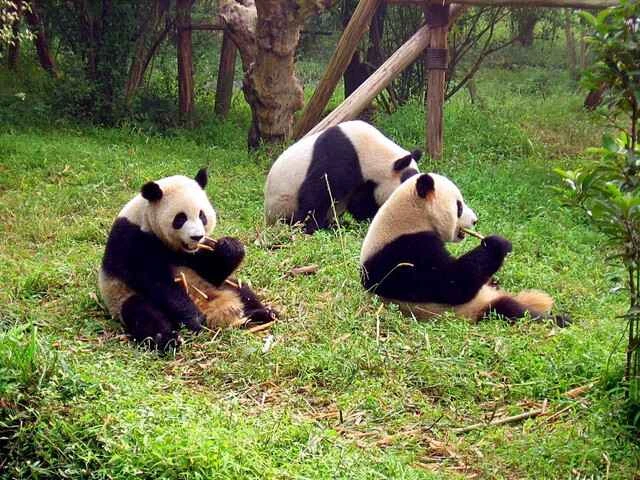
2.3 Ecological adaptation of the Qinling subspecies
The Qinling subspecies lives in mountainous areas at altitudes of 1,500-3,000 meters and is adapted to a relatively cold climate. They are more specialized in their diet, primarily feeding on Qinling arrow bamboo; this unique adaptation allows them to survive in high-altitude environments.
III. Nominate subspecies of giant panda: the typical black and white panda
3.1 Distribution of the nominate subspecies
The nominate subspecies of giant panda (Ailuropoda melanoleuca melanoleuca) is the most widely distributed and numerous subspecies, mainly living in mountainous areas of Sichuan and Gansu.
3.2 Characteristics of the nominate subspecies
The nominate subspecies is larger, with distinct black and white fur, and has a typical panda appearance. Their teeth and digestive system are highly specialized, enabling them to effectively process tough bamboo.
3.3 Ecological behavior of the nominate subspecies
The nominate subspecies lives in bamboo forests at altitudes of 1200–3500 meters and exhibits complex territorial behavior and social structure. Their reproductive strategies and parenting behaviors demonstrate a high degree of adaptation.
IV. White Giant Panda: A Rare Albino Individual
4.1 The discovery of the white giant panda
White pandas are rare individuals resulting from a genetic mutation. The first images of wild white pandas were captured in the Wolong Nature Reserve in Sichuan Province in 2019.
4.2 Characteristics of the White Giant Panda
White giant pandas are entirely white with red eyes, a typical characteristic of albinism. Their vision may be affected, but their other senses may be more developed.
4.3 The Survival Challenges of the White Giant Panda
White giant pandas face greater survival pressure in the wild, mainly due to their lack of camouflage, making them easier for predators to spot. Their presence provides a valuable opportunity to study the genetic diversity of giant pandas.
V. Brown Giant Panda: Unique Fur Color Variation
5.1 The discovery of the brown giant panda
The brown giant panda was first discovered in the Foping Nature Reserve in Shaanxi Province in 1985, and only about 10 cases have been found worldwide to date.
5.2 Characteristics of the Brown Giant Panda
Brown pandas have brown and white fur, a variation likely controlled by a recessive gene. Their size and behavior are similar to ordinary pandas, but their fur color is unique.
5.3 Genetic Research on Brown Giant Pandas
Genetic studies on brown giant pandas suggest that this coat color variation may be related to mutations in specific genes. Researching this variation helps in understanding the genetic diversity of giant pandas.
VI. Lessons from the Giant Panda's Evolution
6.1 Adaptive Evolution
The evolutionary history of the giant panda demonstrates how species can survive in changing environments through adaptive evolution. From the early panda to the modern giant panda, they have undergone multifaceted adaptations in diet, body size, and behavior.
6.2 Conservation of genetic diversity
The existence of different giant panda species underscores the importance of protecting genetic diversity. Each species represents a unique gene pool, which is crucial for the long-term survival of the species.
6.3 Significance for Ecological Protection
Studying the evolutionary history of giant pandas not only helps us understand the species' past, but also provides a scientific basis for developing effective conservation strategies. Protecting giant pandas is not just about protecting a single species, but about protecting the entire ecosystem.
By delving into the evolutionary history of the giant panda, we can not only appreciate the unique charm of this species but also recognize the importance of biodiversity conservation. From the early panda to the modern giant panda, this evolutionary journey testifies to the tenacity and wisdom of life and reminds us to cherish and protect every species on Earth.
The following table compares the five main species of giant pandas, showing their differences in characteristics, distribution, and ecological habits:
| feature | panda | Qinling subspecies of giant panda | Giant panda nominate subspecies | White panda | Brown panda |
|---|---|---|---|---|---|
| scientific name | Ailurarctos lufengensis | Ailuropoda melanoleuca qinlingensis | Ailuropoda melanoleuca melanoleuca | Ailuropoda melanoleuca (albino) | Ailuropoda melanoleuca (coat color variation) |
| Survival Era | Approximately 8 million years ago (Late Miocene). | modern | modern | modern | modern |
| Distribution area | Lufeng area, Yunnan | Qinling Mountains in Shaanxi | Sichuan, Gansu and other places | Sichuan Wolong Nature Reserve | Shaanxi Foping Nature Reserve |
| body shape | Smaller, weighing approximately 30-50 kg | Medium-sized, slightly smaller than the nominate subspecies | Large, typical giant panda size | Similar to ordinary giant pandas | Similar to ordinary giant pandas |
| fur color | Unknown (fossil record cannot determine coat color) | Black and white, with brown or light brown accents | Typical black and white | The entire body is white, with red eyes (a characteristic of albinism). | Brown and white |
| feeding habits | Omnivorous, possibly including fruits and small animals. | Highly specialized, mainly composed of Qinling arrow bamboo. | Highly specialized, primarily composed of bamboo. | Similar to ordinary giant pandas | Similar to ordinary giant pandas |
| Habitat | Subtropical forest | Mountainous areas at an altitude of 1500-3000 meters | Bamboo forests at altitudes of 1200-3500 meters | Similar to ordinary giant pandas | Similar to ordinary giant pandas |
| Tooth structure | Early bamboo-eating adaptation characteristics | Special tooth structure adapted to high-altitude environments | Highly specialized bamboo-eating teeth | Similar to ordinary giant pandas | Similar to ordinary giant pandas |
| Ecological behavior | Primarily terrestrial inhabitants, with some arboreal abilities retained. | Adapted to cold climates, with a specific diet | Complex territorial behavior and social structure | Similar to ordinary giant pandas | Similar to ordinary giant pandas |
| Discovery time | 1985 | 1990s | 1869 | 2019 | 1985 |
| quantity | Extinct | Approximately 200-300 | Approximately 1600 | Extremely rare, only one has been found. | Extremely rare, with only 10 cases discovered worldwide. |
| Preserve the status quo | fossil species | endangered | endangered | Critically endangered (due to survival stress caused by albinism) | Critically endangered (due to survival stress caused by coat color variation) |
| Genetic characteristics | Early ancestors of giant pandas | There are significant genetic differences between it and the nominate subspecies. | Typical genetic characteristics of modern giant pandas | Albinism gene mutation | coat color variation controlled by recessive genes |
| Scientific research value | Revealing the origin of the giant panda | Research on high-altitude adaptation mechanisms | Studying the specialization of bamboo feeding habits | Studying genetic mutations and survival adaptations | Studying the mechanisms of genetic diversity and coat color variation |
Summarize
By comparing the tables, we can clearly see the differences in characteristics, distribution, and ecological habits among the five main species of giant pandas. The *Ailuropoda melanogaster*, as the ancient ancestor of the giant panda, demonstrates the origin and early evolution of this species; the Qinling subspecies and the nominate subspecies represent different ecological adaptations of modern giant pandas; and the white and brown giant pandas, as rare variants, provide valuable opportunities for studying the genetic diversity of giant pandas.
The existence of these different species not only enriches the species diversity of giant pandas but also provides a scientific basis for us to formulate more effective conservation strategies. Protecting giant pandas is not just about protecting a single species, but also about protecting the biodiversity and ecological balance of the entire ecosystem.