Colombia is one of the most biodiverse countries in South America, with 510 recorded reptile species, including 32 turtles and tortoises, 6 crocodiles, 211 lizards, and 261 snakes. Of these, 43 are listed as endangered. This article will introduce 25 representative Colombian reptiles, covering crocodiles, turtles, lizards, and snakes, providing in-depth information on their distribution, habits, and characteristics.
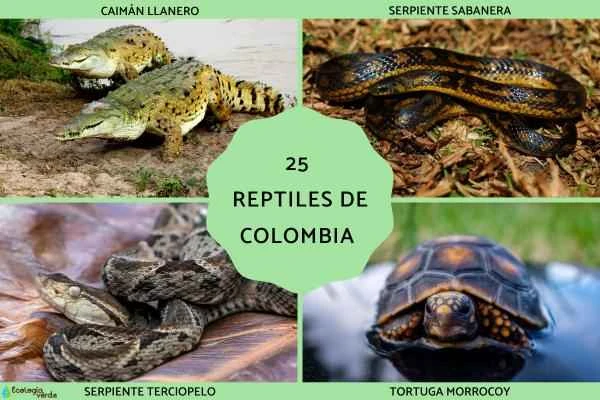
Table of contents
alligator
Orinoco Crocodile
Prairie snake
Cobra Viper
San Andreas Serpent
Swamp turtle
Morocoe Tortoise
Kundina Maca Chameleon
Kalima Chameleon
Bogota Lizard
More Colombian reptiles
1. Crocodylus acutus
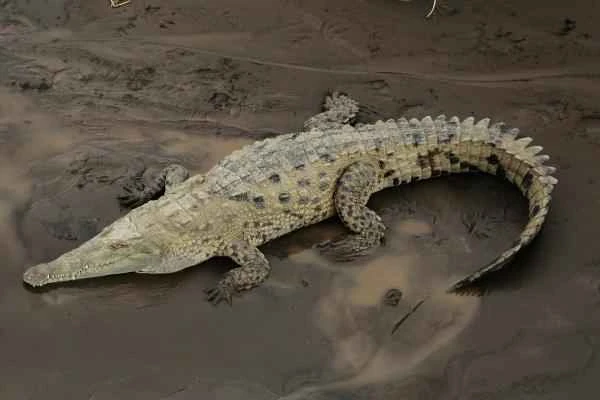
One of the world's largest crocodiles, it is characterized by its long, pointed snout and powerful tail. In Colombia, it is mainly distributed in the Magdalena River basin and the mangrove forests of the Caribbean coast, and also appears along the Pacific coast. It can live in saltwater, freshwater, and brackish water environments.
2. Orinoco crocodile (Crocodylus intermedius)
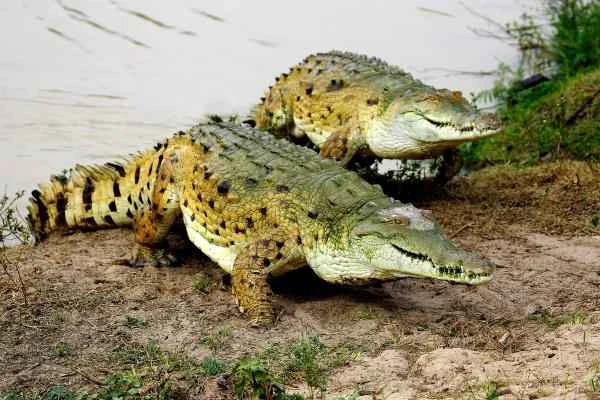
Also known as the "grassland crocodile," it is found in the Orinoco River basin and is one of the largest predators in Latin America, with individuals reaching up to 7 meters in length. Due to poaching and habitat loss, it is critically endangered and has been listed in CITES Appendix I, receiving strict protection.
3. Prairie snake (Atractus crassicaudatus)
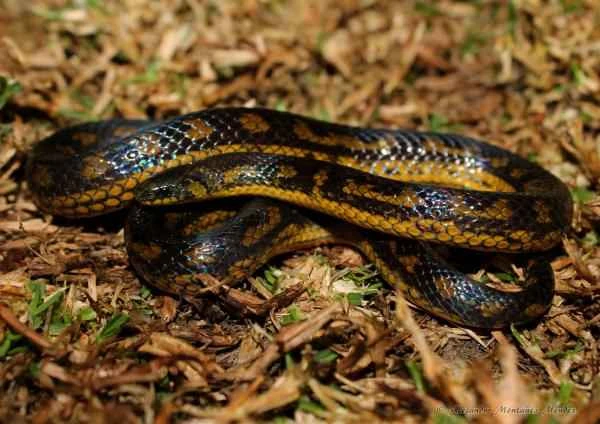
Belonging to the Colubridae family, it is a species endemic to Colombia. Adapted to low-temperature environments, it is distributed in high-altitude areas of 2000-3200 meters, and is often found in moist water bodies or on hillsides.
4. Bothrops asper
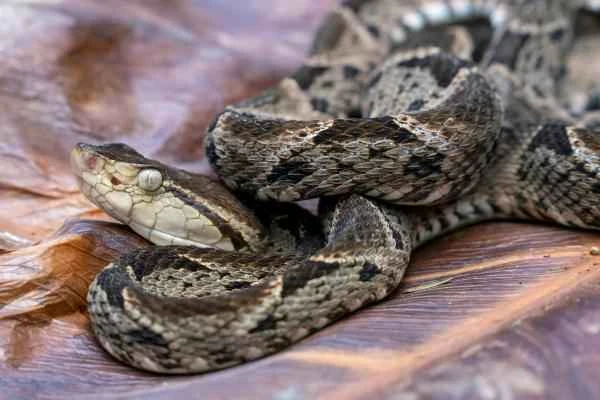
A large venomous snake with a grayish-brown back and dark "X"-shaped patches. It is mainly distributed in the Pacific Ocean, the Caribbean, and the Andes Valley, and is one of the leading causes of snakebite incidents.
5. The San Andreas Serpent (Coniophanes andresensis)
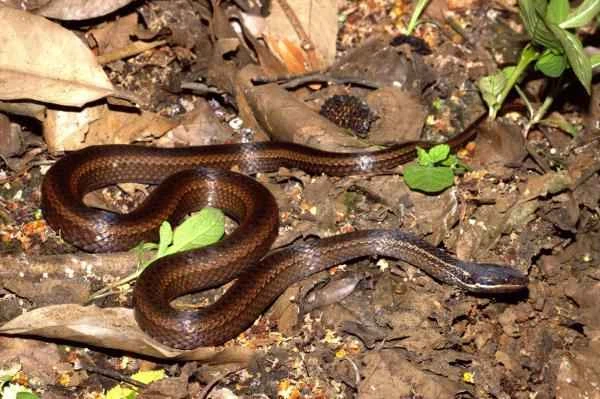
A medium-sized colubrid snake endemic to San Andrés Island, Colombia. It has multiple longitudinal lines on its body and is commonly found in the leaf litter of coconut groves and near residential areas.
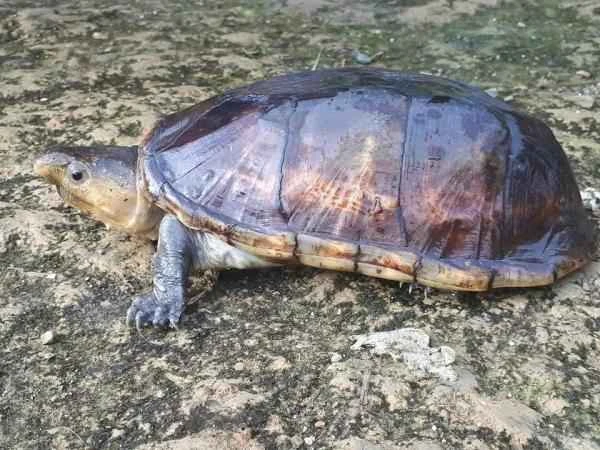
6. Swamp turtle (Kinosternon dunni)
It is small in size, with a broad head and a prominent nose. Its carapace is a mix of light and dark brown, with a relatively small plastron that does not completely cover the soft parts. It is found in the wetlands and streams of Choco Province.
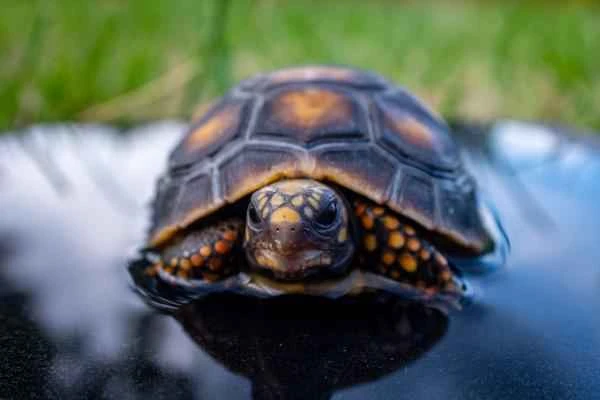
7. Morocoe Tortoise (Chelonoidis carbonarius)
This diurnal tortoise is highly adaptable and can be found in a variety of environments, including tropical dry and wet forests and grasslands. Its shell is black with yellow, orange, or red spots, and it has red spots on its limbs and head, hence the name "red-legged tortoise."
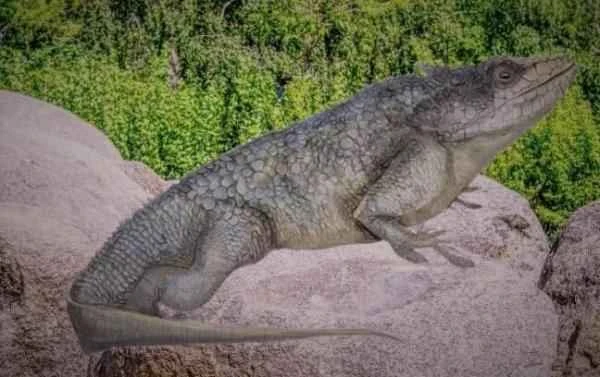
8. Kundina Maca Chameleon (Anolis inderenae)
A large chameleon endemic to Colombia. Diurnal, arboreal, primarily feeding on arthropods. Males have a thick tail base, a broad head, and brightly colored throat folds.
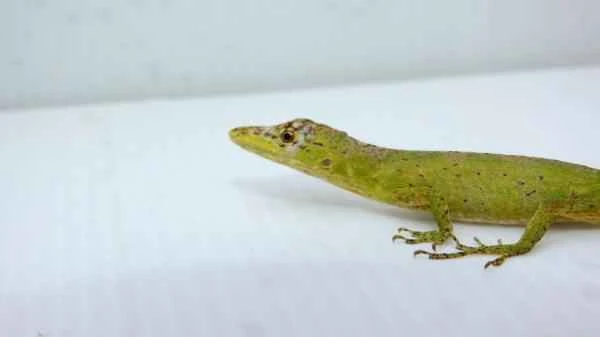
9. Calima Chameleon (Anolis calimae)
A small lizard, yellowish-green in color, with short limbs and tail. It is distributed in the primary and secondary forests of the Andes Mountains at altitudes of 1800-2100 meters.
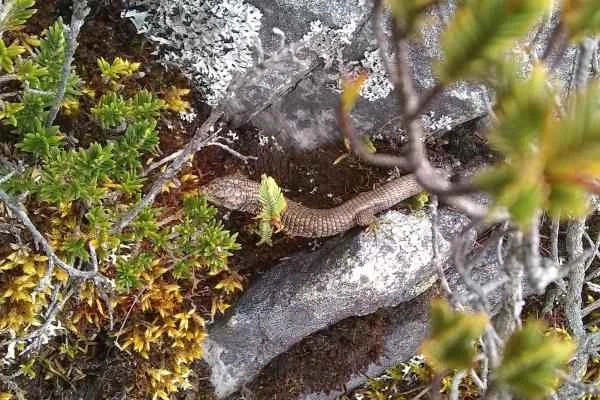
10. Bogota Lizard (Anadia bogotensis)
It is distributed in the high-altitude forests and Paramo region of eastern Colombia, at altitudes of 2000-4100 meters. It is medium-sized with smooth scales, and its back color varies from olive brown to dark gray.
11. More Colombian Reptiles
Pink-throated Chameleon (Anolis antonii)
Anadia pamplonensis (Smooth lizard)
Ruiz Chameleon (Anolis ruizii)
Colombian leaf lizard (Riama columbiana)
Ringed monitor lizard (Morunasaurus annularis)
Dendrophidion boshelli
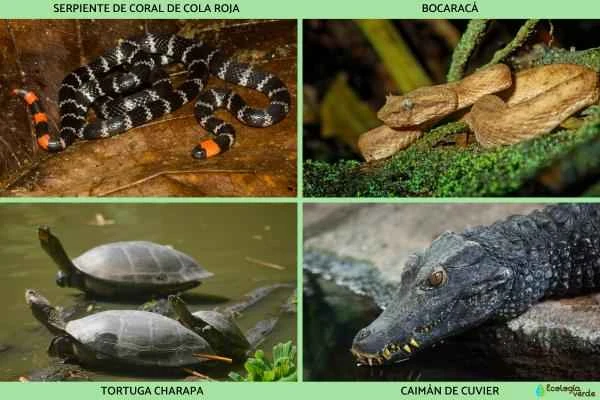
Red-tailed Coral Snake (Micrurus mipartitus)
Bothrocophias campbelli
Villavicencio Coral Snake (Micrurus medemi)
Baraka Green Viper (Bothriechis schlegelii)
Chaparral turtle (Podocnemis expansa)
Magdalena River Tortoise (Podocnemis lewyana)
Olive-faced tortoise (Lepidochelys olivacea)
Kuviere crocodile (Paleosuchus palpebrosus)
Narrow-snouted crocodile (Paleosuchus trigonatus)
You now know some of the major reptiles in Colombia and their distribution characteristics. For a deeper exploration, you can continue reading about Colombia's endangered animals and native flora and fauna.