Mayflies are a collective term for insects in the order Ephemeroptera. They are the shortest-lived insects on Earth, with some living only a day. Mayflies are a primitive and beautiful group of insects, originating in the Carboniferous period, at least 200 million years ago, and are the most primitive winged insects. They are mainly distributed in tropical to temperate zones, with about 30-50 species known worldwide, and about 36 species known in my country.
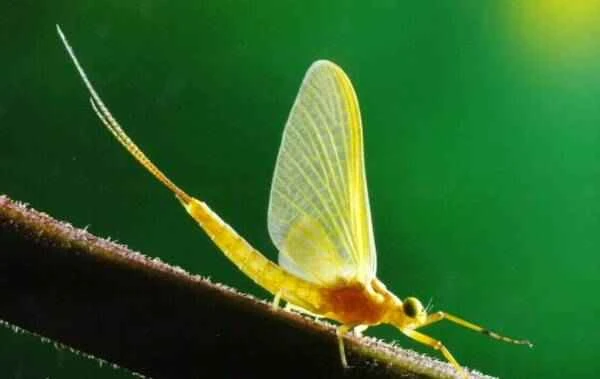
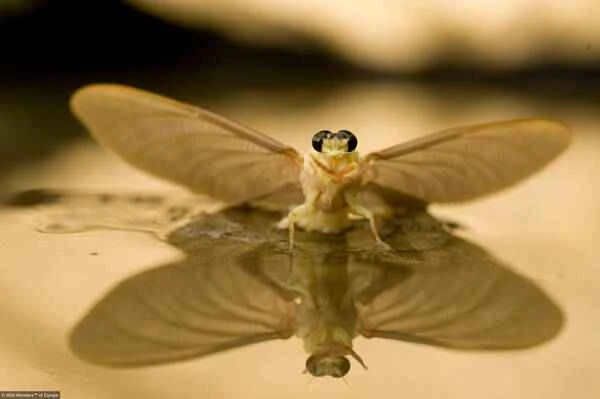
Mayflies are slender and flexible insects, typically 3-27 mm in length. They have short antennae, well-developed compound eyes, a large mesothorax, well-developed forewings, and reduced hindwings. Their abdomens have a pair of long cerci at the end, and some species also have a central caudal filament. The nymphs are aquatic, while the adults do not feed and have short lifespans, generally only living for a few hours to a few days, hence the saying "born in the morning, die in the evening." Adult mayflies are responsible for mating and reproduction during their short lifespan.
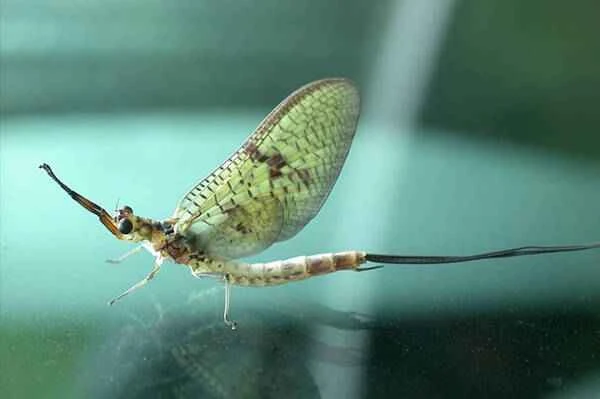
Mayfly larvae live in a variety of freshwater habitats, mostly in warm, flowing water, with a few surviving in saltwater, and one species even living on land. Adult mayflies generally spend their lives in flight. They are distributed worldwide except for Antarctica, high-latitude Arctic regions, and some oceanic islands.