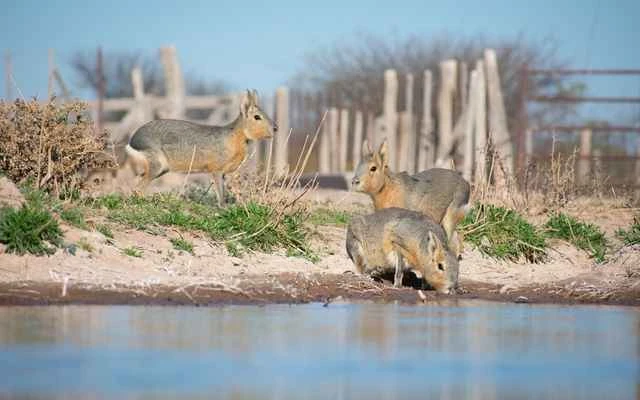
The Patagonian guinea pig (Dolichotis patagonum), also known as the Patagonian mara or Patagonian hare, or Argentine long-eared guinea pig, is a large rodent belonging to the family Caviidae. They are widely distributed in the open plains and semi-arid regions of Argentina and are the second largest guinea pig in the world after the capybara (Hydrochoerus hydrochaeris).
1. Scientific taxonomy of species
Kingdom : Animalia
Phylum : Chordata
Class : Mammalia
Order : Rodentia
Family : Caviidae
Genus : *Dolichotis*
Species : Patagonian guinea pig (Dolichotis patagonum)
Patagonian guinea pigs are typical South American rodents, closely related to capybaras, guinea pigs, and rock guinea pigs (Ctenomys spp.).
2. History of Zoology
The Patagonian guinea pig was first described by the French naturalist Anselme Gaëtan Desmarest in 1817. Initially, scientists thought it might be related to the hare (Lepus spp.) because of its striking resemblance. However, molecular biological studies have confirmed that it is actually a large guinea pig and has no genetic relationship with the European hare.
3. Morphological characteristics and physical properties
(1) Physical characteristics
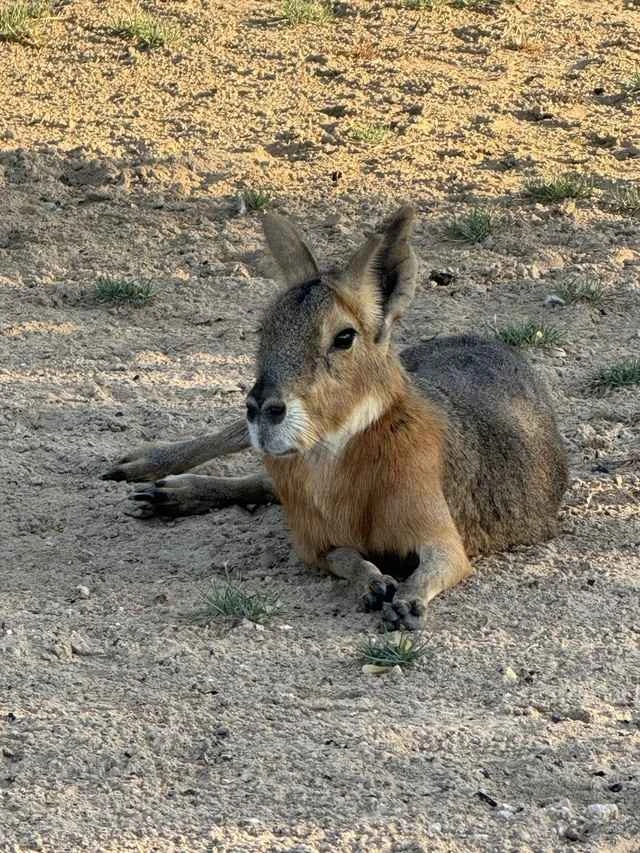
The Patagonian Malamute resembles the long-eared Great Hare in appearance. It has distinctive erect ears and long limbs. Its hind limbs are longer and more muscular than its forelimbs, and its radius is longer than its humerus. Its feet are flat and hoof-shaped, making it resemble a small ungulate, especially when standing or walking. It has four toes on its front feet and three on its hind feet. Its tail is short, flat, and hairless. Its back fur is gray, with a white patch on its rump separated from the back fur by a black area. Additionally, the Malamute's belly is white, with a slightly orange tinge on its waist and chin. The average head and body length of a Patagonian guinea pig is 69-75 cm (27-30 inches), and its tail is 4-5 cm (1.6-2.0 inches) long. It weighs 8-16 kg (18-35 lbs). Unlike most other guinea pigs and capybaras, the guinea pig's anal glands are located between the anus and the base of the tail, rather than in front of the anus.
The Patagonian guinea pig's appearance is somewhere between that of a guinea pig and a hare, and it has the following distinctive features:
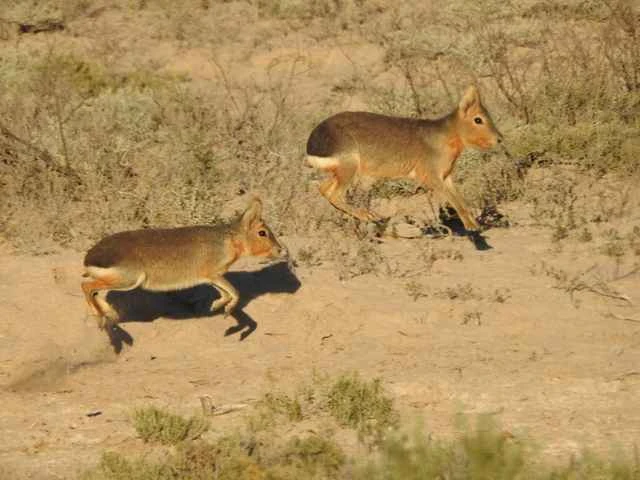
They have a slender build and relatively long limbs, which are adapted for running.
The hind limbs are more developed than the forelimbs, adapted for rapid escape and jumping.
It has a relatively long head, erect ears, and well-developed vision and hearing.
The fur on the back is grayish-brown, while the fur on the belly and legs is lighter, white or pale yellow.
It has a short tail, only 4-5 centimeters long, with a flat tail and sparse hair.
(2) Body length, weight, and lifespan
Body length : 69-75 cm
Tail length : 4-5 cm
Weight : 8-16 kg (females are usually slightly lighter than males)
Lifespan : Approximately 10-14 years in the wild, and up to 15 years in captivity.
4. Global Distribution and Habitat
(1) Geographical distribution
Patagonian guinea pigs are endemic to Argentina, and their distribution range covers most of the country, including:
Patagonia (arid steppe)
Pampas grasslands (temperate grasslands)
Hilly and semi-desert regions
(2) Habitat preference
Patagonian guinea pigs primarily inhabit areas between 28 and 50° south latitude in Argentina . They prefer habitats with shrub cover, but they also inhabit overgrazed and infertile soils within the Montenegrin biota.
The open grasslands and shrublands facilitated rapid running and escaping predators.
Semi-arid regions , such as the Monte Desert.
Low-altitude hilly areas provide safer cave structures.

5. Ecology and Behavior
(1) Migration patterns
Patagonian guinea pigs do not typically migrate long distances, but they will make seasonal moves within a region when food or water is scarce.
(2) Daily activities and social behavior
Diurnal : Active during the day, most active in the morning and evening.
Monogamy : A pair of guinea pigs will remain together for life and will only change partners after one of them dies.
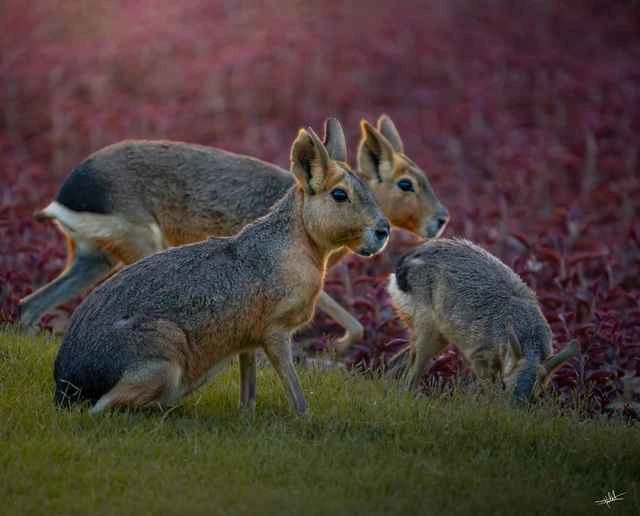
Group reproduction : Although individuals usually move in pairs, they form loose groups during the breeding season and share breeding burrows.
(3) Diet and foraging strategies
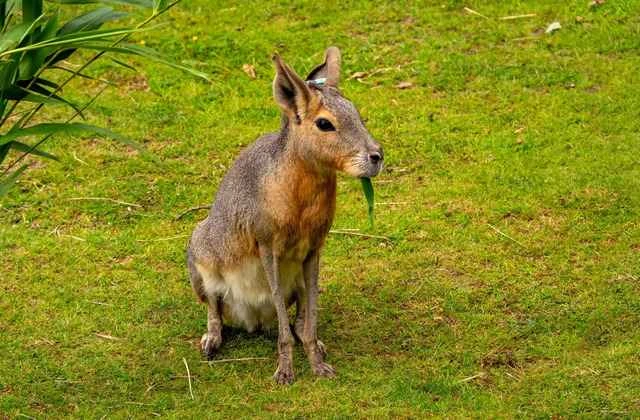
Patagonian guinea pigs are typical herbivores, and their diet includes:
Monocotyledons : such as grasses (such as tiger tail grass and trichlorfon).
Dicotyledonous plants : such as plants of the Chenopodiaceae family, the Lycium genus, and the Fabaceae family.
Fruit : Berries and seeds are consumed in certain seasons.
6. Reproduction
Breeding season : mainly from August to January.
Gestation period : 100 days on average, with 1-3 offspring per litter.
Nurturing behavior : The cubs develop rapidly after birth and can walk within hours.
Co-parenting : Multiple families sharing a cave provides a higher survival rate.
7. Preserve the status quo
(1) Protection level
According to the IUCN (International Union for Conservation of Nature) , the Patagonian guinea pig is listed as "Near Threatened" (NT) .
(2) Current status of the population
Historically, they have been widely distributed , but in recent decades, their population has been declining due to habitat loss and human disturbance.
Local extinction : In some provinces of Argentina, such as Buenos Aires Province, it has been largely wiped out.
(3) Major threats
Habitat destruction : Agricultural expansion has led to a reduction in natural grasslands.
Hunting : being hunted for fur and meat.
Natural enemies : cougars, foxes, eagles, etc. are the main predators of Patagonian guinea pigs.
(4) Protective measures
Establish nature reserves , such as Argentina's Patagonia National Park.
Strengthen legal protections and restrict illegal hunting.
Implement artificial breeding and reintroduction programs .
8. Ecological and Economic Value
(1) Ecological value
Promote seed dispersal and enhance grassland plant community diversity.
They are important prey for many predators and are crucial to the stability of the food chain.
(2) Economic value
Patagonian guinea pigs are used for ecotourism and educational displays in zoos and private ranches.
The demand for fur is low, but illegal hunting still exists in some areas.
9. Closely related varieties
| Species name | scientific name | Body length | Main distribution areas |
|---|---|---|---|
| Capybaras | Hydrochoerus hydrochaeris | 100-130cm | South America |
| rock guinea pig | Ctenomys spp. | 15-25cm | South America |
| Domestic guinea pigs | Cavia porcellus | 20-30cm | Global (captive breeding) |
Summarize
The Patagonian guinea pig is a unique South American rodent that combines characteristics of both rabbits and guinea pigs. Although the population is threatened, reasonable conservation measures can ensure its future survival.
If you enjoyed this article, please share or follow for more wildlife-related content!