Fish are among the oldest vertebrates on Earth, with an evolutionary history spanning over 500 million years . They have adapted to almost every aquatic environment, from freshwater lakes to deep ocean abysses, from tropical coral reefs to icy polar seas. Their unique body structure and physiology enable them to survive in such diverse environments. This article will explore the characteristics of fish and the different ecological environments in which they live, helping you gain a deeper understanding of these mysterious underwater creatures.
Main characteristics of fish
Fish belong to the phylum Vertebrata, and their physiological structure differs significantly from that of terrestrial animals. Here are some of the main characteristics of fish:
1. Body structure adapted to aquatic life
(1) Streamlined body
Fish typically have streamlined bodies to reduce water resistance, allowing them to swim efficiently. Some fish, like eels, have slender bodies, which are well-suited for agile movement in the water; while fish like groupers have more rounded bodies, which are advantageous for ambushing and hunting.
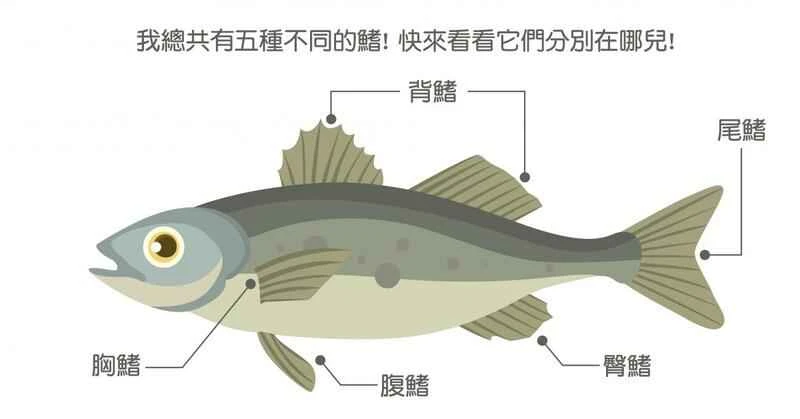
(2) Function of fins
Fish primarily rely on their fins to control direction and maintain balance while swimming. Common fish fins include:
Dorsal fin : helps maintain the fish's stability and prevents it from tipping over.
Pectoral and pelvic fins : help control direction and balance.
Caudal fin : Provides propulsion and is the main source of power for fish to swim.
2. Gills – Key to Underwater Breathing
Unlike land animals, fish use gills to obtain oxygen from the water. Located on either side of the fish's head, gills consist of multiple gill filaments. As water flows over the gill filaments, oxygen is absorbed into the blood, while carbon dioxide is expelled. This method of respiration allows fish to survive underwater for extended periods.
3. Scales and mucus layer – protective mechanism
Fish bodies are typically covered with scales , which serve several functions:
It protects the fish's skin from damage and parasite infestation.
By reducing friction, swimming efficiency can be improved.
Some fish scales can also provide camouflage; for example, chameleons can change the color of their scales to avoid predators.
In addition, fish secrete a mucus layer on their skin, which not only helps reduce water resistance but also prevents bacterial infections and enhances their immunity.
4. Special organs for perceiving the environment
Fish live underwater and rely on special sensory organs to perceive their environment, for example:
Lateral line system : Sensory organs on both sides of the fish's body that can detect changes in water flow and help fish perceive surrounding objects and prey.
Electrosensory ability : Some fish, such as sharks, can sense changes in the electric field in the water to locate prey.
Vocalization and hearing : Some fish can make sounds for socializing or courtship.
5. Fish Reproduction Methods
Most fish reproduce through external fertilization , where the female lays eggs and the male releases sperm in the water to fertilize them. For example, salmon migrate upstream to their spawning grounds. However, some fish, such as sharks and live-bearing killifish, reproduce through internal fertilization , giving birth directly to live fry.
Fish habitat
Fish can adapt to a wide variety of aquatic environments, ranging from freshwater and saltwater to extreme conditions , and their ecological distribution is extremely broad. The following are some of the main habitats of fish:
1. Freshwater environment
Freshwater fish live in low-salinity environments such as rivers, lakes, swamps, and streams .
(1) Common freshwater fish species
Carp : Found all over the world, highly adaptable.
Salmon : They migrate between freshwater and saltwater during their life cycle.
Piranha : Native to South American rivers, known for its aggressive nature.
(2) Adaptability of freshwater fish
Freshwater fish must constantly regulate their internal osmotic pressure to prevent excessive fluid loss. They maintain their body's water balance by excreting large amounts of diluted urine .
2. Marine Environment
Saltwater fish live in saltwater environments such as the ocean, coral reefs, and deep sea .
(1) Common marine fish species
Tuna : A fast-swimming fish adapted for long-distance migration.
Cod : It has high economic value and is an important food fish worldwide.
Shark : Top predator, widely distributed.
(2) Adaptability of marine fish
Marine fish need to maintain their osmotic balance by excreting excess salt . Their kidneys and gills actively excrete salt to adapt to high-salt environments.
3. Fish in extreme environments
Some fish can survive in extreme environments, such as the deep sea, polar regions, and hot springs .
(1) Deep-sea fish
Deep-sea fish live in environments below 1000 meters , adapted to low temperatures, high pressure, and darkness. For example:
Lanternfish : They can glow to attract prey.
Anglerfish : Uses bioluminescent lures to attract prey.
(2) Polar fish
Fish living in the Arctic and Antarctic, such as the Antarctic icefish , have antifreeze proteins in their blood that prevent the blood from freezing.
(3) Fish in hot springs and high salinity waters
For example, sulfur fish can survive in high-temperature environments, while saltwater killifish are adapted to high-salinity waters.
The importance of fish
1. The key to ecological balance
Fish play an important role in the ecosystem, such as:
Control the number of algae and plankton.
As an important part of the food chain, it is preyed upon by birds, mammals, and humans.
2. Economy and Human Life
Fish are an important part of global fisheries , providing livelihoods for millions of people and serving as a vital source of protein in the human diet.
3. Ornamental and scientific research value
Many fish species, such as koi and tropical fish , are widely used for ornamental purposes, and the physiological structure and evolutionary characteristics of fish also provide valuable resources for scientific research.
in conclusion
Fish possess unique physical characteristics, such as gills, fins, scales, and a lateral line system, enabling them to survive efficiently underwater. They are distributed across a wide variety of waters, from freshwater lakes to the deep sea, from polar regions to hot springs, and each species demonstrates remarkable adaptability. Fish not only play a vital role in ecosystems but also have a profound impact on human society and the economy. In the future, with advancements in scientific research, we will further unravel the mysteries of these underwater creatures and strive to protect their habitats.