When people mention "camelidae" (Camelidae), they usually think of camels and alpacas. But in fact, this family is much more than that. Camelidae includes not only the common dromedary and Bactrian camels , but also alpacas, llamas, guanacos, llamas, and wild Bactrian camels that live in South America.
Although many articles mention "six species of camels," the scientific community has actually identified seven species of camels . This article will provide a comprehensive overview of the definition and common characteristics of camels, and introduce each of these seven species in turn.

What are camels? | Characteristics Overview
Camels belong to the order Artiodactyla and are the only animals in this order without hooves (in contrast, animals like giraffes and cows have prominent hooves). Their feet have two toes, each ending in a small, hard nail, but the entire foot is in contact with the ground through a soft pad .
The most notable characteristics of camels include:
Soft and flexible foot pads : can move separately, helping to walk freely on rough, sandy or snowy surfaces.
Well-developed knee muscles : able to kneel and rest.
Special dental structure : fewer incisors and a split upper lip, which helps to lick snot and maximize the recycling of bodily fluids, adapting to arid environments.
Oval-shaped red blood cells : facilitate the transport of oxygen in hypoxic environments.
Three-chamber stomach structure : Unlike the four-chamber stomach of cattle, it can still ruminate and break down fiber.
Herbivorous : Primarily feeds on grasses or wild grasses.
Defensive behavior – spitting : Camels, alpacas, and llamas all spit to drive away threats.
Camels can be divided into three main categories based on geographical and genetic characteristics : Camelus (Asia) , Lama (South America) , and Vicugna (South America) . Let's take a look at their specific species.

1. Dromedary camel (Camelus dromedarius)
The dromedary camel, also known as the Arabian camel , is characterized by a single hump on its back. This hump is used to store fat for metabolic purposes when food and water are scarce. It originated in the Middle East , but its ancestors may have come from Asia or the Arabian Peninsula .
Because they are very sensitive to dampness and cold, they are adapted to dry, hot desert climates and are the camel species with the longest history of domestication by humans.

2. Wild Bactrian camel (Camelus ferus)
Camelus ferus is the only living wild camel species. Unlike the captive-bred Bactrian camel, it retains its original characteristics, has two humps , and lives in the Gobi Desert region of China and Mongolia .
This animal is diurnal, foraging during the day and hiding from predators at night. Due to habitat loss, it has been listed as a critically endangered species since 2002.

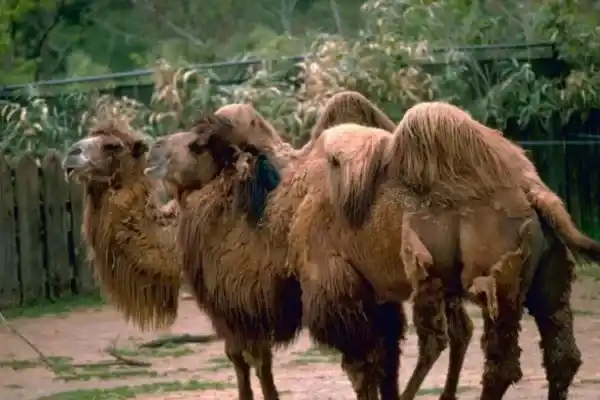
3. Bactrian camel (Camelus bactrianus)
Also known as the Bactrian camel, it is a domesticated Bactrian camel. It can adapt to extreme temperature environments— up to 40°C in summer and as low as -29°C in winter .
Their bodies are covered in thick fur to protect them from the cold, their nostrils can close to prevent sand and dust from entering, and double rows of eyelashes protect their eyes . They can survive for weeks without food or water , and once they find a water source, they can drink up to 100 liters of water in a short time.
Today, their numbers in the wild are extremely small, with most living in domesticated environments. Wild populations are concentrated in parts of Mongolia and China .
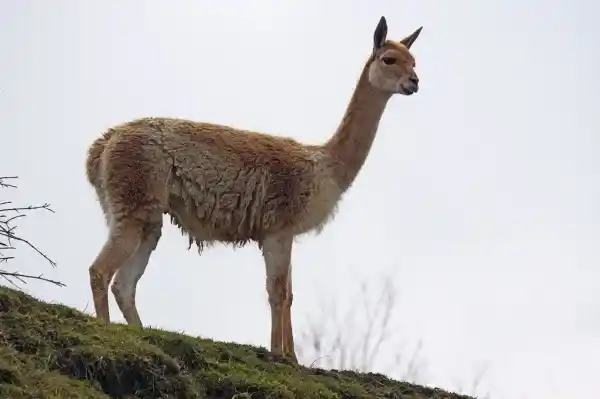
4. Alpaca / Vicugna vicugna
Alpacas are the smallest camel species , with long, slender legs and reddish-brown fur, and are well-adapted to varying climates. They are wild species , inhabiting the semi-arid grasslands of Peru, Bolivia, Chile, Colombia, Ecuador, and Argentina .
This species is divided into two subspecies: one adapted to humid plateaus, and the other preferring dry mountainous areas. They live in small groups , led by a male and consisting of several females, and emit high-pitched calls when threatened.
5. Alpaca (Vicugna pacos)
Alpacas were domesticated from llamas and bred by the ancient Peruvian civilization . They are known for their soft wool , which is an important source of textile materials in South America.
They mainly live in the high-altitude regions of the Andes Mountains and are 75–90 cm tall. Compared to alpacas, alpacas have legs covered with thick fur , and their heads and necks are also more robust.
The word "alpaca" comes from the Quechua language and means "golden-haired".

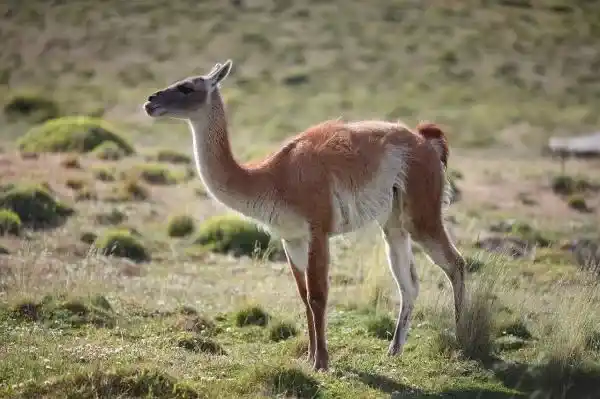
6. Guanococcus (Lama glama guanicoe)
The guanodon is a wild, undomesticated South American camel that lives in the Andes Mountains and Patagonian steppes . Its thick fur helps it withstand the cold.
Their blood is rich in hemoglobin , allowing them to adapt to low oxygen levels. They inhabit arid or semi-arid grasslands and have pointed ears and robust physiques.
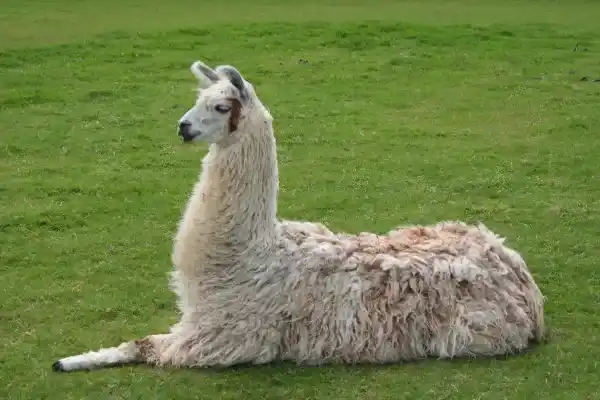
7. Llama/Alpaca (Lama glama glama)
Llamas were domesticated from guanacos and were widely used by the Inca civilization for transportation and fur processing . They are large animals, reaching up to 1.8 meters in height, and like camels, they require relatively little water, making them well-suited for long-distance heavy-duty journeys.
Today, llamas are still used for pack transport, meat, fur, and leather in the Andes Mountains. They are found in countries such as Peru, Bolivia, Chile, and Argentina .
Summarize
Camels are a group of mammals adapted to extreme environments, possessing unique physiological structures and rich cultural value. From camels in Asia to alpacas, guanacos, and llamas in South America, this family demonstrates evolutionary diversity and environmental adaptability .
bibliography
Naumann, R. (1999) *Camelus dromedarius*. Accessed at: https://animaldiversity.org/accounts/Camelus_dromedarius/
Encyclopædia Britannica (2022) Vicuña. Accessed at: https://www.britannica.com/animal/vicuna
National Geographic (no date) Llama. Access URL: https://www.nationalgeographic.es/animales/llama
Beatty, R., Beer, A., and Deeming, C. (2010). The Book of Nature. Dorling Kindersley, UK.