The famous naturalist Charles Darwin once referred to the guanodon ( Lama guanicoe ) as "the camel of South America." His statement was not an exaggeration, because the guanodon is indeed a member of the Camelidae family, belonging to the same family as camels and dromedaries living in Africa and the Middle East, as well as alpacas, llamas, and llamas (the wild ancestors of alpacas) in South America.
These animals share a common ancestor from millions of years ago and thus possess many similar physiological characteristics. For example, they all have three-cavity stomachs , unlike the four-cavity stomach structure of ruminants such as cattle; in addition, they do not have hooves , but instead walk on two toes with horny nails and thick pads, which is very well adapted to varied terrain.
This article will provide you with an in-depth introduction to the physical characteristics, habitat distribution, dietary preferences, and unique reproductive behaviors of the guanacus , one of the largest wild mammals in South America.
What is a genus camel? — Physical appearance and basic characteristics
The guanodon is one of only four remaining camel species in South America, the other three being the alpaca, llama, and llama. They are wild animals and are widely considered the ancestors of the domesticated llama .
Physical characteristics of the genus *Gastropoda*:
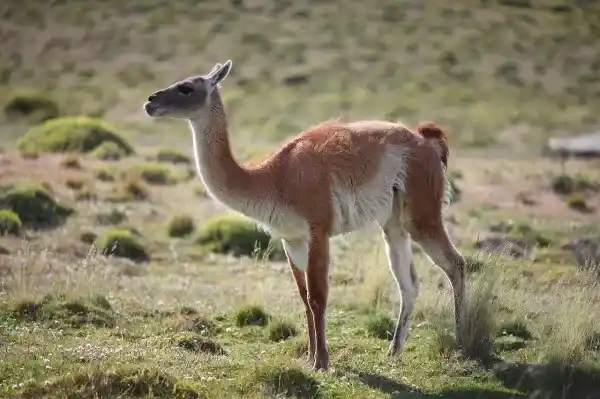
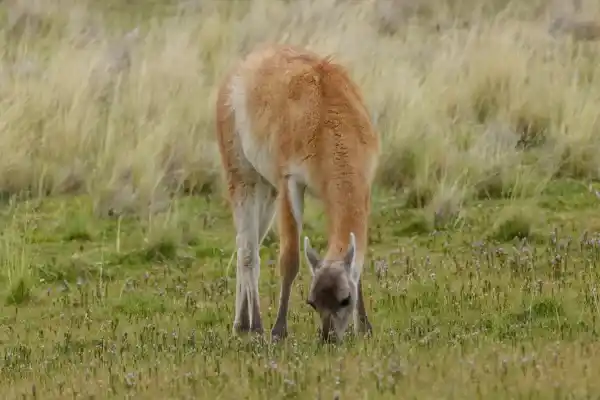
She has a slender neck and limbs , and her overall figure is light and graceful.
The body hair is short and soft , and the color varies depending on the body part: the back is mostly brown , the abdomen, the inside of the neck and the limbs are white , and the head is dark gray .
The tail is short and slightly curved ;
Shoulder height approximately 90-120 cm , medium build;
The coat color of all wild camels is relatively uniform, unlike domesticated alpacas which have a variety of colors (white, black, gray, brown, etc.).
Different subspecies exist, such as:
Lama guanicoe guanicoe : Mainly distributed in Peru and northern Chile;
Lama guanicoe cacsilensis : Slightly larger in size and more widely distributed.
Group behavior:
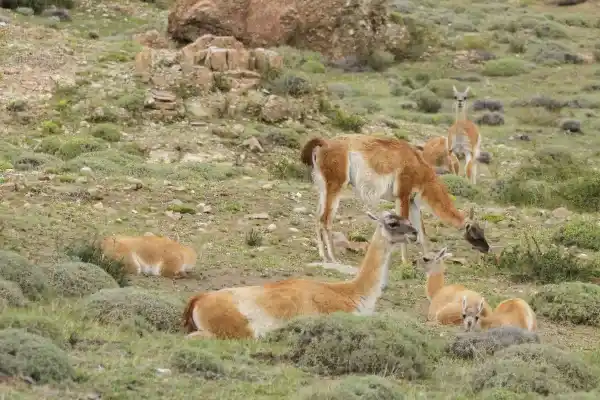
Gigantopiles typically live in small groups , each led by a male and consisting of 4 to 20 females and calves (called "chulengos") . They mark their territory by piling up dung . When threatened, gits can run at speeds up to 60 km/h , making them agile animals with defensive strategies.
Habitat distribution of the genus *Gastropoda*
The guanacus is the most widely distributed of all camels in South America . They prefer dry or semi-arid regions and are mainly concentrated along the Andes Mountains , stretching from northern Peru to the Patagonian plains in the south, covering countries such as Argentina, Chile, Bolivia, and Peru .
Habitat types include:
Grassland (meadow)
bushland area
Plateau and mountainous areas
Range of altitude changes from sea level to 4000 meters
The guanacus is highly adapted to environments with drastic temperature changes , and can cope with both day-night temperature differences and seasonal changes with ease.
What do camels eat? — An analysis of their dietary habits
Gentooes are purely herbivorous , but unlike some ruminants, they are not exclusively herbivorous. They have a wide range of foraging abilities , which helps them survive in various ecological zones.
The main food of the guanacus includes:
Various grasses and herbaceous plants
Various wild grasses and shrubs
Occasionally, they will eat lichens or succulents , especially when resources are scarce.
The camel spends a lot of time foraging between midday and afternoon ; in the evening , it will seek out bushes or rocks for shelter to rest and spend the night.
Reproduction methods of guanacos
The guanodon has a typical polygynous reproductive structure . The male in each group is the leader and fiercely drives away potential competitors during the breeding season (late spring). Immature male guanos typically leave the herd around the age of three and form small groups with other males, waiting to one day establish their own herd.
Breeding process:
Mating season : Late spring to early summer;
Pregnancy period : Approximately 11 months;
Each litter produces one baby , which can stand and run two or three days after birth;
Young camels begin to eat herbaceous plants at 1 month of age , but still need to be nursed until they are about 6 months old.
Female camels reach sexual maturity at around one year old ;
Both males and females reach maturity at the age of three , but males need to separate from the group and become independent.
After the breeding season (winter) , different groups will temporarily abandon their territoriality and form large herds of hundreds of camels .
Summarize
The guanacus is not only a key species in the South American wild ecosystem, but also represents the extreme adaptation of camels to high-altitude, arid environments. Its social structure, wide diet, running speed, and territorial awareness demonstrate astonishing ecological wisdom.
If you would like to learn more about the differences between camels, you can also read our recommended article, "The Difference Between Alpacas and Camels".
References
Argentina National Parks Administration Biodiversity Information System. Guanicoe (Lama guanicoe). Access URL: https://sib.gob.ar/especies/lama-guanicoe?tab=info-general
Torres, Hernán. Distribution and conservation of the guanodon: a report. (1985). International Union for Conservation of Nature (IUCN), Grand, Switzerland and Cambridge, UK.
Gilmore, RM (1950). Fauna and Ethnography of South America. U.S. Government Printing Office.
Ojasti, J. (1996). Wildlife utilization in Latin America: current status and prospects for sustainable management. Italy: Food and Agriculture Organization of the United Nations.