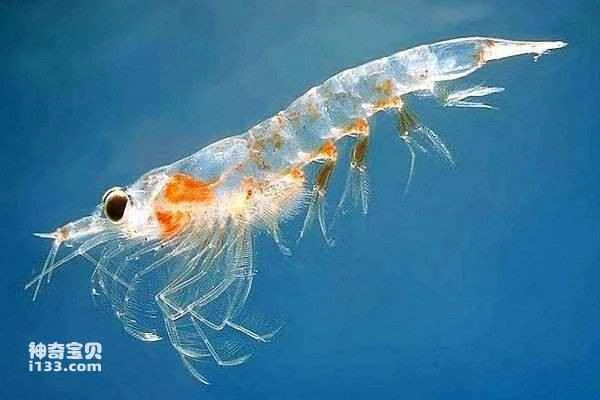
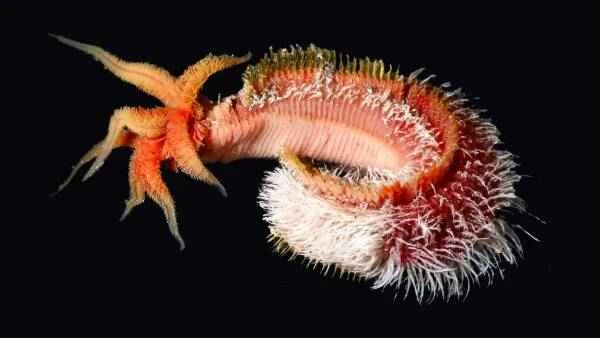
Many animals, like humans, can see colors, but some are colorblind. An animal's ability to see colors depends on whether it has color receptors in its retina. Cone cells are responsible for perceiving colors such as red, green, and blue, while rod cells are more sensitive to light and are responsible for visual perception in low-light conditions. This is why we cannot see colors clearly in the dark. Humans have three types of cone cells: red, blue, and green, which allows us to see the entire spectrum—a capability known as trichromatic vision.

However, some animals have fewer cone cells and more rod cells, which limits their ability to perceive color and affects their night vision. This article will explore some colorblind animals and why they cannot see the full spectrum. Let's delve deeper!
Which animals are colorblind?
Although colorblind animals cannot see vibrant colors like humans, they have other ways of perceiving the world around them. Here are some common colorblind animals.
1. Whale
Whales have strong night vision, possibly because they have more rod cells.
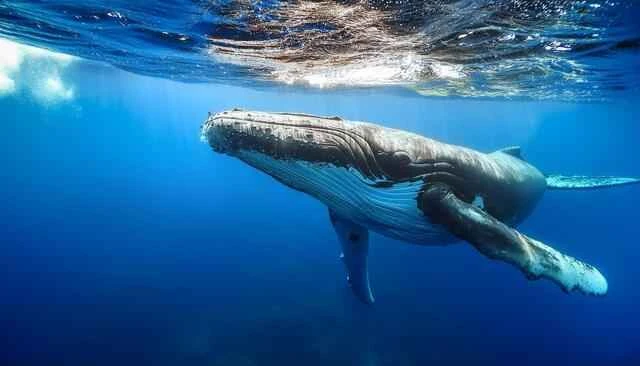
Whales are monochromatic vision animals, meaning they have only one type of cone cell. Therefore, they see the world as different shades of gray. However, they are able to distinguish between light and dark.
Furthermore, whales have better vision in the dark, likely because they possess more rod cells. They also use echolocation to navigate their environment and locate prey. Additionally, whales have a reflective layer (tapetum lucidum), a membrane that reflects light through the retina, helping them see more clearly in the dark.
2. Dog
Dogs rely on other senses, such as smell and hearing, to compensate for the limitations of their vision.
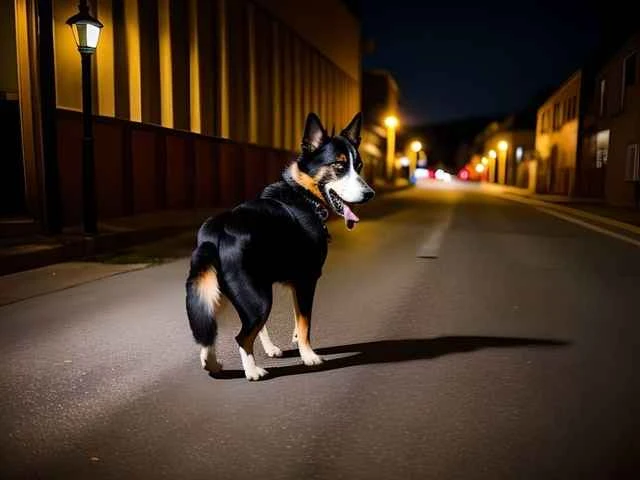
Like most mammals, dogs are dichromatic, meaning they have only two types of cone cells. In color recognition, dogs primarily see shades of gray, blue, and yellow; they have difficulty distinguishing between red and green, making their color vision similar to that of people with red-green color blindness. Furthermore, dogs are not sensitive to changes in brightness, meaning they see colors less vividly than we do.
Dogs rely on other senses, such as smell and hearing, to compensate for their visual deficiencies. They also have more rod cells and a reflective layer, which allows them to see better in low-light conditions.
3. Cat
Cats are dichromatic animals, similar to colorblind humans.

Like dogs, cats are dichromatic, possessing two types of cone cells, making them similar to colorblind humans. They can distinguish different shades of blue, yellow, and red. Furthermore, they can also distinguish between red and green light. However, cats are more adept at distinguishing between blue and violet, while their perception of colors close to the red spectrum (such as pink and violet) is weaker. For example, pink might appear as green, and violet as another form of blue.
To compensate for their poor color perception, cats have a reflective layer that reflects light back to their retina, allowing them to see more clearly in low-light conditions.
4. Owl
Owls are more sensitive to light than humans.
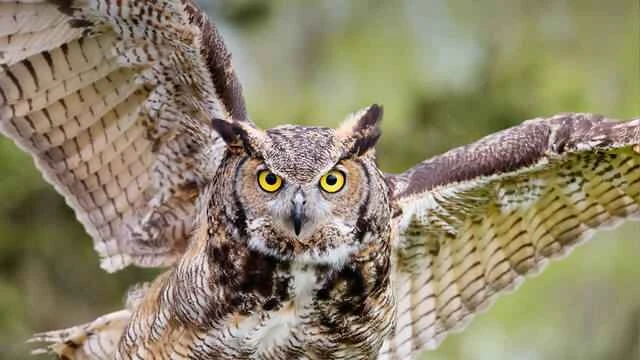
Owls are unique animals with some very interesting characteristics. They are nocturnal, have excellent hearing, and can turn their heads 270 degrees. Their eyes are unusually large compared to their skulls. Another interesting feature is that owls' eyes cannot move; they need to turn their heads to see their surroundings. However, owls have poor color vision.
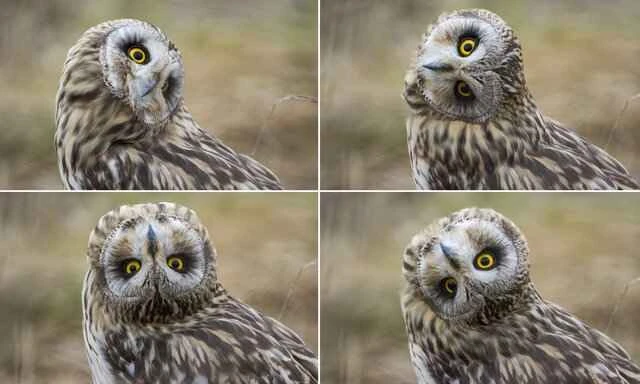
Because they have more rod cells, owls are more sensitive to light than humans. Furthermore, they have fewer cone cells, meaning they cannot see colors as we perceive them, and are therefore considered colorblind. In other words, the world of owls is black, white, and gray. However, despite their poor color vision, they do not rely on echolocation like most colorblind animals, but instead hunt in complete darkness thanks to their excellent night vision.
5. Raccoon
Raccoons have a reflective layer in their eyes that reflects light in low-light conditions, helping them see more clearly.

Raccoons (Procyon lotor) are another nocturnal colorblind animal that primarily inhabits the damp forests of North America. Raccoons have poor distance vision and are considered colorblind. However, their eyes have a good ability to distinguish green light, and their eyes reflect red light in the dark.
To compensate for their poor color vision, raccoons possess a reflective layer, a structure that reflects light onto their retina, helping them see better in low-light conditions. Like most colorblind animals, raccoons rely on their keen sense of smell, touch, and hearing to navigate and hunt effectively in their habitat.

By understanding the characteristics of these colorblind animals, we can see that although they have limitations in color perception, they still live well in their world through other senses and unique abilities that they have evolved.