Lizards are a wide range of reptiles with diverse forms. This article will introduce you to representative lizard species from around the world, including the spotted lizard of South America, the Nile monitor lizard of Africa, the Komodo dragon of Asia, and the green lizard of Europe, sharing their distribution, physical characteristics, and habits.
Salvator merianae (Spotted Monitor Lizard)
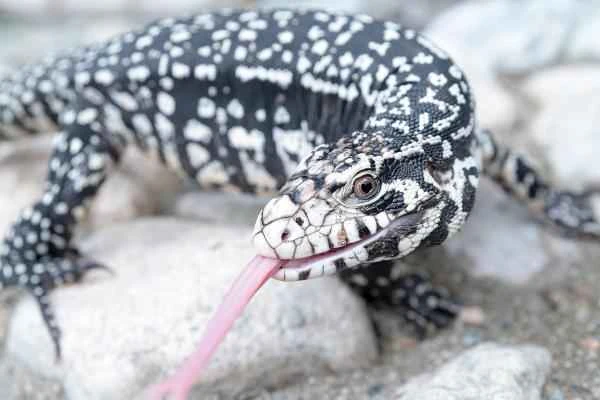
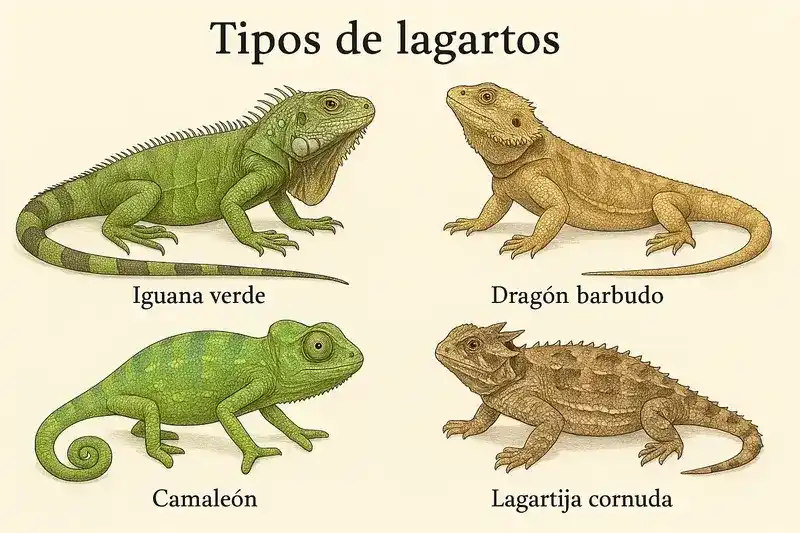
Native to north-central Argentina, it inhabits tropical rainforests, wetlands, grasslands, scrublands, and coastlines. Its body is dark gray to black with white spots on its back and ringed markings on its tail. It is omnivorous and possesses biological control abilities. It is oviparous and reproduces prolifically. It hibernates in winter, typically residing in burrows it has dug itself or those abandoned by other animals.
Red monitor lizard (Tupinambis rufescens)
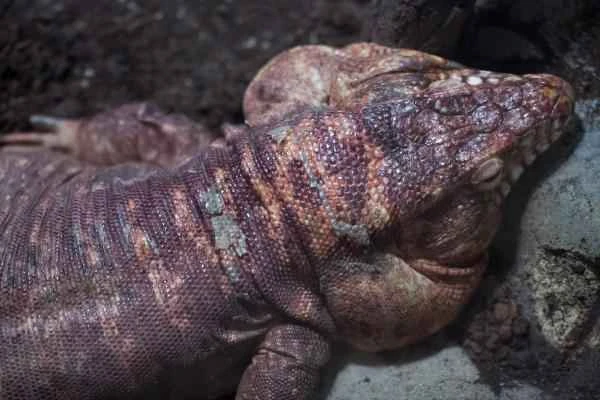
Commonly known as the "Red Monitor Lizard," it is found in the arid environments of Argentina. It has a robust body, a reddish hue with irregular dark markings. It is shy and will flee quickly when threatened. Like the Spotted Monitor Lizard, it is a commercially exploited species, facing significant pressure from the leather trade, and is listed in CITES Appendix II.
Canary Lizard (Gallotia galloti)
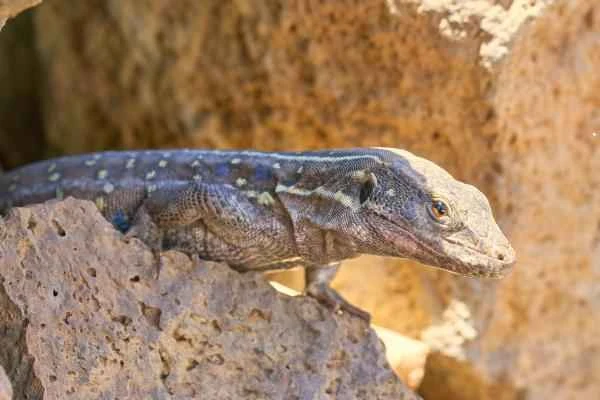
Endemic to the Canary Islands, males are large with blue patches on their faces, which are especially noticeable during the breeding season; females lack this feature and their body color tends to be more camouflaged. They feed on insects and plants.
Agile Lizard (Lacerta agilis)
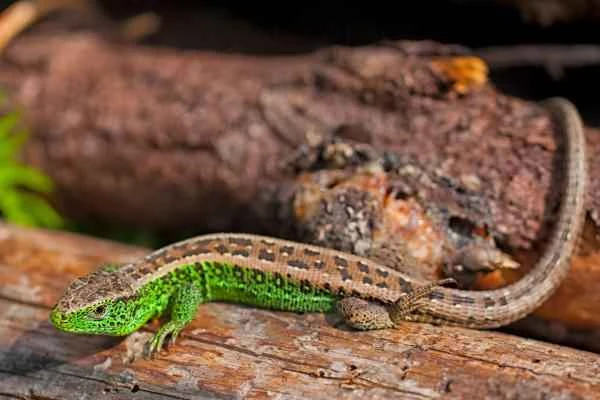
Widely distributed in Europe and Central Asia, commonly found in hills, thickets, grassy slopes, and parks. Males are green, while females are predominantly brown. Listed as an endangered species in Spain.
Green lizard (Lacerta viridis)
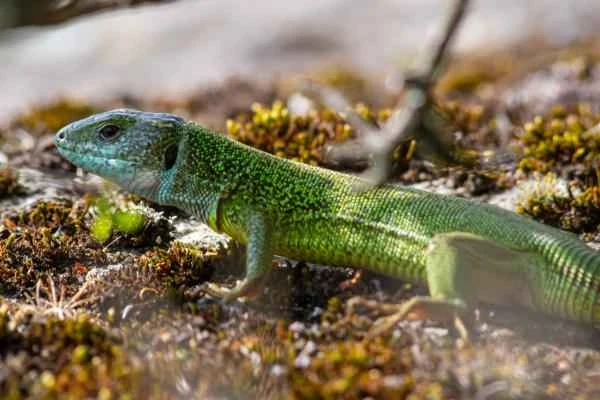
It is mainly distributed in forest edges, grasslands, and shrublands in Europe and Asia. Males have green backs with black spots, and their lower jaws turn blue in spring; females are bright green.
Western green lizard (Lacerta bilineata)
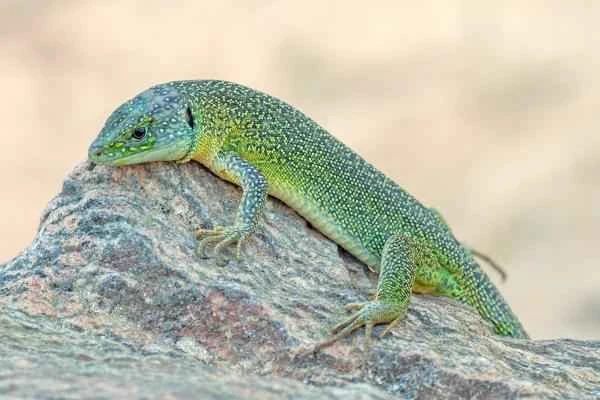
Once considered a subspecies of the green lizard, it is now a separate species. It is widely distributed in Europe and has even been introduced to the United States. Its tail often exceeds its body length, it is highly territorial, and primarily feeds on large insects.
Komodo dragon (Varanus komodoensis)
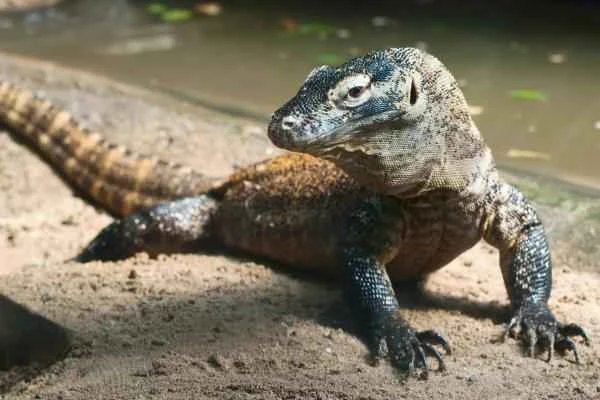
The world's largest lizard, found only on certain islands of Indonesia. It can reach 3 meters in length and weigh over 160 kilograms. A top predator, it can consume prey equal to 80% of its own body weight in a single meal. It has a powerful bite, and its salivary glands secrete anticoagulants and antihypertensive factors, accelerating blood loss and death in its prey.
Water monitor lizard (Varanus salvator)
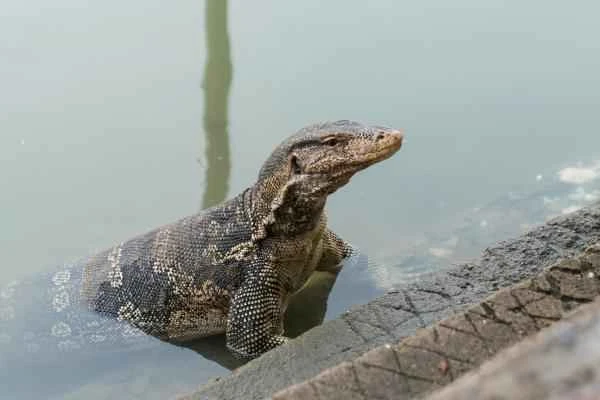
Second in size to the Komodo dragon, it is distributed in Southeast Asia and is a semi-aquatic lizard that inhabits wetland environments such as mangroves, swamps, rice paddies and irrigation canals.
Nile monitor lizard (Varanus niloticus)
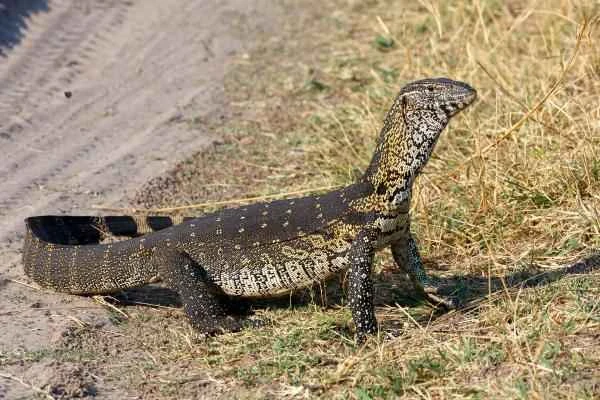
A large lizard widely distributed in Africa, with a grayish-brown body speckled with green spots, it is muscular, possesses a powerful jaw, and sharp claws. It is used for digging, hunting, and defense. It has invaded Florida, USA.
Common flying lizard (Draco sumatranus)
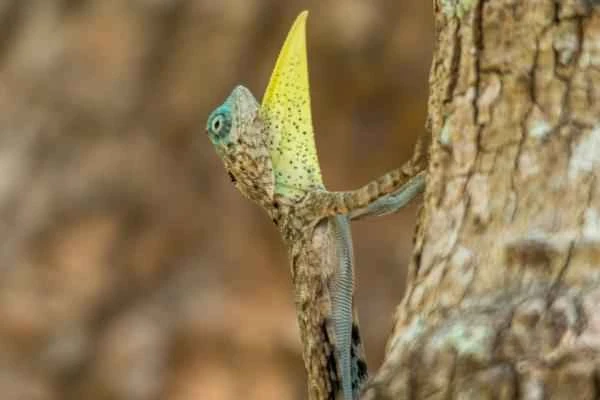
A small lizard endemic to Southeast Asia, it possesses a retractable membrane and elongated ribs , allowing it to glide among trees. Its body color is camouflaged, and it primarily preys on insects.
Desert Horned Lizard (Phrynosoma platyrhinos)
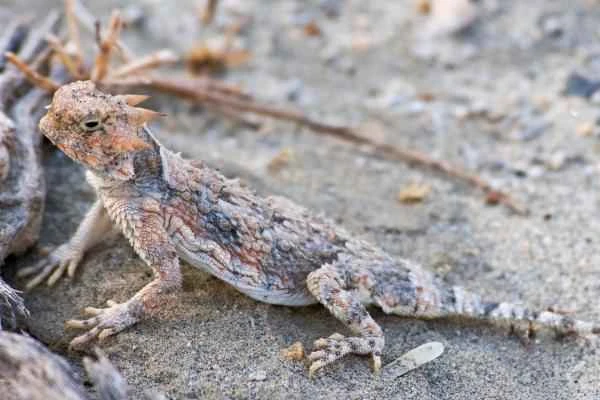
It is distributed in the desert regions of northern Mexico and the southwestern United States. Its back is covered with small spines, and its head has horn-like structures. It is adept at camouflage in the sand, exposing only its head to hunt or evade predators.
Collared lizard (Crotaphytus collaris)
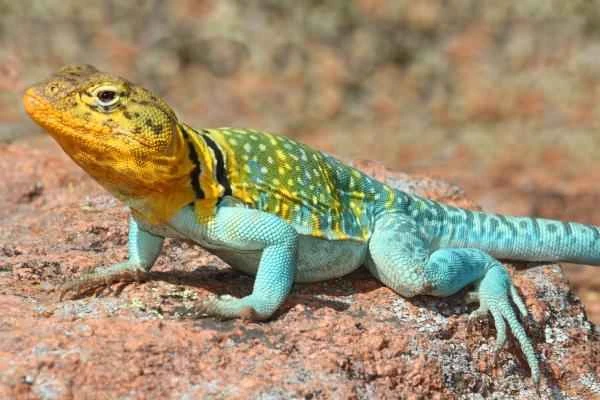
Found in the arid regions of the southern United States and northern Mexico. It has two distinct black rings around its neck. It is a swift and adept climber. Males are brightly colored, while females are lighter brown.
Timon lepidus (Spotted Lizard)
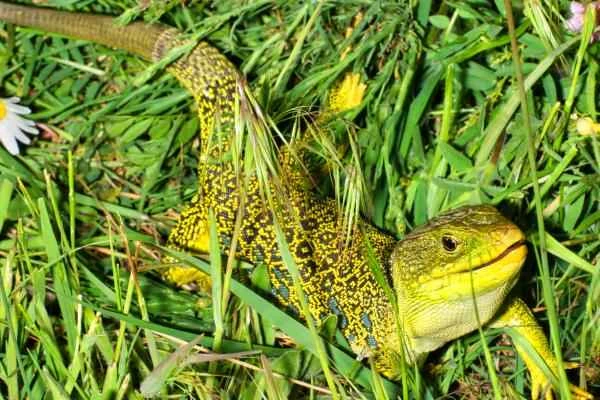
Native to southwestern Europe and North Africa, it is green with blue eye-like spots on its back. It is robust, with a broad head and sharp claws, and typically inhabits areas with low vegetation.
Beaded Poison Lizard (Heloderma horridum)
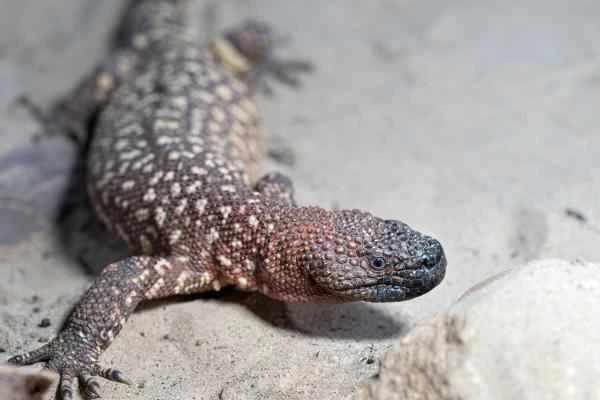
This is a venomous lizard found in the southwestern United States, Mexico, and Guatemala. It has a black and yellow mottled coat and a forked, elongated tongue. It is commonly found in broadleaf forests, savannas, and pine forests.
Calima chameleon (Anolis calimae)
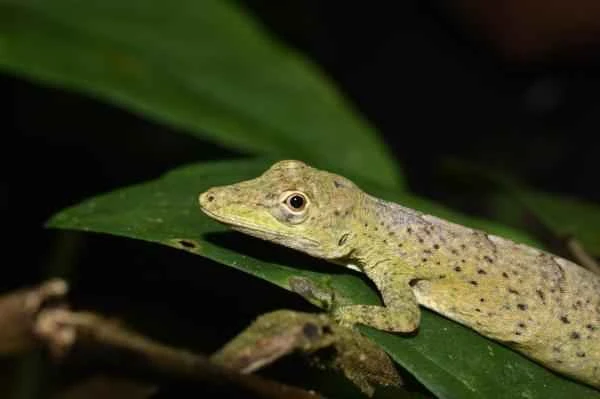
Endemic to Colombia, this species inhabits primary and secondary forests, is diurnal, and is mostly arboreal. It is small, greenish-yellow in color, and has grasping abilities in its limbs and tail.