The blue-footed booby (scientific name: *Sula nebouxii*), also known as the blue-footed gannet, blue-footed pied goby, or blue-footed seabird, is a seabird famous for its striking blue feet. This bird is not only unique in appearance, but its courtship behavior and lifestyle are also very interesting, making it one of the most watched bird species along the tropical Pacific coast and the Galapagos Islands. This article will provide a detailed introduction to the characteristics, distribution, diet, and breeding practices of the blue-footed booby, helping readers gain a comprehensive understanding of this remarkable seabird.
Key characteristics of the blue-footed booby
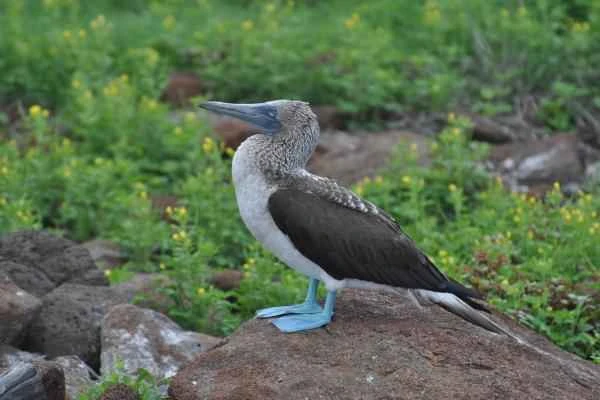
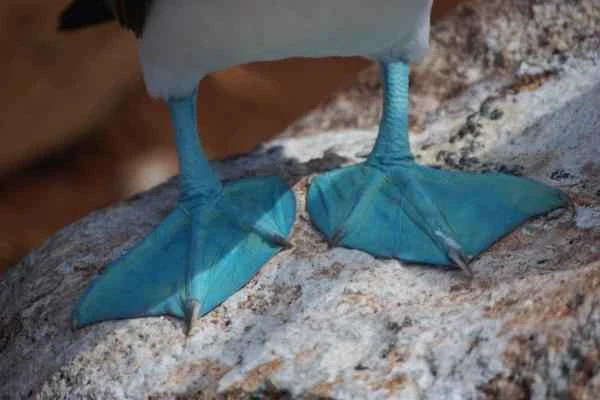
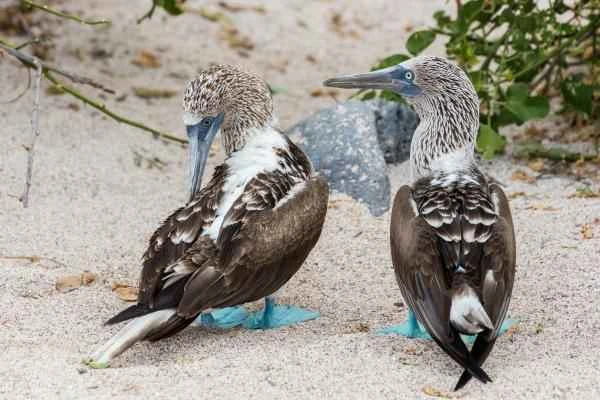
The most distinctive feature of the blue-footed booby is its blue feet, a color derived from its carotenoid-rich diet. They are relatively large, typically around 80 cm in length and with a wingspan of up to 90 cm. Their beaks and wings are relatively long, and they can weigh up to 1.5 kg. Females are slightly larger than males, exhibiting some degree of sexual dimorphism.
The body plumage is predominantly white, with a dark brown back speckled with white spots, and dark wings. Adult blue-footed boobies have distinctive light-colored stripes on their heads. Blue-footed boobies are docile and have low wariness of humans, which is one of the reasons why they were captured in large numbers during the early colonial period in the Americas.
Distribution and Habitat of Blue-footed Booby
Blue-footed boobies are mainly distributed in the tropical and subtropical regions along the eastern Pacific coast, including Mexico, the Galapagos Islands, the coast of Central America, and Peru. They are typical seabirds, spending most of their time at sea, only coming ashore in large numbers during the breeding season to form dense breeding colonies.
Isabelle National Park in Nayarit, Mexico, is an important breeding ground for blue-footed boobies, attracting thousands of birds to nest and lay eggs there each year. The Galapagos Islands are also famous for their blue-footed boobies and are one of the best destinations in the world for observing this bird species.
Dietary habits of blue-footed boobies
Blue-footed boobies primarily feed on fish, with a particular preference for sardines and anchovies. Their unique hunting method involves high-speed swooping down from the air to the water's surface to snatch their prey. Blue-footed boobies can enter the water directly from a height of 15 meters, using special air bladders to cushion pressure changes and thus pursue their prey.
Their nostrils have evolved to be closed, allowing them to breathe only through their mouths to prevent water from entering. They cannot synthesize carotenoids from their food and must accumulate them through ingestion, which is the direct reason for their bright blue feet. The brighter the blue of their feet, the better their health and the higher their reproductive success rate.
Breeding behavior of blue-footed boobies
The blue-footed booby is known for its complex courtship dance. The male actively displays its blue feet, accompanied by wing-spreading, singing, and head-nodding to attract the female. If attracted, the female responds with her feet and interacts with the male, eventually forming a pair.
The breeding season typically runs from November to July of the following year. They dig nests in the ground and surround them with guano to form a boundary. Each clutch contains 1 to 3 eggs, with an incubation period of about 40 days. Both parents participate in incubation and raising the chicks. The incubation time for chicks varies by about 4 days, resulting in a size hierarchy among the chicks. When food is scarce, larger chicks may crowd out or even kill their smaller siblings.
Blue-footed boobies have a long lifespan, averaging up to 20 years. Adult individuals typically return to their birthplace to breed, exhibiting strong breeding orientation and homing instincts.
Summarize
Blue-footed boobies attract attention not only for their appearance and courtship behavior but also for their vital role in tropical marine ecosystems. Their survival is closely linked to environmental health, making them an "indicator" species of marine ecological change. For more information on blue-footed boobies, seabirds, and marine ecology, please visit our website for more wildlife-related content.
Recommendations : Blue-footed Booby, Sula nebouxii, Blue-footed Booby characteristics, Blue-footed Booby distribution, Blue-footed Booby diet, Blue-footed Booby breeding, Tropical seabirds, Galapagos seabirds
References
Kaufman, K. (2005). *A Field Guide to the Birds of North America*. New York: Hillstar Publishing.
Institute of Ecology, National Autonomous University of Mexico (undated). "Reproductive Ecology of the Blue-footed Booby on Isla Isabel Island, Nayarit". Accessed at: http://web.ecologia.unam.mx/isla_isabel/proyecto.html