Hidden within aquatic ecosystems are many tiny animals invisible to the naked eye. Among them, copepods are an extremely important group of microscopic crustaceans, widely distributed in freshwater, marine, and saltwater environments worldwide. Copepods are not only numerous and diverse (over 21,000 species known), but also play a crucial role in the aquatic food chain. This article will systematically introduce you to the basic characteristics, classification, habitats, diet, reproductive methods, and ecological importance of copepods.
Characteristics of copepods
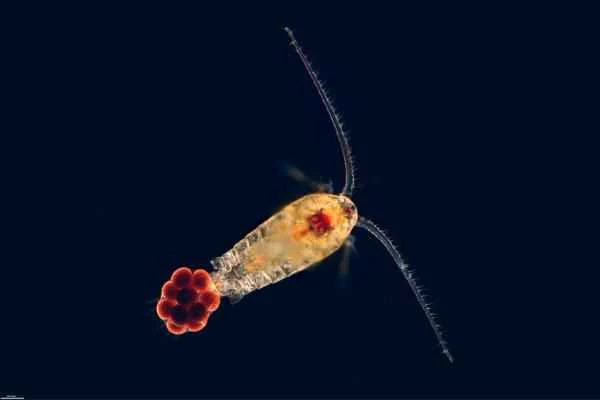
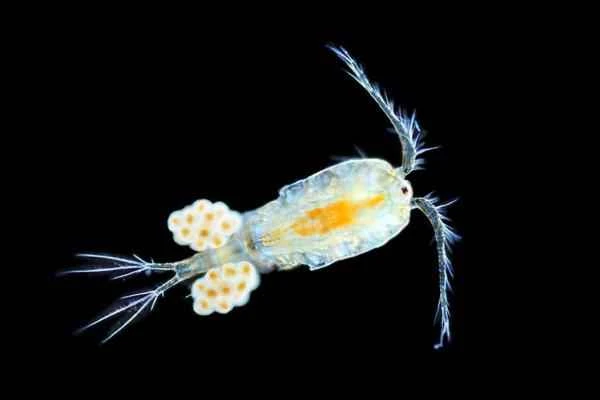
Although copepods belong to the class Crustacea, they differ significantly from common large crustaceans such as crabs and lobsters. They have teardrop-shaped or spindle-shaped bodies and are extremely small, generally 0.25-3 mm in length, requiring a microscope for observation. Common morphological characteristics include:
No carapace protection : Unlike many crustaceans, copepods do not have a hard carapace.
Two long tentacles : one pair is usually very well-developed, and some species rely on their long tentacles to swim.
Tail forking : There are two bristled forks at the end of the tail, which help maintain balance.
Multiple pairs of appendages : the appendages near the head are mainly used for feeding, while the abdominal appendages are mainly used for swimming.
Their body color is mostly transparent , but there are also variations such as red, blue, and green.
They are tiny in size and are typical microscopic animals in the water.
Classification and types of copepods
Copepods are a highly diverse group, and can be divided into several main categories based on their lifestyle, habitat, and physical characteristics:
Classified by lifestyle
Free-living type : The vast majority of copepods belong to this category and are among the most abundant zooplankton in water bodies.
Parasitic type : Some species specialize in parasitizing the bodies or surfaces of fish, shellfish, or other invertebrates.
Classified by habitat
Freshwater copepods : live in freshwater environments such as lakes, rivers, and ponds.
Marine copepods : widely distributed in all oceans, bays and coastal areas around the world.
Saltwater copepods : live in waters with large salinity variations, such as estuaries.
Classified by habitat
Planktonic (planktonic copepods): They float on the upper layer of water and are an important member of the zooplankton family.
Benthic type : Lives in the mud or among aquatic plants at the bottom of the water.
Semi-terrestrial or crevice habitat type : Some species can live in moist soil or rock crevices.
Common Copepod Categories and Characteristics
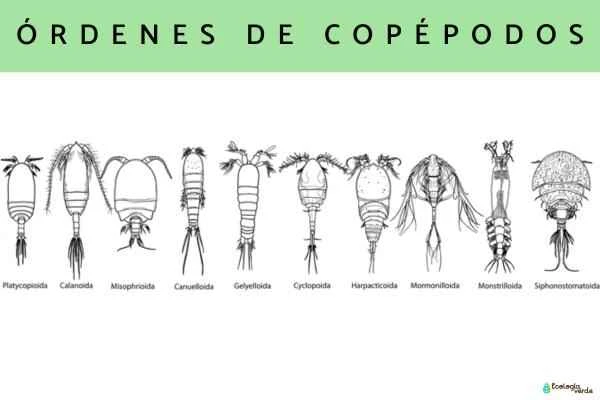
Calanoida (long-tentacleed animals) : with extremely long tentacles, mostly marine planktonic organisms.
Cyclopoida (Short-tentacleed species) : with relatively short antennae, distributed in both freshwater and seawater, including both free-living and parasitic species.
Harpacticoida (Ciliformes) : Short and stout in body, mostly benthic.
Siphonostomatoida (order Siphonostomidae) : Mostly parasitic, parasitizing fish, etc.
Monstrilloida, Poecilostomatoida, etc .: are all special habitats or parasitic types.
Distribution and Habitat of Copepods
Copepods are among the most widely distributed animals in the world. They can be found from the equator to the North and South Poles, from alpine lakes to the plant water sacs (such as pineapple troughs) of tropical rainforests. Their main habitats include:
Freshwater lakes, ponds, and rivers
Ocean and the surface, middle and deep sea
Estuary and saline environment
Polar waters, tropical and subtropical waters
Lakes, swamps, intertidal zones, rock crevices, and even stagnant water in areas with some vegetation (fitotelma)
Copepods constitute a very high proportion of marine zooplankton communities and are fundamental members in maintaining the ecological balance of aquatic bodies.
Diet of copepods
Copepods have diverse diets and can be divided into two main categories depending on the species:
Free-living copepods : Most feed primarily on tiny algae (phytoplankton) in the water, but some are carnivorous and prey on small animals. They create water currents using their tentacles and mouth appendages to capture planktonic particles.
Parasitic copepods : They parasitize hosts such as fish and shellfish, absorbing body fluids or feeding on tissues. Some are semi-symbiotic and pose less harm to their hosts.
Reproduction methods of copepods
Copepods have a complex reproductive process, exhibiting typical crustacean developmental stages:
Mating : The male uses specialized antennae to transfer spermatophores into the female's body.
Egg laying : Some species release fertilized eggs directly into the water, and many females carry the fertilized eggs and protect them until hatching.
Larval development : First, a stage called "nauplius" hatches, which has only a head and tail and no abdomen. After several molts, it gradually develops into an adult with complete body segments and appendages.
Ecological significance and application value of copepods
Copepods are crucial intermediaries in aquatic ecosystems, connecting primary producers (phytoplankton) with higher consumers (fish, whales, etc.). They include:
It is an important food source for many fish, crustacean larvae, whales, and other species.
Consuming large amounts of phytoplankton helps regulate algae levels and purify water.
It is widely used as a highly nutritious feed for fish fry in aquaculture.
Some parasitic species are also used as bioindicators for monitoring fish health.
Conclusion
Copepods are among the most abundant and crucial microscopic crustaceans on Earth. Understanding their ecological position, habits, and diversity not only contributes to scientific research but also benefits aquaculture and environmental protection. For more animal encyclopedia content, please visit our "Wildlife" section!
bibliography
Suárez, E., Velázquez, K., Ayon, M. (2021). Catalogue of copepods in temporary waters of Jalisco State (Crustaceans: Copepods: Calanoida and Cyclopoida). Mexico: El Colegio de la Frontera Sur.