The butterfly's life cycle has been vividly documented in numerous nature documentaries and photographs, showcasing one of the most wondrous life phenomena in nature. While the most familiar part is the process of " metamorphosis ," in reality, each stage of a butterfly's life, from beginning to end, involves unique physiological changes and marvelous details.
Different species of butterflies have varying lifespans, some lasting a year or even longer, while others are extremely short-lived, such as certain species that only live for one day (belonging to the order Ephemeroptera ).
This article will give you a comprehensive overview of the four main stages of a butterfly's life cycle—from egg to adult—as well as their characteristics, behaviors, and interesting facts at each stage, accompanied by vivid pictorial examples.
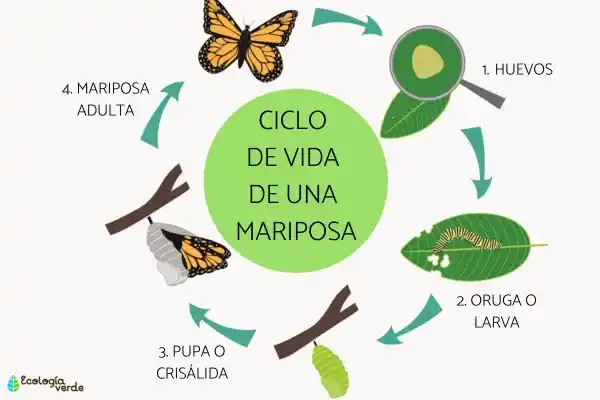
The four main stages of a butterfly's life cycle
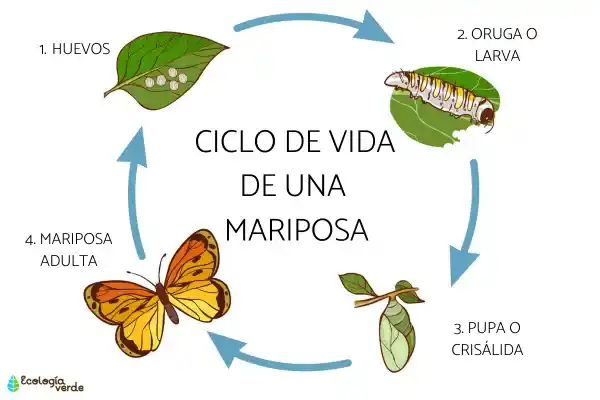
Butterflies are holometabolous insects, and their life cycle includes the following steps:
Egg period
Larval stage (caterpillar stage)
Pupal stage (phallus stage)
Adult stage (emergence and reproduction)
At each stage, the butterfly's morphology, diet, and lifestyle undergo tremendous changes.
Phase One: The Ovary Stage – The Beginning of Life
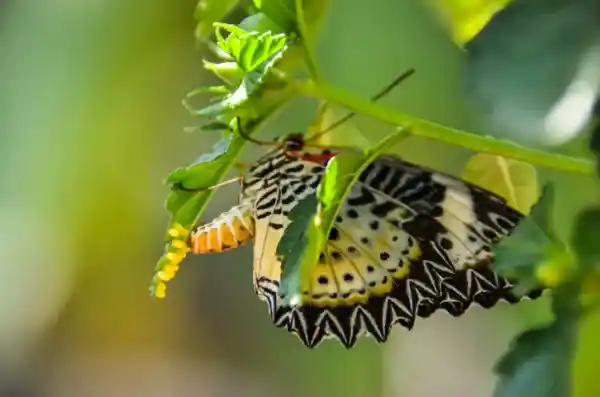
Like other oviparous animals, butterflies reproduce by laying eggs. Female butterflies usually lay their fertilized eggs on the undersides of leaves or in concealed places on plants to avoid being discovered by predators or damaged by severe weather.
The function of an egg : to provide nutrients for the embryo.
Hatching process : After the larvae have developed, they will crawl out from the tiny opening on the eggshell and immediately swallow the protein-rich eggshell to accumulate energy for themselves.
Number of eggs laid : A female butterfly can lay hundreds of eggs in her lifetime, but only a portion of them can successfully develop into adults.
Phase Two: Larval Stage – Frenzied Feeding and Growth
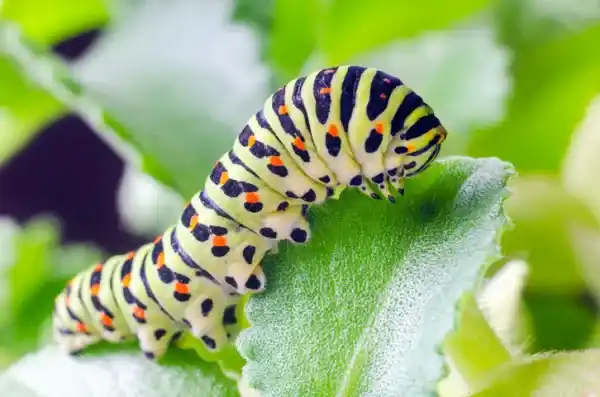
After hatching, butterfly larvae are called caterpillars . At this stage, their main task is— to eat!
Food : Mainly leaves, flowers, and buds, with the types varying depending on the butterfly species.
Molting : As the body grows, the larvae will molt multiple times (usually 4–5 times).
Special behavior : During the final molt, the larvae weave a web from their old skin to hang upside down under leaves or branches, with their bodies in a " J" shape . This is an important signal that they are about to enter the pupal stage.
Fun fact: Some well-known examples include the larvae of the silkworm (Bombyx mori) and the cabbage white butterfly (Pieris brassicae), which can appear in large numbers in fields and gardens in the spring.
Third stage: Pupae – Metamorphosis in stillness
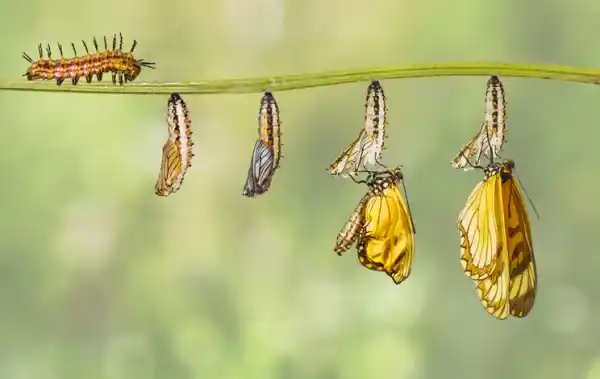
After the larvae are attached to the silk web and complete their final molt, they enter the pupal stage (also known as the "pupa" or "pupa shell" stage).
Appearance : The pupa appears motionless, without eyes or antennae, and its body is encased in a hard shell.
Internal changes : Dramatic physiological reorganization is taking place inside the pupa—the larval tissues are broken down and reconstructed into the organs of the adult, including wings, antennae, and mouthparts.
Time : The time required varies depending on the species. For example, the pupal stage of the monarch butterfly (Danaus plexippus) can last up to 7 days.
Fourth stage: Adult stage – Emergence and reproduction
When a butterfly has completed its development, it will forcefully break out of its pupa and emerge as an adult. The wings of a newly emerged butterfly are soft and wrinkled, and it needs to remain still for a period of time to allow body fluid (hemolymph) to fill the wing veins. The wings will gradually become flat and firm before it can fly.
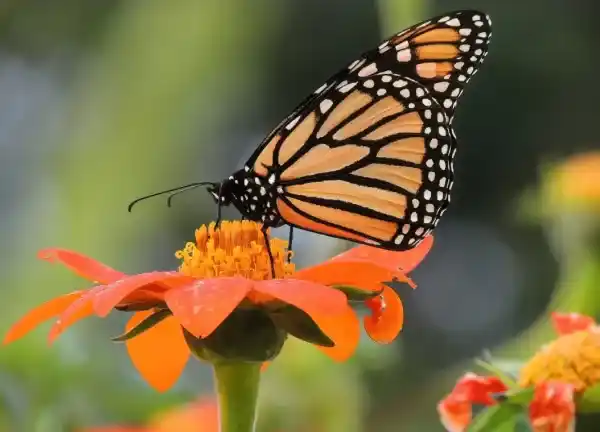
Feeding : Adult insects mainly feed on nectar, which they suck up using a long, curled proboscis ( proboscis tube or gnathus ).
Mission : In the adult stage, butterflies forage for food while searching for mates. After mating, the female butterfly lays a new generation of eggs, and the life cycle begins again.
Interesting extension
Butterflies and Ecology : Butterflies are not only pollinators of flowers, but also indicator species of ecological health.
Lifespan differences : The lifespan of adult insects varies greatly among different species, ranging from a few days to several months.
A migratory miracle : The transnational migration of monarch butterflies is one of the most spectacular phenomena in the animal kingdom.
bibliography
Arroyo, M. and Viñuela, E. (1991) Introduction to Entomology. Ediciones Mundi-Prensa, pp. 13-129.