As their name suggests, nocturnal birds are a type of bird that is active at night. In order to hunt and find prey in the dark, they have developed a series of amazing adaptations during evolution:
Silent flight – The special structure of their wings allows them to glide through the air almost silently, thus launching an attack when their prey is completely unaware.
Keen hearing and vision – even in dim environments, they can still accurately lock onto their targets.
Nocturnal birds are one of the most diverse bird groups in the world, distributed in almost all terrestrial ecosystems, from dense forests to wilderness. As soon as night falls, their figures and calls can be heard, adding vitality to the night.
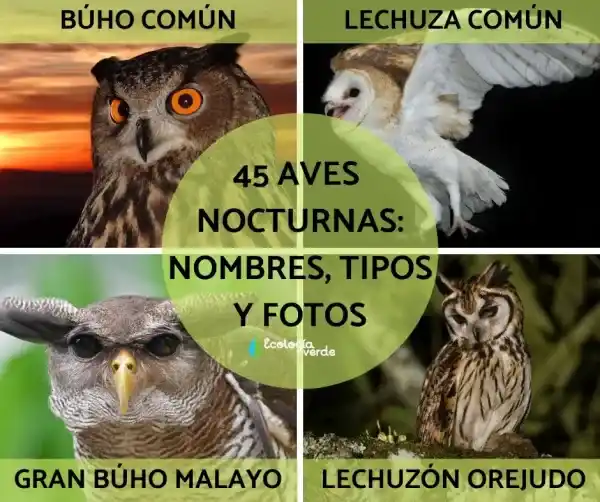
List of representative species of nocturnal birds
Besides the well-known eagle owl (Bubo bubo) and the common barn owl (Tyto alba), there are dozens of other widely distributed nocturnal birds of prey around the world. Below are 45 famous nocturnal birds and their scientific names:
Eagle Owl ( Bubo bubo )
American Eagle Owl ( Bubo virginianus )
Gray Eagle Owl ( Bubo cinerascens )
Cape Eagle Owl ( Bubo capensis )
Striped Eagle Owl ( Bubo shelleyi )
Bengal Eagle Owl ( Bubo bengalensis )
White-horned eagle owl ( Lophostrix cristata )
Spotted Owl ( Strix occidentalis )
Snowy Owl ( Bubo scandiacus )
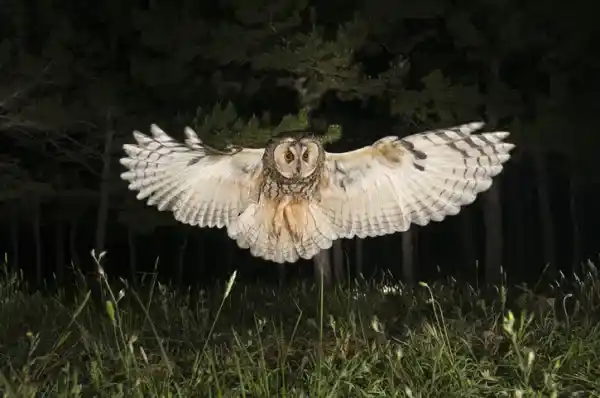
Long-eared Owl ( Asio otus )
Guinea Eagle Owl ( Bubo poensis )
Philippine Eagle Owl ( Bubo philippensis )
Desert Eagle Owl ( Bubo ascalaphus )
Moor Owl ( Asio capensis )
Magellanic Eagle Owl ( Bubo magellanicus )
Widman's Eagle Owl ( Bubo lacteus )
South American Giant Scops Owl ( Bubo virginianus nacurutu )
Barn Owl ( Tyto alba )
Short-eared Owl ( Asio flammeus )
Malayan Eagle Owl ( Bubo sumatranus )
Long-eared long-tailed owl ( Pseudoscops clamator )
Spectacled Owl ( Pulsatrix perspicillata )
Dark-eared Owl ( Asio stygius )
Eurasian Little Owl ( Athene noctua )
Costa Rican Little Owl ( Glaucidium costaricanum )
Brygyi's Little Owl ( Athene blewitti )
Pearl Owl ( Glaucidium perlatum )
Athene cunicularia
Jungle Owl ( Glaucidium radiatum )
Andean Little Owl ( Glaucidium jardinii )
Little Cactus Owl ( Micrathene whitneyi )
Little owl ( Xenoglaux loweryi )
Amazonian Little Owl ( Glaucidium hardyi )
Little Alpine Owl ( Glaucidium passerinum )
Cinnamon Little Owl ( Aegolius harrisii )
Northern Little Owl ( Aegolius funereus )
Red-breasted Owl ( Glaucidium tephronotum )
Chilean Little Owl ( Glaucidium nana )
Guatemalan shrike ( Megascops guatemalae )
Pacific Scops Owl ( Megascops cooperi )
Gray Scops Owl ( Megascops choliba )
Sparrowhawk-owl ( Surnia ulula )
Brown Owl ( Strix virgata )
Himalayan Owl ( Strix nivicolum )
California Owl ( Strix occidentalis )
Classification
All nocturnal birds of prey belong to the order Strigiformes , an order known for its highly specialized hunting abilities in the bird world.
Exceptional hearing – asymmetrical ear canal position allows for precise location of prey.
Silent flight – The wing edges are covered with special downy hairs that reduce the noise of air friction.
They swallow their prey whole —after eating, they vomit up indigestible substances such as hair and bones, forming "eggs" (egagrópila).
Category hierarchy:
Domain: Eukaryotes
Kingdom: Animalia
Phylum: Chordata
Class: Aves
Order: Strigiformes
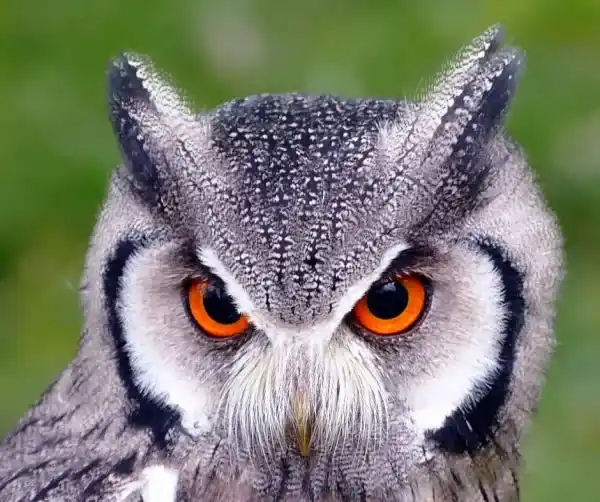
Two major families
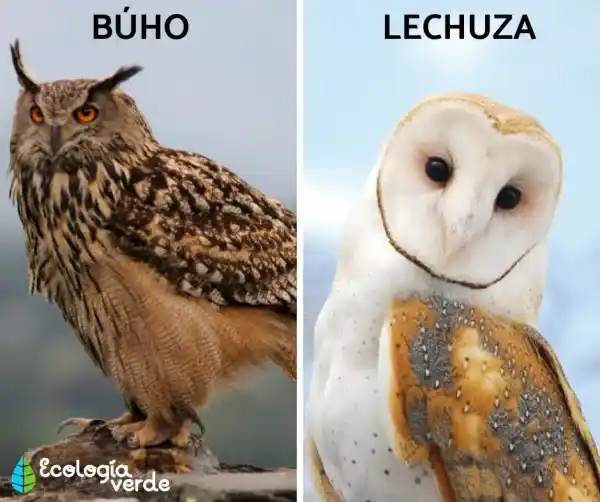
Strigidae (family Strigidae)
This includes eagle owls, owls, little owls, scops owls, and quails.
They are widely distributed, found almost all over the world except for most of Antarctica, Greenland, and some remote islands.
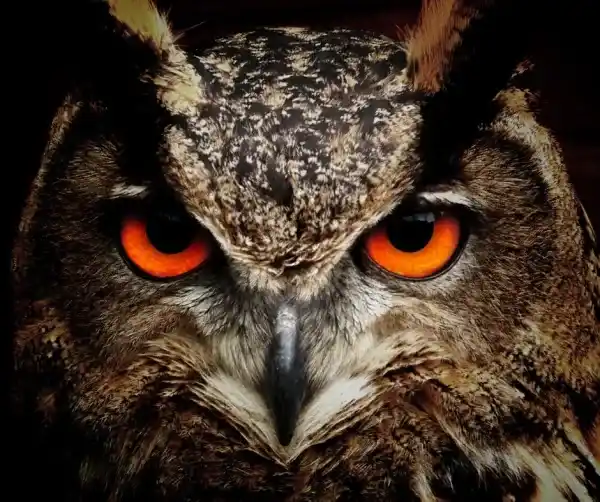
Features: round facet, neck that can rotate 270°, short beak, and false ear tufts.
Tytonidae
This includes the genera * Tyto * and * Phodilus *.
Typical characteristics: heart-shaped face, large head, medium body size.
Common species: Barn Owl ( Tyto alba ), Asian Horned Barn Owl ( Phodilus badius ).
Most of them do not migrate, live alone or in pairs, and are distributed in most areas except for polar regions and extreme deserts.
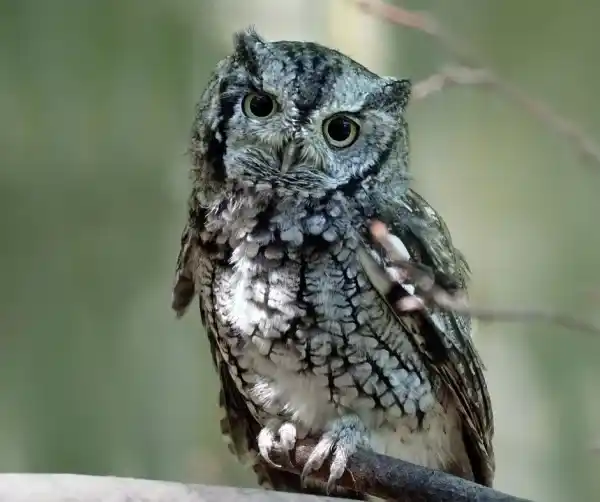
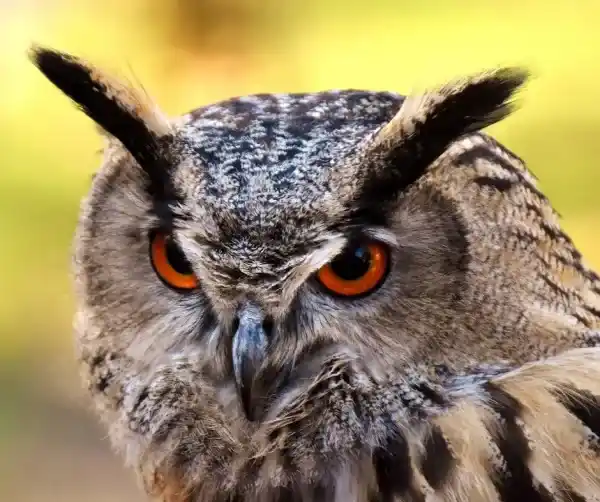
Ecological and behavioral characteristics
Nocturnal birds primarily prey on small mammals (such as rodents), small birds, and insects.
By silently gliding and ambushing their prey, they are important "biological rodent exterminators" in forests and farmlands.
Most species are solitary and territorial, using calls to declare their territory during the breeding season.
Nocturnal Birds Image Gallery
Below is a gallery of images of nocturnal birds. Here you can see the amazing nocturnal raptor species mentioned in the first section, in the same order as in the first section.
References
Rivera, E. et al., (2012) Distribution and abundance of nocturnal raptors (ptarmigans) in the El Ocote Rainforest Biosphere Reserve, Chiapas, Mexico. Mexican Journal of Biodiversity, Vol. 83 (3).
Freile, J., Castro, D. and Varela, S. (2012) Knowledge, distribution and conservation status of nocturnal raptors in Ecuador. *Neotropical Ornithology*, Vol. 23, pp. 235-244.