Where did humans come from? This is an eternal question that humanity has grappled with in its process of self-discovery. It's not just a question pondered by philosophers; paleontologists and archaeologists are also striving to find answers through fossils and other means. The idea that modern human ancestors "left Africa" is based on numerous ancient human fossils and genetic discoveries in Africa. However, how human ancestors migrated and evolved after leaving Africa remains a challenge. A team led by Academician Zhang Yaping of the Kunming Institute of Zoology, Chinese Academy of Sciences, has found the answer in the genes of various ethnic groups across Asia.
The mother's mitochondrial DNA is passed down from generation to generation.
Tracing back to events in the distant past seems to be a capability possessed only by archaeology and geology. Both disciplines excavate fossil remains buried underground and then use various methods to identify and infer their age and characteristics, thereby drawing certain conclusions.
So how do geneticists search for clues from ancient times? From the perspective of life's structure, every living organism is composed of countless cells, each containing capsule-shaped mitochondria, with the number ranging from 1,000 to 10,000. Mitochondria provide energy for cellular activities, hence their nickname "cellular powerhouses." Besides participating in processes such as cell differentiation, cellular signaling, and apoptosis, mitochondria also possess their own genetic material and genetic system.
Within each mitochondrial, there are approximately 2 to 10 sets of mitochondrial DNA. In animals, the mitochondrial DNA in the fertilized egg mainly comes from the mother; in plants, there is slight variation, but it also mainly comes from the mother; fungi originate from both parents. Therefore, by studying the mitochondrial DNA in humans, it is possible to trace whether these individuals share a common "distant grandmother." This is precisely the method used by Academician Zhang Yaping's research group.
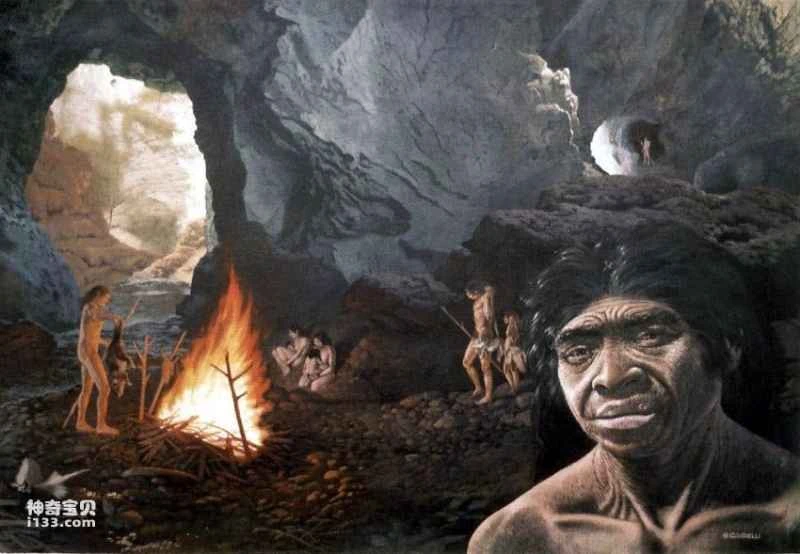
Reconstruction of Peking Man's daily life
Yuanmou Man and Peking Man are not related to modern humans.
This research project on the evolution of Asian populations has been ongoing for many years. The research team, led by Academician Zhang Yaping, verified over 6,000 samples and discovered that the mitochondrial DNA in these samples all traced back to Africa. No ancient humans like Yuanmou Man or Peking Man from Zhoukoudian were found to have contributed to modern Chinese populations. Modern Chinese people all have a very close African ancestor. So why didn't the genes of Peking Man, Yuanmou Man, and other ancient humans pass down? Some studies suggest that the harsh climatic conditions of the Ice Age may have been a significant cause of the extinction of these ancient humans.
So how did the ancestral group of contemporary Chinese people arrive in East Asia? Academician Zhang Yaping's research team discovered that the ancestral group came from East Africa to West Asia, then migrated rapidly along the coastline of southern Asia, passed through the South Asian subcontinent, and entered East Asia from Southeast Asia.
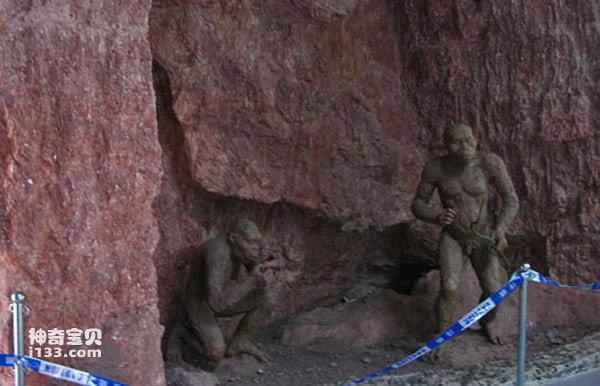
Reconstruction of Yuanmou Man
When did humans first migrate to the Qinghai-Tibet Plateau?
"When did humans first successfully settle on the Qinghai-Tibet Plateau?" This is a question that has been hotly debated in the fields of archaeology, history, and genetics. The Qinghai-Tibet Plateau, known as the "Roof of the World," has a harsh natural environment, and it is astonishing that humans could survive in such an environment.
Academician Zhang Yaping's research team analyzed 680 Tibetan population samples from Qinghai, Tibet, Sichuan, Yunnan, and Gansu. The results showed that approximately 98% of the maternal genetic components of modern Tibetans can be traced back to northern Chinese populations that migrated to the Qinghai-Tibet Plateau since the Neolithic period. Simultaneously, the study also discovered a unique new basal component—haplotype group M16. Unlike the maternal genetic components originating from northern Chinese populations, group M16 directly differentiated from the Eurasian dominant group M and is almost exclusively observed in Tibetan populations. The most reasonable explanation for this result is that group M16 likely represents the maternal genetic components that have continued to this day from modern human ancestors who settled on the Qinghai-Tibet Plateau during the Late Paleolithic period.
Meanwhile, near Lhasa in the heart of the Qinghai-Tibet Plateau, there is a Paleolithic site with human handprints and footprints. The estimated age of this site (20,600 to 21,700 years ago) is very close to the age of the M16 group, which also supports the above view to some extent.
To adapt to the harsh environment of the Qinghai-Tibet Plateau, the Tibetan people have evolved special abilities to overcome altitude sickness. Subsequent studies by multiple research teams both domestically and internationally have shown that two genes (EPAS1 and EGLN1) in the Tibetan population can regulate the production of heme in the blood under hypoxic conditions, reducing the likelihood of various altitude-related illnesses.