Animals typically have a tail, but the shape and size of the tail vary greatly from species to species, exhibiting a wide range of characteristics such as length, thickness, and color. Are you curious about the animals with the longest tails in the world? Well, they are incredibly diverse! These include species such as the Barosaurus, Diplodocus, Long-tailed Chicken, Shallow-water Thresher Shark, Reeves's Pheasant, Peacock, Red Kangaroo, Indian Gray Langur, Guizhou Golden Monkey, and Long Island Long-tailed Civet. Of course, you might not know all about the tail lengths of these species. Come and learn about them with us; you might discover some surprises!
1. Baloron (20 meters)
Balosaurus is believed to be a herbivorous sauropod dinosaur weighing approximately 40 tons, and its most distinctive feature was its extremely long tail. In fact, among all the dinosaurs discovered so far, Balosaurus has the longest tail, reaching over 20 meters. This tail was composed of 82 bones, and Balosaurus used its exceptionally long tail to maintain balance on its 9-meter-long neck.
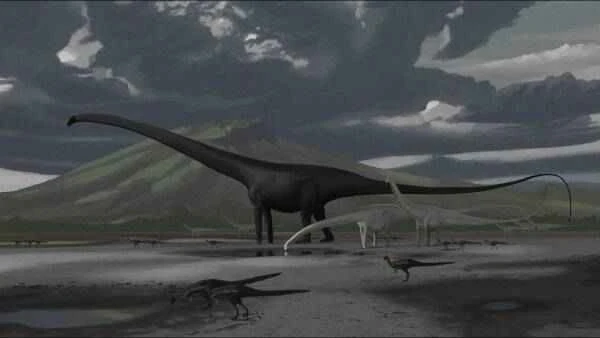
In addition, the Balorosaurus's tail can also be used as a defensive weapon, striking any enemy that attacks it like a whip. Because of its extremely long tail, it has a longer attack range when attacking enemies, and can also be used to defend against any potential attacks.
2. Liang Long (14 meters)

Diplodocus was an extremely large dinosaur that lived in western North America during the Late Jurassic period, dating back 150 to 147 million years. Its tail could reach lengths of up to 14 meters, with some individuals exceeding 30 meters in length and weighing approximately 10 tons. Diplodocus is one of the most easily identifiable dinosaurs; its whip-like tail helped it defend itself against predators and even drive away other small animals in its path. One can imagine the force of its tail lashing out as it fed, a force not to be underestimated. Furthermore, its tail also helped maintain balance, making it more stable when walking on steep terrain.
3. Long-tailed chicken (6-7 meters)
The long-tailed chicken is a breed of poultry primarily valued for its ornamental qualities, bred through artificial hybridization. These chickens are known for their astonishingly long tail feathers, typically reaching 6 to 7 meters in length. The longest recorded long-tailed chicken, bred in 1974, had a tail feather length of an astonishing 12.5 meters. If this chicken were standing on the balcony of a four-story building, its tail feathers would even reach the ground, making it the bird with the longest feathers in the world.
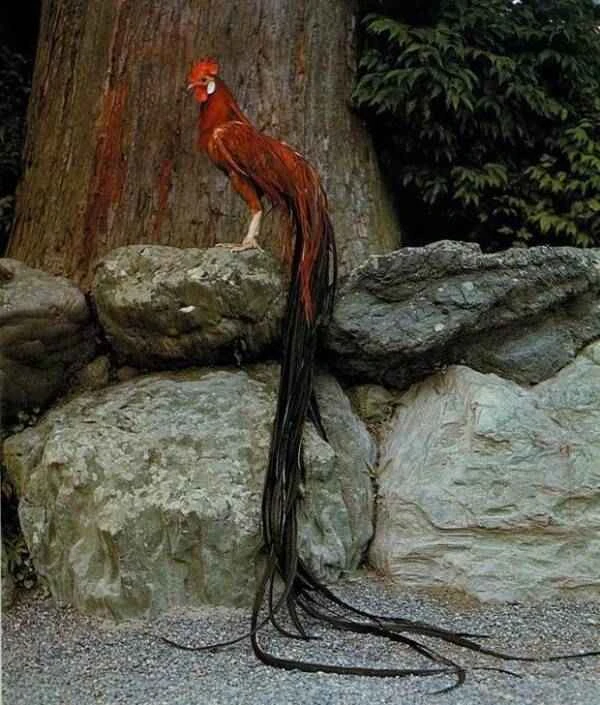
The Long-tailed Chicken is renowned for its exceptional ornamental value, commanding high prices at auctions and ranking among the top ornamental poultry breeds internationally. Its long, elegant tail feathers further enhance its visual appeal, making it a captivating attraction for visitors.
4. Shallow-water thresher shark (4.5 meters)

The thresher shark is a large, carnivorous shark that lives in the open ocean. It primarily feeds on non-fish, flying fish, and pelagic squid, and has a lifespan of approximately 16 years. Shallow-water thresher sharks can reach lengths of up to 3 meters, with their tails being particularly elongated, exceeding 1.5 times the combined length of their head and torso, or over 4.5 meters. They use the tip of their extremely long tail fin to stun prey, making hunting easier.
5. Reeves's Pheasant (1.2-2 meters)
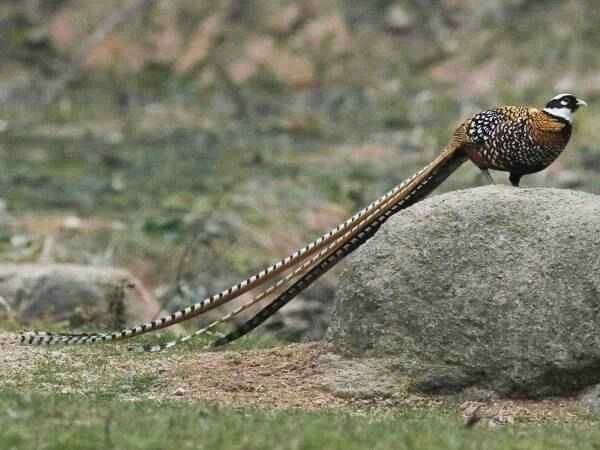
The Reeves's Pheasant is a bird species endemic to my country. Due to its scarcity, it is listed as a Class II protected animal in China. There are four species of Reeves's Pheasant: the Black-crowned Reeves's Pheasant, the White-crowned Reeves's Pheasant, the Black-necked Reeves's Pheasant, and the White-necked Reeves's Pheasant. The most common is the White-crowned Reeves's Pheasant, also known as the "Long-tailed Wild Chicken" or "Ground Chicken." They resemble pheasants in shape, but their tail feathers are extremely long. The male's tail feathers range from approximately 1.2 to 2.0 meters in length, and their plumage is exceptionally vibrant. The two longest tail feathers of the male are often chosen as decorations on the helmets of martial arts actors in Peking Opera, enriching the performance and artistic effect.
6. Peacock (1.5 meters)
Peacocks are a group of birds comprising two genera and three species. The genus *Peacock* includes two distinct species, both exceeding 2 meters in length, with their tail feathers reaching approximately 1.5 meters in length, making them the largest birds in the order Galliformes. The peacock's tail feathers are primarily composed of the upper tail coverts, which are exceptionally long and feature iridescent eye rings at the tips, surrounded by blue and bronze hues.
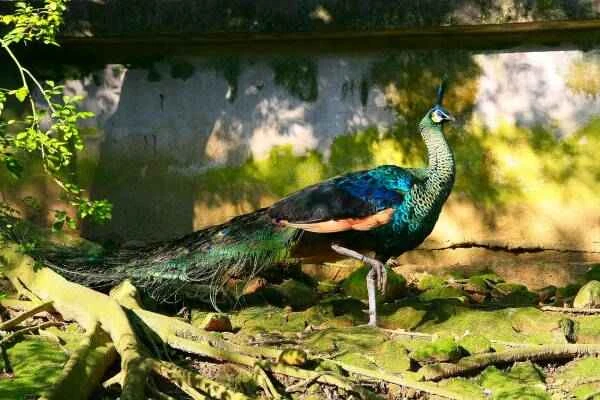
During courtship displays, the male peacock raises the tail section beneath its tail feathers, extending the tail feathers upwards and forwards. At the climax of the performance, the male peacock's tail feathers tremble, shimmer with a captivating light, and produce a clattering sound.
7. Red Kangaroo (1.2-1.3 meters)
The red kangaroo, also known as the giant red kangaroo, is the largest kangaroo in the world. Resembling a mouse, it is not actually related to rats. Its fur is reddish-brown, and it measures approximately 130 to 150 centimeters in body length, 120 to 130 centimeters in tail length, and weighs between 70 and 90 kilograms. This adorable animal has a unique and attractive appearance, adapted to a hopping lifestyle. The red kangaroo's forelimbs are short and slender, used for grasping food, while its hind limbs are powerful, with fused toes, allowing it to jump up to 5 meters in a single leap, reaching speeds of 40 to 65 kilometers per hour.
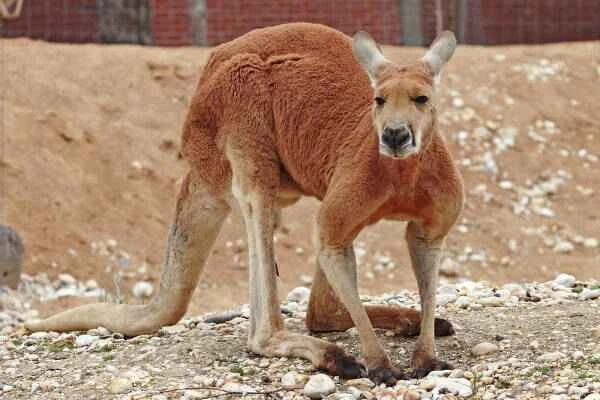
Red kangaroos also have very long tails, which not only support their bodies when they are perched, but also serve as a balancing organ when they jump, allowing them to flexibly control their bodies and maintain stability.
8. Indian gray langur (1 meter)
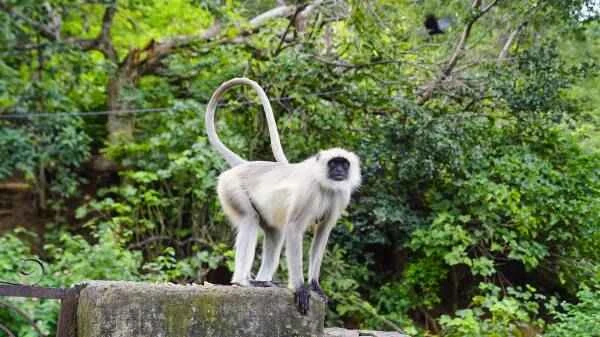
The Indian gray langur is slender, measuring approximately 58.5 to 64 centimeters in length and weighing between 9.9 and 13 kilograms, with a tail that can reach over 100 centimeters in length. This monkey is named for its prominent cheek and eyebrow hairs and its long body or tail. Inhabiting tropical or subtropical forests, the Indian gray langur primarily feeds on leaves. Its very long tail is adapted for arboreal life, allowing it to be active during the day and roosting in trees at night. It also exhibits seasonal vertical migration.
9. Guizhou Golden Monkey (0.8-0.9 meters)
The Guizhou golden snub-nosed monkey is a species of monkey that measures approximately 60 to 73 centimeters in body length, 80 to 90 centimeters in tail length, and weighs 13 to 16 kilograms. In its native habitat, it is often called the "cow-tailed monkey" because its long, slender tail closely resembles that of a cow. Compared to the Sichuan golden snub-nosed monkey, the Guizhou golden snub-nosed monkey has shorter fur, less prominent back hair, and a sparser hair density. Its exposed light blue facial skin is also less vibrant than that of the Sichuan golden snub-nosed monkey.
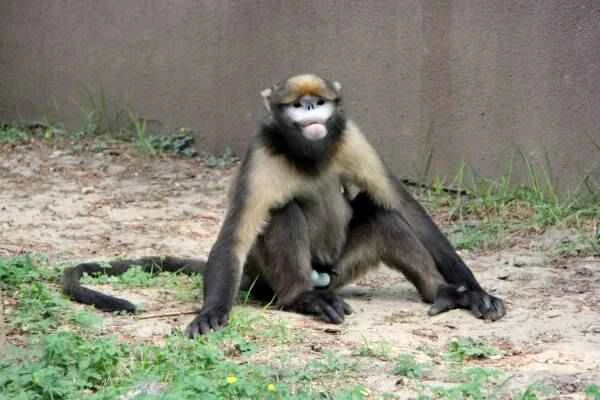
The Guizhou golden monkey is primarily arboreal, often living in groups, and exhibits both splitting and regrouping behavior depending on the season. They typically inhabit forests, where dense arbor environments play a crucial role in their activity and survival.
10. Long Island Longtail Civet (0.7-0.9 meters)

The Long Island raccoon is one of the world's most endangered species. Male Long Island raccoons measure 75 to 80 centimeters in body length, with a tail length of 70 to 90 centimeters, and weigh approximately 6 to 10 kilograms. Females measure 65 to 70 centimeters in body length, with a tail almost the same length as the males, and weigh approximately 5 to 7 kilograms. Long Island raccoons live in predominantly arboreal habitats and are highly agile. They can leap from tree to tree, making them one of the most agile animals in Madagascar.

The Long Island leopard looks and behaves very much like a cat, and some of its features are also similar to those of a clouded leopard. They live in Madagascar and face threats from habitat destruction and hunting by humans, leading to a continuous decline in their numbers.
This list of the top ten animals with the longest tails is primarily based on the longest known tail lengths of each animal, and also takes into account relevant online rankings/lists. This list is for reference only and hopefully will be helpful in finding out which animal has the longest tail. If you have any questions, please feel free to comment/criticize at the end.