The ostrich (genus *Struthio*) belongs to the order Struthioniformes and the family Struthionidae. It is the largest living bird . Adults can reach a height of 2.5–2.8 meters , and males typically weigh 100–145 kilograms . Although flightless, it can run at speeds of approximately 64 kilometers per hour across open grasslands thanks to its powerful hind limbs . Its native distribution is mainly in Africa , particularly in tropical and subtropical savannas and semi-desert areas. Its diet consists primarily of herbs, seeds, tender leaves, and fruits , supplemented by insects and small vertebrates.
I. Main characteristics of ostriches
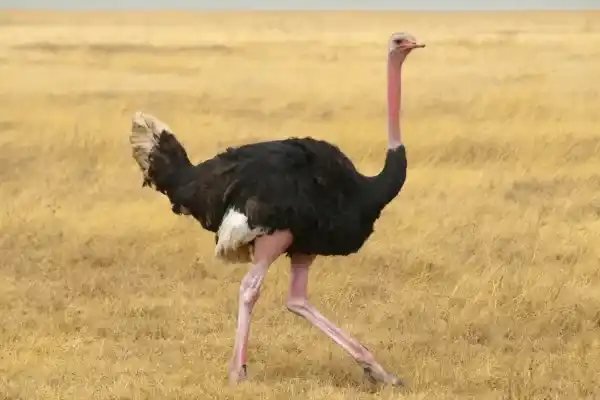
Size and speed : Males typically weigh 100–145 kg ; males are usually 2.5–2.8 m tall. They can run at speeds up to about 64 km/h , with a stride of up to 5 meters . They have excellent endurance and are adapted to long-distance travel and rapid escape.
Key features of the form :
Extremely long neck and well-developed hind limbs , bare and featherless below the calves, with thick muscle bundles;
Each foot has two toes (the outermost toe is vestigial), unlike most birds which have three or four toes. This adaptation helps with high-speed running and cushioning the landing.
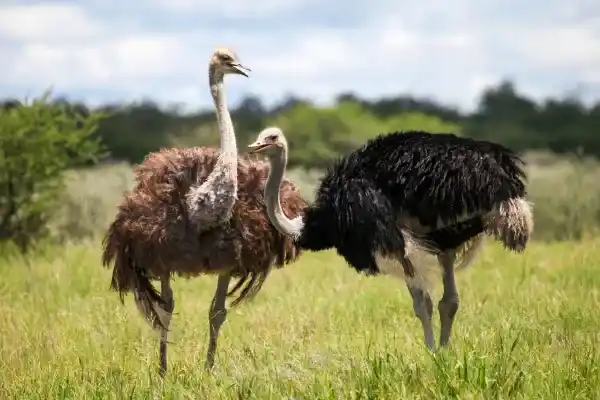
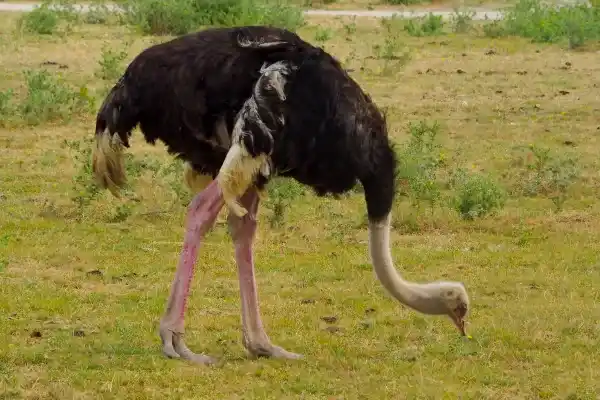
The male bird is predominantly black , with white feathers on its wings and tail; the female bird is more brownish-gray , which helps it to hide in the grassland.
Temperature and physiological regulation :
Make good use of wings to stabilize the body , turn, and stop while running at high speed;
The body regulates heat dissipation and insulation by opening or covering the feathers on its sides ;
It has a high drought resistance , and some of its water comes from plant tissues and metabolic water.
Behavior and defense : When threatened, it often chooses to lie down and camouflage or escape at high speed ; when close, it can defend with powerful front kicks and sharp claws, which is potentially dangerous.
Sensory advantages : Possesses one of the largest eyes among terrestrial vertebrates , with a wide field of vision and strong long-distance alertness.
II. Classification and Main Types
There are currently two main extant species of the genus *Struthio* :
Common ostrich (Struthio camelus ) (including several geographical subspecies/types, with slight differences in neck and body plumage color);
Somali ostrich (Struthio molybdophanes ) has a distinctive bluish-grey bare neck and tarsal areas and is found in the Horn of Africa region.
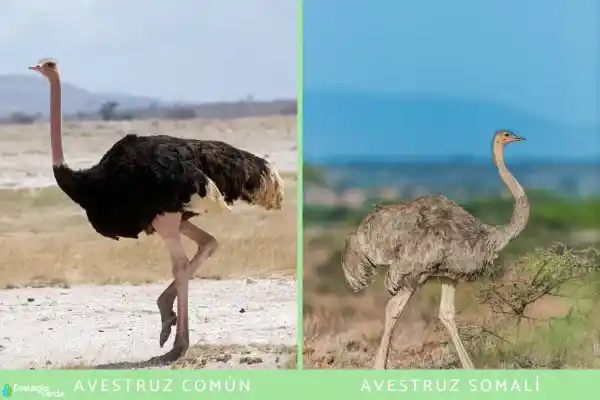
Note: Ostriches have a history of distribution in North Africa and West Asia, but some ancient subspecies or regional types have declined or disappeared.
III. Distribution and Habitat
Core distribution : savannahs, semi-deserts, shrub grasslands, and open plains of the African continent. These terrains offer good visibility and sparse vegetation, making it easy for ostriches to spot predators (such as lions, leopards, and hyenas) from a distance and take precautions in advance.
Group structure and movement :
Outside of the breeding season , small or loose groups can be seen, often moving alongside large herbivores such as zebras and wildebeest .
These "grassland engineers" turn over the soil , drive away insects , and enhance vigilance , creating a mutually beneficial synergistic effect .
Historical distribution changes : There were ethnic groups in West Asia and the Arabian Peninsula in the early days, but with the increase of hunting, land use changes and disturbances , the original distribution has shrunk significantly.
IV. Dietary Characteristics and Digestive Adaptations
Their diet consists mainly of plants : grass, seeds, tender leaves, buds, and fruits .
Facultative omnivorous : Opportunistically feeds on insects, small reptiles , or animal carcasses , but in a relatively small proportion;
Digestive characteristics : Toothless, relies on the gizzard for mechanical grinding; frequently ingests small stones (gastroliths) to help break down fibers and seed coats;
Water and drought resistance : It can reduce the frequency of direct drinking water by using high water content plants and metabolic water, and adapt to seasonal drought environments.
V. Breeding and Brooding
Sexual maturity : around 2–4 years , with females typically maturing slightly earlier than males.
Reproduction strategy :
The male bird establishes and defends a small territory and displays courtship behavior (wing flapping, neck swaying, crouching and patting the ground, etc.).
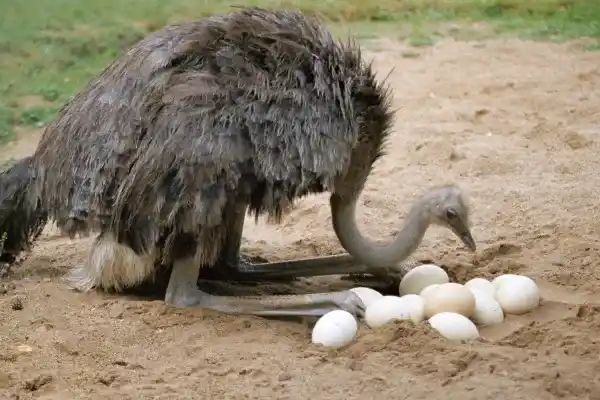
The male bird digs a shallow, disc-shaped nest pit on the ground, forming a **"shared nest" ; multiple female birds lay their eggs together in the same nest location **.
Egg laying and hatching :
A single female can lay about 7-10 eggs per nest, and a total of 20-50 eggs can be laid in a "group nest" .
The incubation period is approximately 39–42 days : the female bird is mainly responsible for incubating the eggs during the day , while the male bird mainly incubates the eggs at night by hiding behind his dark plumage.
Chicks and survival rate : They grow rapidly after hatching, but early predation and climate-related mortality are high. Survival rate is closely related to habitat quality and predator pressure .
VI. Threats and Conservation Key Points
Habitat loss and fragmentation : Agricultural expansion, road and settlement construction have reduced continuous open grasslands .
Hunting and utilization : Hunting for meat, leather and feathers can cause population decline in local areas.
Climate change : Changes in rainfall patterns and drought frequency affect herbaceous plant regeneration and water availability .
Factors contributing to reproductive failure include: high predation rates of eggs and chicks (jackals, jackals, birds of prey, etc.), human disturbance, and threats from dogs.
Conservation recommendations (practical actions for readers): Support grassland reserves and sustainable animal husbandry , refuse wildlife feather products of unknown origin, and pay attention to community co-management and grassland ecological restoration projects.
VII. Popular Science Facts and Common Misconceptions
"Largest bird egg" : Ostrich eggs are the largest living bird eggs, with a volume equivalent to about 24 chicken eggs .
The idea of "burying one's head in the sand" is a misconception : the actual behavior is to lie down and lower one's body to reduce exposure. At the same time, one will lower their head when checking or turning over the eggs in the nest , which is then misunderstood as "burying one's head".
Large eyes : advantageous for long-range surveillance and adaptable to "first come, first served" tactics in open terrain.
Economic history of use : Ostrich skin and feathers have been used in North Africa and the Middle East for thousands of years; modern standardized farming has become an important source of leather and feather ornaments, and should be strictly distinguished from poaching in the wild .
Safety Reminder : Adult male birds become more aggressive during the breeding season. There is a risk of taking photos or feeding them at close range . Visitors should adhere to professional husbandry practices and maintain safe distances .
VIII. Quick Parameter Table
Scientific name : Struthio camelus (common ostrich), Struthio molybdophanes (Somali ostrich)
Body length/height : Males typically reach 2.5–2.8 m
Weight : Males typically weigh 100–145 kg
Running speed : up to approximately 64 km/h
Number of toes : 2 toes per foot (adapted for high-speed running)
Diet : Primarily herbivorous, supplemented with insects and small animals.
Nest type : shallow ground nest, often shared nest
Incubation period : approximately 39–42 days
Distribution : African grasslands—semi-deserts—shrub plains
References
Animal Diversity Network. (2024). Ostrich (Common Ostrich). University of Michigan Museum of Zoology. https://animaldiversity.org/accounts/Struthio_camelus/
Kenya Wildlife Park. (2023). Fun facts about ostriches. https://www.kenyawildparks.com/fun-facts-about-the-ostrich/
PBS Nature Channel. (2023). Ostrich overview. https://www.pbs.org/wnet/nature/blog/ostrich-fact-sheet/
PubMed. (2002). Ostrich colony nesting and egg selection. https://pubmed.ncbi.nlm.nih.gov/12492891/
World Animal Protection. (2024). Ostrich Facts and Welfare Issues. https://www.worldanimalprotection.org/latest/blogs/ostrich-facts/