When hyenas are mentioned, many people think of them as "wild dogs on the African savanna" because their appearance does resemble that of canines: long limbs, a relatively long muzzle, and agile movements. However, strictly speaking, hyenas do not belong to the canine family; they have their own independent family— Hyaenidae . The reason they look like dogs is mainly a result of convergent evolution : animals of different lineages living in similar environments evolve similar body shapes and functional structures.
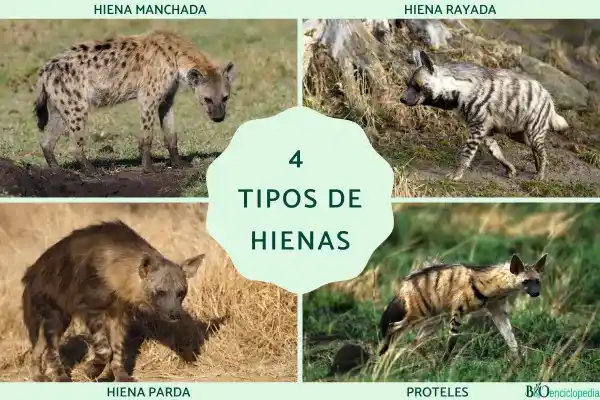
There are only four extant hyena species : the spotted hyena ( Crocuta crocuta ), the striped hyena ( Hyaena hyaena ), the brown hyena ( Parahyaena brunnea ), and the aardwolf ( Proteles cristata ). This article will first explain the taxonomic position of hyenas, and then introduce the differences in appearance, distribution, diet, and behavior of each of the four hyena species.
Hyena classification: Are they more like dogs or cats?
Hyenas have long legs, a sturdy body, a relatively long snout, and erect ears, which often leads them to be mistaken for canines. However, taxonomically, hyenas belong to the "feliformia" clade within the order Carnivora. This means they are not closely related to canines; rather, they are more closely phylogenetically closer to feliform carnivores.
Basic classification hierarchy (simplified version)
Kingdom: Animalia
Phylum: Chordata
Class: Mammalia
Order: Carnivora
Suborder: Feliformia
Family: Hyena (Hyaenidae)
Common characteristics among hyenas include: many species possess anal glands for marking territory; they are mostly nocturnal , returning to more secluded areas to rest around dawn; and modern hyenas are often divided into two categories based on their diet and feeding methods: three types of "bone-crushing hyenas" and one type of "insect-eating hyena" .
1) Spotted hyena ( Crocuta crocuta )
Aliases and physical characteristics
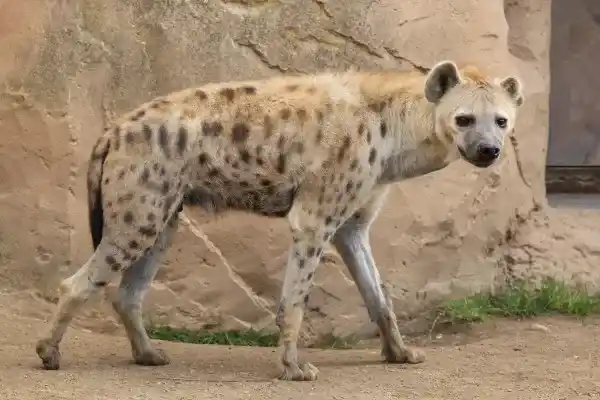
The spotted hyena is also often called the " laughing hyena ." Its fur is mostly tan or brown with dark spots, the density and color of which may vary in different regions. Compared to other hyenas, the spotted hyena appears more robust and sturdy , sometimes even giving the impression of being "as strong as a bear"; its ears are relatively small and round .
Body length: Approximately 90–160 cm
Athletic ability: Good at running and swimming
distributed
It is mainly distributed in central and southern Africa and is often described as one of the most common large carnivores on the African continent.
Diet and Ecological Role
The spotted hyena is a typical bone-crushing hyena . It hunts ungulates, scavenges , and exhibits opportunistic behavior, such as stealing prey from other predators when the opportunity arises. Its digestive system is incredibly powerful, capable of processing the hard parts left behind by other animals, including bones. Because of this, the spotted hyena plays a crucial "cleaner/recycler" role in the ecosystem, reducing the accumulation of decaying carcasses and promoting nutrient cycling.
Social Structure and Laughter
Spotted hyenas are highly social animals with complex hierarchical and competitive relationships within their groups. The "laughter" that people hear is not real laughter, but a diverse set of calls used to convey different messages: such as obedience, threats, territorial signals, and tension when being chased, forming their sophisticated communication system.
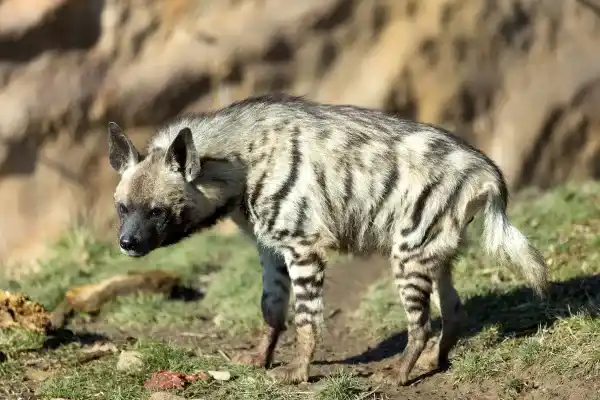
2) Striped hyena ( Hyaena hyaena )
Shape identification points
The striped hyena has a grayish coat with thick fur, and its body and limbs often have distinct black stripes . It often gives the impression of having a slightly hunched back , and its overall silhouette appears more primitive.
Body length: Approximately 80–130 cm
Characteristics: Relatively small in size among bone-crushing hyenas.
Distribution range
The striped hyena is the most widely distributed of the four hyena species: in addition to Africa, it extends to the Middle East and India .
Diet and Behavior
It primarily feeds on carrion , but can also hunt when necessary. It often seeks out the carcasses of ungulates, utilizing parts left behind by other predators, such as ligaments and bone marrow. Its teeth are very strong, capable of chewing bones before swallowing. When resources are plentiful, it may also consume fruits and even insects (such as locusts) to supplement its energy.
social
Striped hyenas are mostly solitary , and even when they do come in groups, the group is usually small, often consisting of no more than two.
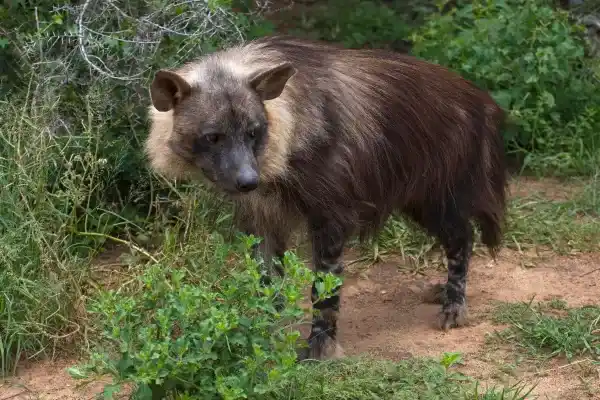
3) Brown Hyena ( Parahyaena brunnea )
Shape identification points
The most easily recognizable feature of the brown hyena is its long, straight, dark brown fur , which makes it look more "fuzzy" than other hyenas.
Body length: Approximately 130–160 cm
Distribution and Habitat
They mainly live in the savanna and desert edges of southern Africa .
Feeding methods and "fighting" behavior
Brown hyenas are not typically known for their active hunting, but rather for their scavenging . They eat animal carcasses and may supplement their diet with small mammals (such as rodents), insects, and fruits. The text mentions that they also engage in food theft (parasitic thievery) , such as stealing food from predators like cheetahs, and they can be quite aggressive in this act, even making powerful desert predators back down.
Survival pressure
Brown hyenas are assessed as near threatened in some areas, partly because humans often mistakenly perceive them as a greater threat to livestock and drive or kill them. However, from an ecological perspective, they are also important "cleaners," handling carcasses and preventing excessive accumulation of decaying matter.
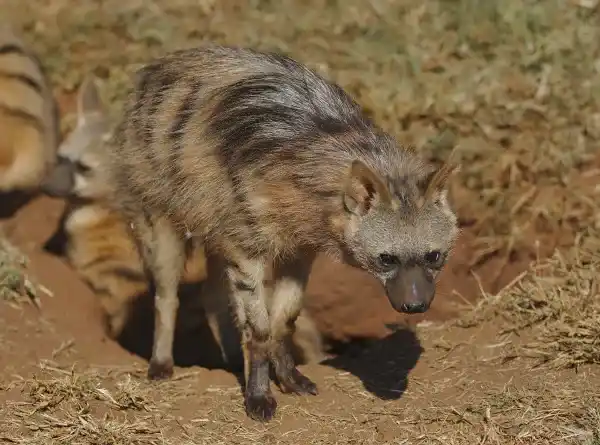
4) Coyote ( Proteles cristata , Aardwolf)
Aliases and core positioning
The aardvark, also known as the "earth wolf ," is the only insectivorous member of the four hyena species. Unlike the bone-crushing hyena, it hardly relies on large carcasses or crushes bones, but instead feeds primarily on insects such as termites.
Shape identification points
Coyotes are mostly yellowish-brown, grayish-yellow, or grayish in color, with only a few horizontal black stripes on their bodies; their faces and muzzles often have a deeper black contrast; their tails are relatively bushy and mostly black; and they have a short, dark mane ridge along their backs.
Body length: approximately 50–90 cm (smallest among hyenas).
Ears: Large
Dietary adaptations and structural characteristics
Because they primarily feed on termites and insect larvae, aardwolves have relatively reduced molars, and their tongues are long, thin, and sticky , making it easy for them to lick insects. The text also mentions that their toe count differs from that of the osteoclast: aardwolves have five toes on their hind feet and four on their forefeet, while osteoclasts typically have a more even number of toes on all four feet.
Distribution and Behavior
Hyenas mainly inhabit grasslands in southern Africa and open environments in parts of East Africa . They are mostly solitary and more active at night.
A quick overview of hyena types: Bone-crushing type vs. Insectivorous type
Bone-crushing hyenas: spotted hyena, striped hyena, brown hyena
Insectivorous hyenas: Aardvarks (ground hyenas)