The vastness of Earth has nurtured countless lives, even in areas we consider least likely to harbor life—such as the deep sea with its low oxygen levels, zero sunlight, near-zero temperatures, and extremely high water pressure—a mysterious vitality abounds. In this world, so different from human living environments, organisms demonstrate astonishing adaptability and survival strategies.
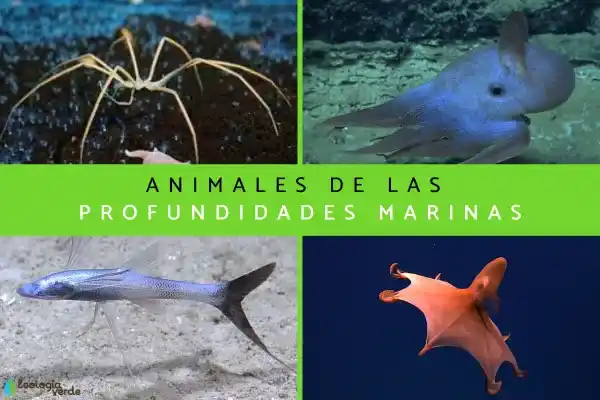
In this article, we will introduce 13 amazing deep-sea animals and how they survive in extreme environments, offering a glimpse into the mysteries of the deep-sea ecosystem.
1. Ghost fish (Ceratiidae)
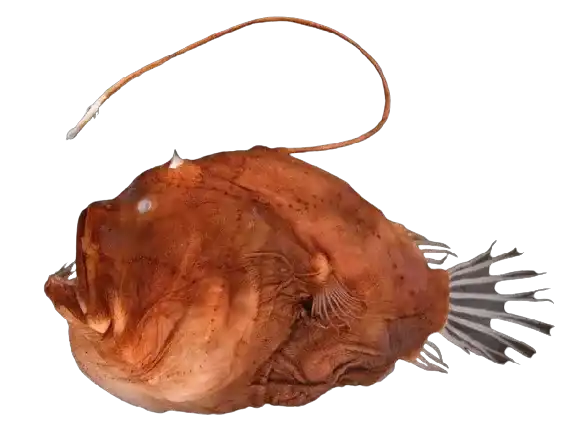
Ghost fish, also known as deep-sea anglerfish, are among the most notorious "devilish creatures" of the deep sea. Their most distinctive feature is a glowing, rod-like organ on their forehead used to attract prey. Females can reach 77 to 120 centimeters in length, while males are extremely small and fuse with the female, becoming a "parasitic mate." They may even lose their own reproductive organs, retaining only their reproductive function. This extreme reproductive method is an evolutionary adaptation to the scarcity of mates in the deep sea.
2. Vampyroteuthis infernalis
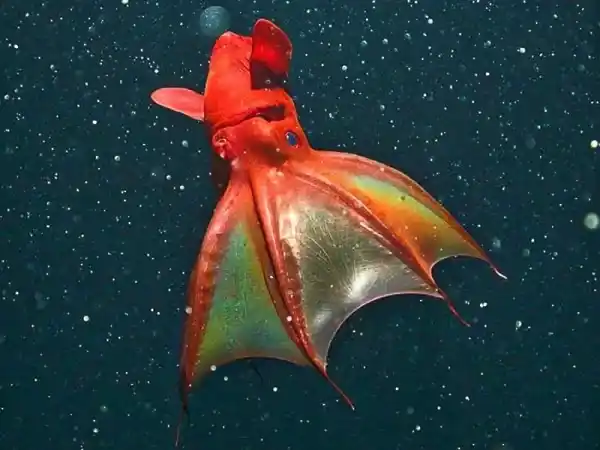
This creature, despite its terrifying name, is actually docile. The vampire squid doesn't produce ink; instead, it uses bioluminescence to confuse its prey. It passively feeds on floating organic debris and plankton, collecting its food using a mucous membrane surrounding its tentacles. Its red mantle and numerous bioluminescent organs give it a ghostly, mysterious presence in the water.
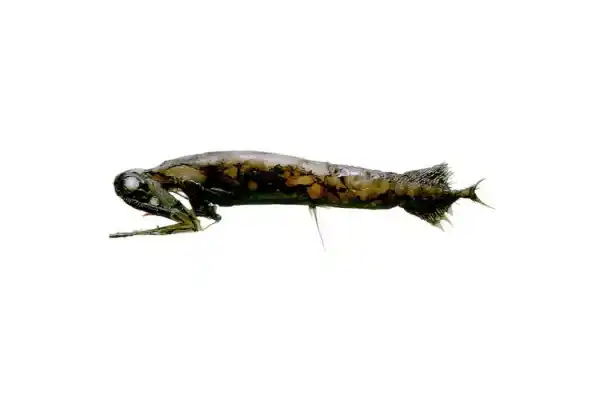
3. Black Deep-Sea Arowana (Malacosteus niger)
Living at depths of 500 to 3900 meters, the dragonfish emits a red bioluminescence. This light is invisible to its main prey, shrimp, allowing it to hunt "invisibly." Its massive lower jaws allow it to swallow large prey, which can reach lengths of over 25 centimeters.
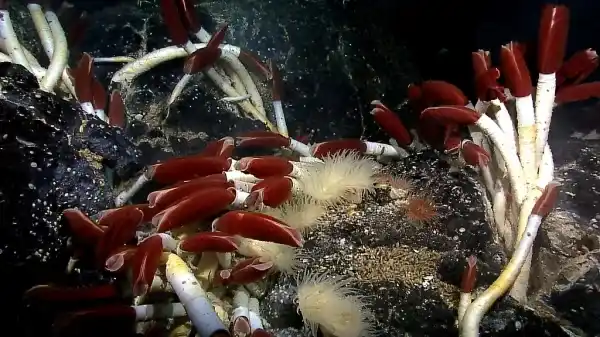
4. Giant tube worm (Riftia pachyptila)
These worms, unlike typical animals, neither move nor have mouths or eyes, and live in sulfur-rich environments near deep-sea hydrothermal vents. They can reach 2 meters in length and live for over 150 years. Their symbiotic bacteria generate energy through chemical synthesis, allowing them to function independently of photosynthesis and oxygen.
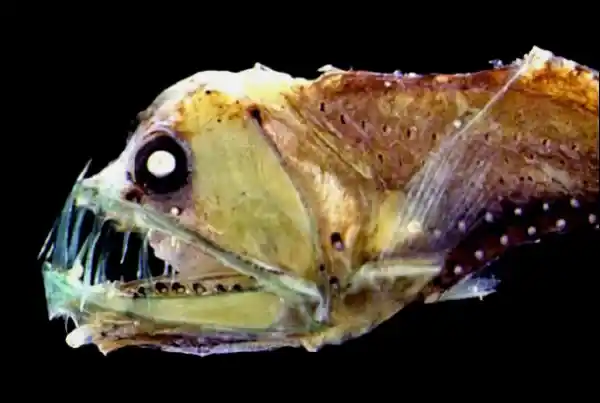
5. Sloani (Chauliodus sloani)
Also known as the deep-sea dragonfish, it lives in tropical and subtropical waters and is one of the most aggressive predators in the deep sea. Its body is slender, and its teeth are huge and transparent, extending beyond its mouth to form a "cage." It uses bioluminescent organs on its body to regulate its light and avoid predators, perfectly adapting to the dark deep-sea environment.
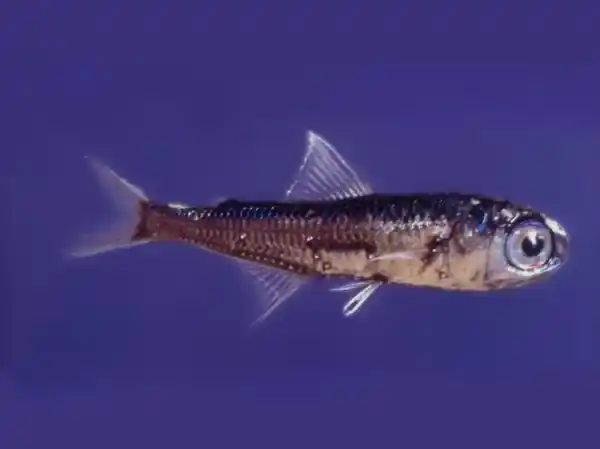
6. Lanternfish (Myctophum punctatum)
This is a small fish that is only 11 centimeters long, but it has huge eyes and light-emitting organs used for communication and avoiding predators. Lanternfish have a large population and are considered to be the most numerous vertebrates on Earth.
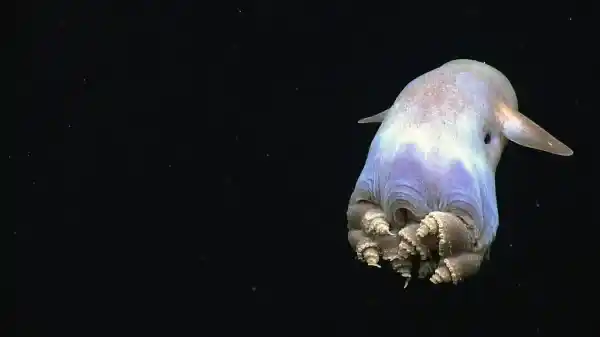
7. Dumbo Octopus (Grimpoteuthis)
These octopuses live at depths of 5,000 meters and are known for their adorable appearance. They have a pair of "elephant ear"-like fins and membrane structures between their tentacles that help them navigate their environment. They swallow their prey whole and digest it internally, making them one of the relatively gentler types of octopuses in the deep sea.
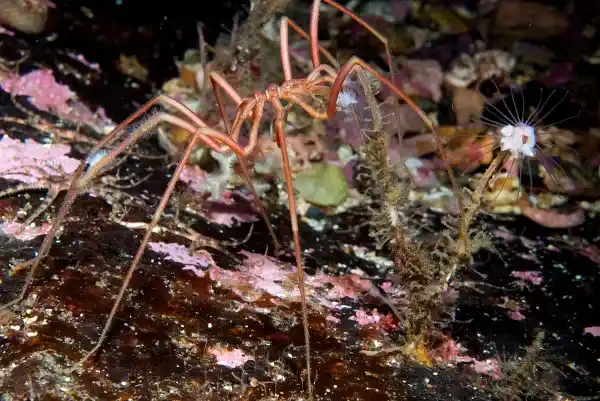
8. Sea spider (Pycnogonida)
Despite having "spider" in their name, they are not related to spiders at all. Deep-sea sea spiders can have legs that are over 50 centimeters long, making them typical giant invertebrates of the deep sea. Colossendeis megalonyx is a representative species, living in sub-Antarctic waters.
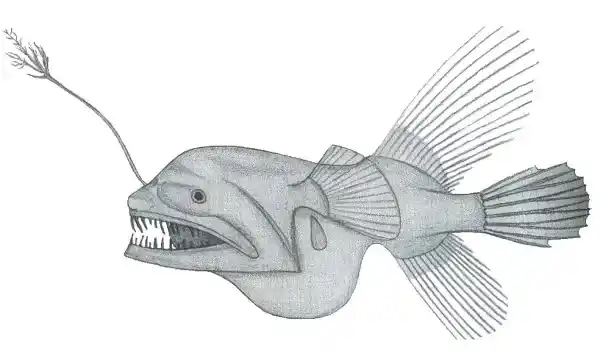
9. Anglerfish (Caulophryne)
Another typical deep-sea predator, possessing an enormous mouth, sharp teeth, and a bright "bait" on its forehead. This fish can swallow prey twice its own size, and its body surface also has luminous filamentous organs that it can use to lure prey or confuse enemies.
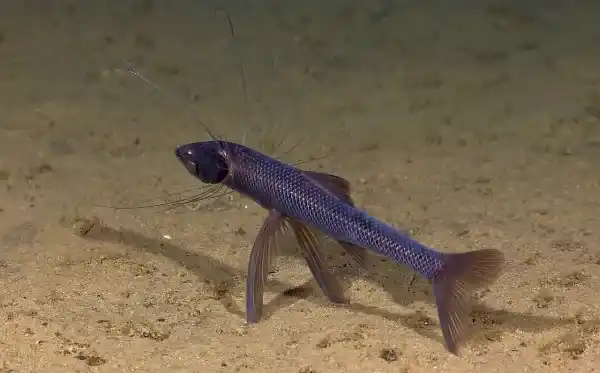
10. Longfin flounder (Bathypterois longifilis)
The longfin flounder lives in the mud of the deep sea and has long, slender pelvic fins and ribbon-like pectoral fins, which are about 37 centimeters long. These fins help it move steadily in the mud and prey on zooplankton.
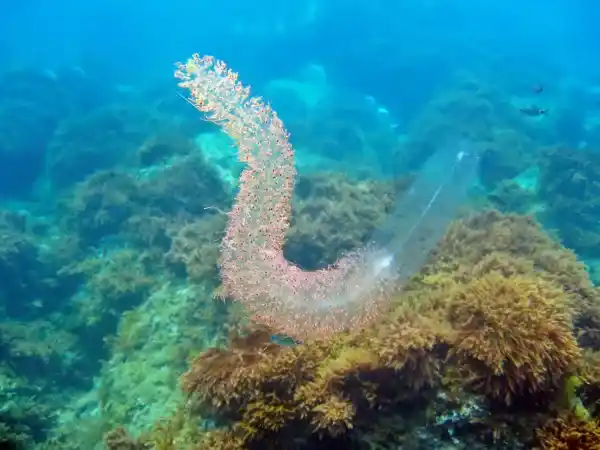
11. Siphonophorae (polyp planktonic colonies)
These closely related jellyfish are large organisms, consisting of "colonial organisms" composed of multiple functionally differentiated individuals. Apolemia ianosa is a bioluminescent species with a transparent body that can reach 4 meters in length, using its toxic tentacles to lure crustaceans and small fish.
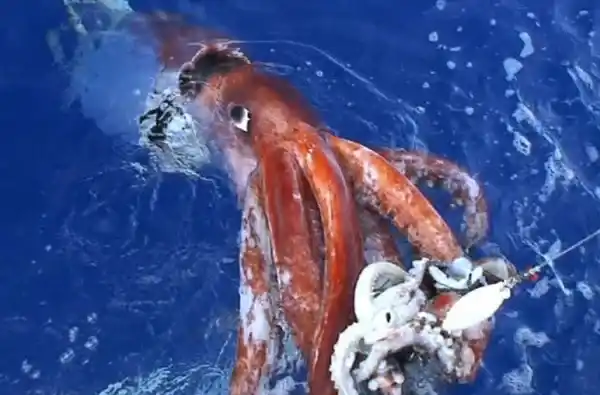
12. Giant squid (Mesonychoteuthis hamiltoni)
This is a cephalopod that can reach 15 meters in length, possibly the largest invertebrate on Earth. Living in the deep Antarctic sea, it possesses powerful suckers and hooks, as well as a typical beak-like mouthpart. Its high ammonia content helps it float in the ocean.
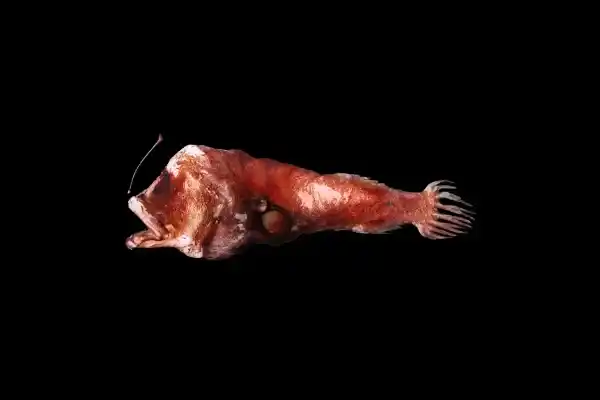
13. Horned Lanternfish (Centrophryne spinulosa)
Despite its name, the lanternfish is actually a fearsome deep-sea predator. Its body is covered in sharp spines, and it has glowing "hooks" on its head and luminous eyes, a result of its symbiotic relationship with bacteria. Its body shape and tissue structure are highly adapted to the deep-sea environment.
The amazing adaptations of deep-sea animals
Low metabolic rate : Due to food scarcity, they can fast for extended periods.
Minimal oxygen requirement : Can survive in environments with extremely low oxygen levels.
Organ degeneration : such as the degeneration of eyes and fins, to adapt to darkness.
Special sensory system : well-developed light emitters, antennae, and chemoreceptors.
Diurnal vertical migration : diving deep during the day and surfacing to forage at night.
Giant growth in the deep sea : Some invertebrates grow larger and live longer in cold water.
If you are interested in more exotic marine life, you may want to explore "The World's Most Dangerous Marine Animals" or other wildlife knowledge content to gain a deeper understanding of the wonder and cruelty of nature.
literature
Jungbauer, W., Randler, C., Reck, M., and Stripf, R. (2005). Network Biology 1. Braunschweig: Schrödel
Beatty, R., Beer, A., and Deeming, C. (2010). The Book of Nature. UK: Dorling Kindersley
Editorial Department of National Geographic. (2010). Snuff. Accessible at: https://www.nationalgeographic.es/animales/rape
National Geographic Magazine. (2017). Vampire Squid. Accessible at: https://www.nationalgeographic.es/photography/2017/03/calamares-vampiro?image=10960.600x450
Monterey Bay Aquarium Research Institute. (2020). Siphonophore (Apolemia siphonophore). Available at: https://www.mbari.org/products/apolemia/
BBC. (2020). Surprisingly, a 45-meter-long, self-reproducing siphonophore has been discovered in the waters off Australia. Website: https://www.bbc.com/mundo/noticias-52289163