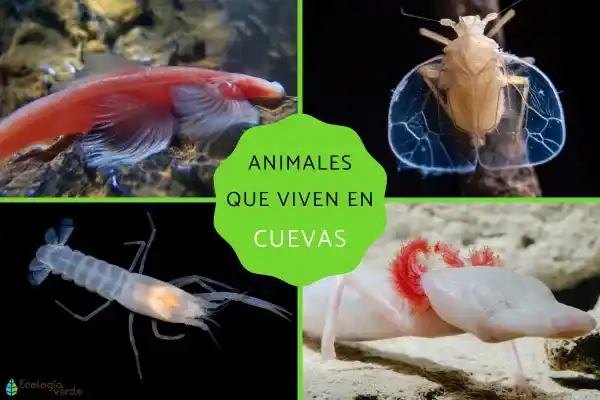
Although caves often evoke images of darkness, desolation, and inhospitability, many animals have actually evolved astonishing adaptations to these environments. Terrestrial and underwater caves are home to a number of unique and even undiscovered species. These "permanent residents" are known as troglobios , and they specialize in living in dark, damp environments.
If you'd like to learn about the unique animals that live in these mysterious environments, this article will introduce you to 10 representative animals that live only in caves.
1. Hausera hauseri
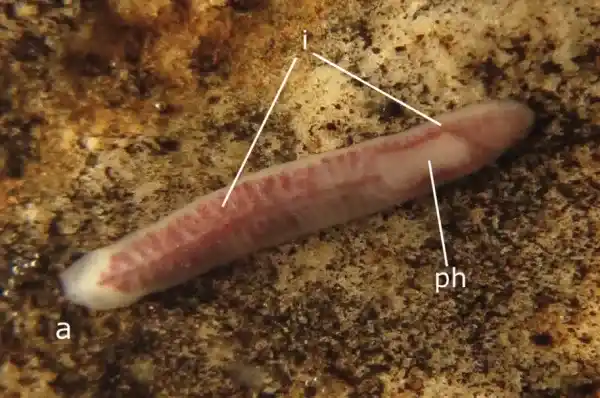
Hausera hauseri is currently the only animal classified under the genus Hausera. This flatworm exists only in underground waters and is a typical "estigobio" (subterranean aquatic organism). It lives in the karst region of Felipe Guerra in northeastern Brazil, a biodiversity hotspot.
To adapt to a completely dark environment, it lacks eyes and skin pigmentation. The study also found that the ovaries of female individuals are located at the back of the brain, a very rare reproductive feature that further demonstrates its unique adaptation to extreme habitats.
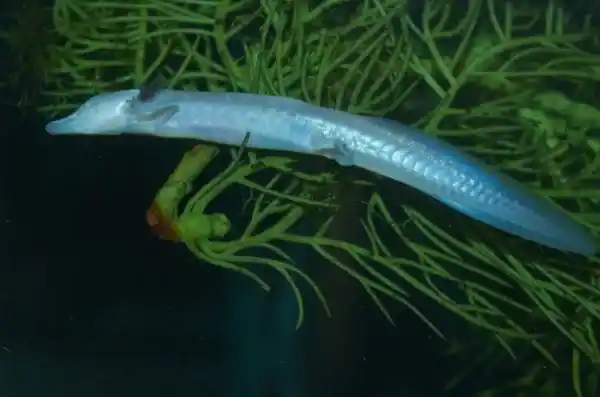
2. Texas blind newt (Eurycea rathbuni)
This salamander is an amphibian endemic to Texas. Living in underwater caves where there is no sunlight, it has completely lost its eyes and pigmentation, relying on its highly sensitive skin to sense changes in water flow to locate its prey.
It also possesses gills for breathing in water, and vestigial limbs—as they no longer need to support its weight. This salamander lives only in the underground water cave system near San Marcos, Texas, and primarily feeds on shrimp. Due to environmental pollution, overexploitation of groundwater, and historical overhunting, the species now numbers less than 100 individuals in the wild and is listed as "endangered" by the U.S. government.
3. Ghost Cave Snail (Pyrgulopsis texana)
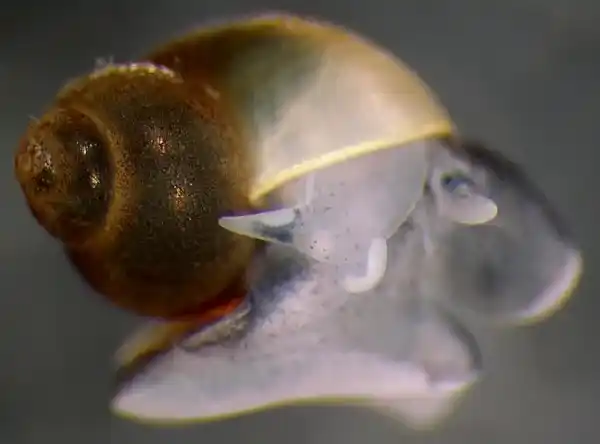
This freshwater gastropod lives only in three springs near Balmorhea, Texas, with its most typical habitat being a place known as "Ghost Cave".
Its current population density is very low. Water pollution (pesticides, herbicides) and declining groundwater levels have led to severe habitat destruction. Furthermore, the invasion of the invasive species *Melanoides* snail may also have had a negative impact. It was initially called *Cochliopa texana*, but genetic research later corrected its name to *Pyrgulopsis texana*.
4. Sinopoda scurion
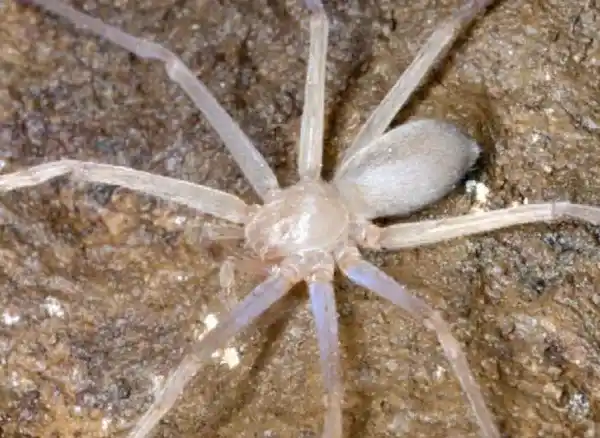
Sinopoda scurion is the only known eyeless crab spider . It was discovered in 2012 in the Tham Khoun Xe cave in Laos. It can reach 6 centimeters in length, is fast, has strong hunting abilities, and exhibits typical characteristics of an ambush predator.
5. Eupolybothrus cavernicolus
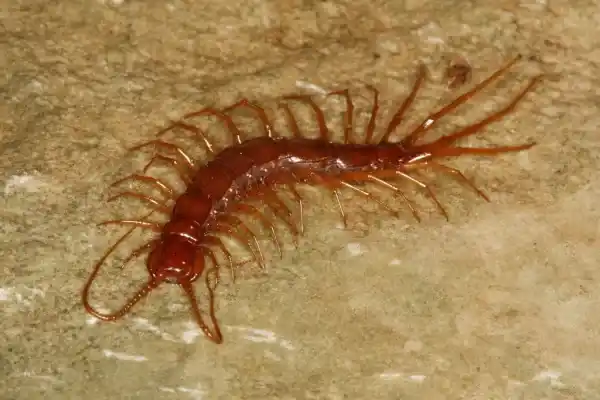
This is a cave centipede living in the Miljacka cave system of Kırka National Park in Croatia, measuring approximately 30 millimeters in length. It is the first cave eukaryote to have its entire genome sequenced, providing important data for studying the genetic adaptation of cave animals.
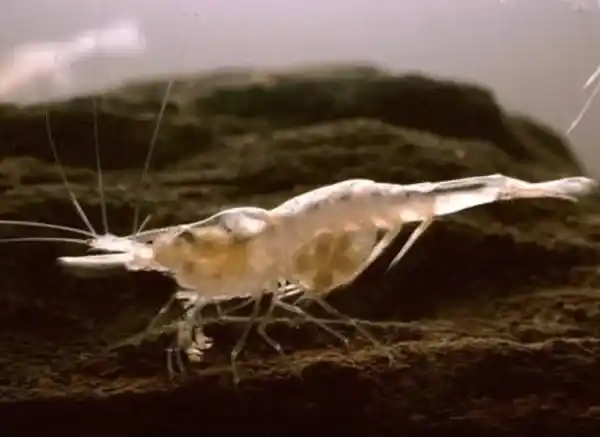
6. Alabama cave shrimp (Palaemonias alabamae)
P. alabamae is a colorless cave shrimp that was historically found only in four caves in Alabama, and is now mainly found in Shelta Cave. Females are larger than males and they survive by filtering particles from the water. Their natural predator is the subterranean fish Typhlichthys subterraneus.
Due to groundwater pollution and over-extraction, its habitat has been severely damaged, and this shrimp species has been listed as an "endangered species".
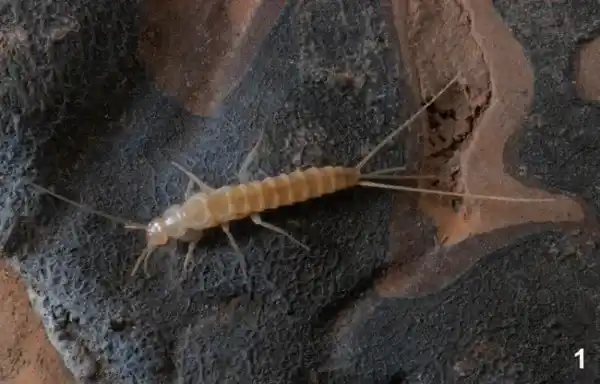
7. Coletinia majorensis
This is a wingless primitive insect (Zygentoma) discovered in 2014 in the Llano Cave on the island of Fuerteventura, Spain. It has a slender body, reaching up to 11 millimeters in length, and prefers to hide in cave crevices. It is the first recorded insect of the genus Colettinia in the Canary Islands.
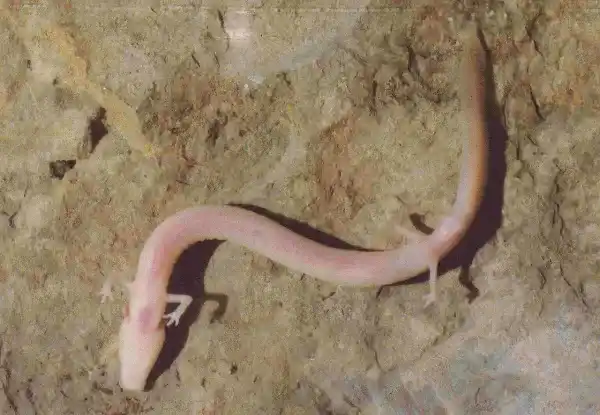
8. Blind Salamander (Proteus anguinus)
This animal, which lives in the karst system on the border of Slovenia and Italy, is also known as the "European cave salamander." It feeds on invertebrates in underwater sediments and can survive in darkness for more than 12 years.
However, the species is classified as “vulnerable” due to threats such as tourism, groundwater pollution, habitat destruction, and illegal hunting.
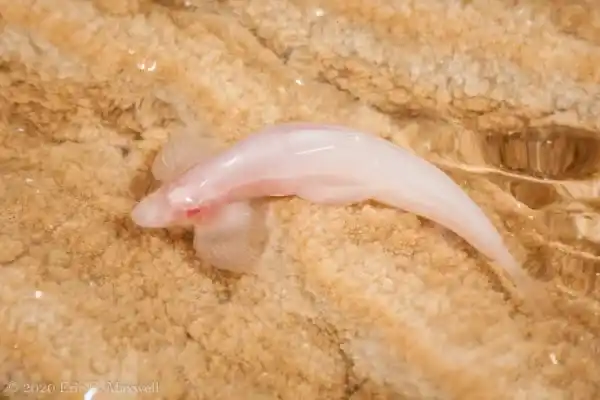
9. Waterfall Climbing Fish (Cryptotora thamicola)
These fish are found in limestone caves in Thailand. Although they are only 3–8 centimeters long, they can use their pectoral fins to "climb" like lizards. They are eyeless and have adapted to the flowing water environment of caves, making their locomotion very unique.
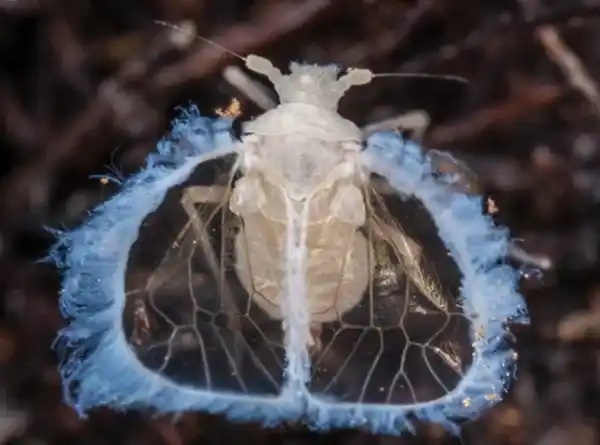
10. Forest Fairy Insect (Valenciolenda fadaforesta)
Discovered in 2021 in a cave in the Calderona Mountains of Valencia, Spain, this elf-like hemiptera insect is eyeless, pale, and has blue, glowing hairs along the edges of its wings.
They feed on the sap of plant roots, possess the ability to jump and glide, and are the first known cave-dwelling hemiptera insects in Spain.
If you're interested in cave animals, feel free to browse our content on wildlife. Understanding the creatures in these hidden ecosystems helps us better protect their homes and the environment.
References
Megan Gannon. (2012). Live Science. Discovery of the world's first eyeless hunter spider. Accessible at: https://www.livescience.com/22232-eyeless-spider-adapted-darkness.html
Editorial Department. (2015). El Universo. Cave-dwelling reptiles may provide evidence of fish evolution. Accessible at: https://www.eluniverso.com/vida-estilo/2015/05/10/nota/4853661/pez-escalador-cuevas-podria-probar-evolucion-peces/
AGV/LA RAZÓN. (2021). La Razón. A previously unknown species of cave worm discovered in Valencia. Link: https://www.larazon.es/comunidad-valenciana/20210118/x6wxis2d6vcuhaxdxanynp67gi.html
References
Leal-Zanchet A, Souza S, Ferreira R (2014) A new genus and species of cavernicola (flatworm) recorded for the first time in South America. ZooKeys 442: 1–15. Link: https://doi.org/10.3897/zookeys.442.8199
This is the Texas blind salamander. Brut Media. Link: https://www.brut.media/mx/entertainment/esta-es-la-salamandra-ciega-de-texas-50a5748c-904e-4cdb-be07-84dc20b1a775
Texas blind newt (Eurycea rathbuni). Published by Naturalista. Link: https://www.naturalista.mx/taxa/27130-Eurycea-rathbuni
Ghost Cave Snail (Pyrgulopsis texana). Natureserve Explorer Publishing. Link: https://explorer.natureserve.org/Taxon/ELEMENT_GLOBAL.2.107256/Pyrgulopsis_texana
Stoev, P., Komerički, A., Akkari, N., Liu, S., Zhou, (2013). Eupolybothrus cavernicolus Komerički & Stoev sp. n. (Lamipoda:Leptobasidia:Leptobasidia): The first eukaryotic species description combining transcriptomics, DNA barcoding, and micro-CT imaging data. Journal of Biodiversity Data, (1), e1013. https://doi.org/10.3897/BDJ.1.e1013.
Cooper, John & Riser, Martha. (2010). Biological observations of the endangered subterranean shrimp Palaemonias alabamae, with annotations for P. ganteri (Decapoda: Lithopodidae). Subterranean Biology. 8. 10.3897/subtbiol.8.1226.
Morello-Baltanas, Rafael and Gaju-Ricat, Mikel and Lopez, Nestor and Oromi, Pedro and Bach, Carmen. (2014). Description of the family Nicolettiidae of the Canary Islands and a new group (Class Insecta: Zygentoma). European Journal of Entomology. 111(2). 1-8. 10.14411/eje.2014.032.