Trapdoor spiders are among the most unique and mysterious creatures in the spider world. They are renowned for their ingenious ambush tactics, constructing intricate burrows and using camouflaged "trapdoors" to capture unsuspecting prey. In this comprehensive guide, we'll delve into the life, behavior, habitat, and other fascinating details of trapdoor spiders.
Table of contents
Introduction: What is a trapdoor spider?
Anatomy and unique features of trapdoor spiders
Hunting Techniques: The Art of Ambush
Habitat and Distribution
Traps around the world
Life cycle and behavior
Are trapdoor spiders dangerous?
Trapstraps as pets: How to raise them
Protection and Threat of Trapdoor Spiders
Interesting facts and popular culture
Introduction: What is a trapdoor spider?
Trapdoor spiders are a group of spiders belonging to the order Mygalomorphae, known for their unique hunting methods. They dig burrows in the ground and cover the entrance with "trapdoors" made of silk, dirt, and other materials. Inside the burrow, they wait silently for their prey to approach before launching a sudden attack. Although they look similar to wolf spiders, trapdoor spiders are smaller, more elusive, and possess specialized ambush behavior.
Key features of trapdoor spiders
Scientific name : Includes species from multiple families, such as Ctenizidae and Idiopidae .
Lifespan : Typically 5-20 years, depending on the species.
Size : Body length is about 1 to 4 centimeters, and it appears larger when the legs are spread out.
Toxicity : The venom is used to paralyze prey and poses little harm to humans.
Anatomy and unique features of trapdoor spiders
Trapdoor spiders are perfectly suited for an ambush lifestyle, and their anatomy reflects this perfectly. From powerful fangs to superb camouflage, every feature serves for efficient hunting.
Key features
Masters of disguise : Their burrows are so well disguised that they are almost impossible for prey or predators to find.
Venomous fangs : Venomous fangs are used to quickly inject venom into prey, rendering it incapacitated. The venom is primarily effective against small insects or arthropods.
Strong legs and digging tools : Sturdy legs facilitate digging and maintain the stability of the burrow.
Sensitive hairs : Sensitive hairs on the legs and abdomen can detect vibrations in the surroundings, helping spiders sense the approach of prey.
Comparison of trapdoor spiders and wolf spiders
Although they share many similarities with wolf spiders, such as venom and robust bodies, trapdoor spiders are typically smaller and have less hair. Unlike wolf spiders, which actively seek out prey, trapdoor spiders rely on ambush and camouflage.
Hunting Techniques: The Art of Ambush
The hunting behavior of trapdoor spiders is one of the most fascinating examples of ambush predation in nature. They ambush their prey by constructing intricate burrows. Here is a detailed explanation of their hunting process:
Step-by-step analysis of the hunting process
Building a trap : Spiders first dig a burrow and reinforce the walls with silk. At the entrance, they make a trap door using silk, soil, and plant materials.
Hidden and waiting : The spider hides inside the cave, leaving only the trap door exposed.
Sensing prey : Spiders are extremely sensitive to vibrations in their surroundings and can quickly detect the approach of prey.
Surprise attack : When prey gets close, the spider dashes out of its hole with lightning speed, grabs the prey with its fangs, and quickly subdues it.
Speed and efficiency
Trapdoor spiders can spring out of their holes in a second to capture insects, small vertebrates, or other spiders. Their ambush tactics are highly efficient, saving unnecessary energy expenditure.
Habitat and Distribution
Trapdoor spiders are widely distributed, but are mainly concentrated in tropical and subtropical regions. They prefer loose, sandy soil, which is ideal for digging burrows.
Common distribution areas
Australia : This region boasts a wide variety of species, including the famous golden trapdoor spider ( Euplos variabilis ).
Africa : Many trapdoor spiders live in the arid sandy lands of Africa.
United States : Species of the genus Aphonopelma can be found in California and Florida.
Asia : Trapdoor spiders are also found in forested regions of Asia, such as India and Southeast Asia.
Trapdoor spiders are typically solitary creatures that spend most of their lives in their burrows, only leaving them to mate or hunt.
Traps around the world
Trapping spiders from different regions exhibit unique characteristics that allow them to adapt to their environment. Below are introductions to some well-known species:
Well-known varieties
Brown trapdoor spider ( Misgolas rapax ): A common species in Australia, known for its deep burrows and excellent camouflage.
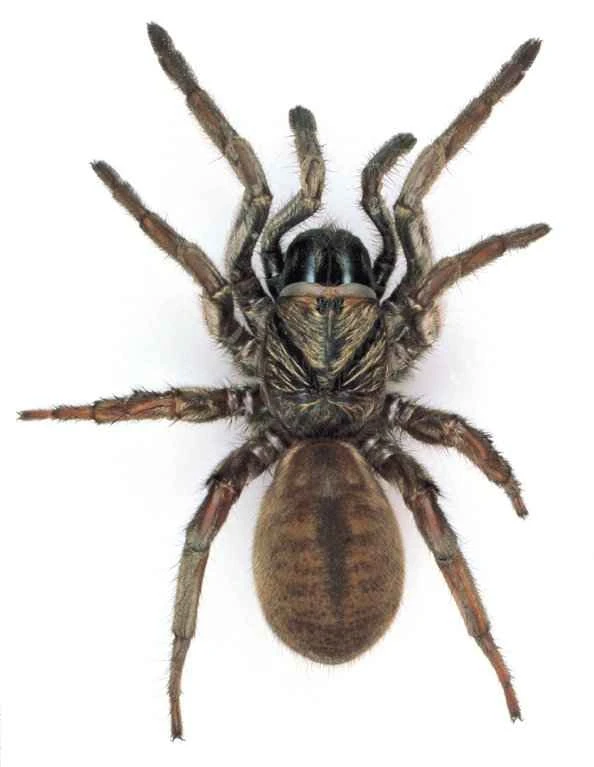
Golden trapdoor spider ( Euplos variabilis ): One of the larger species in Australia, with golden markings.
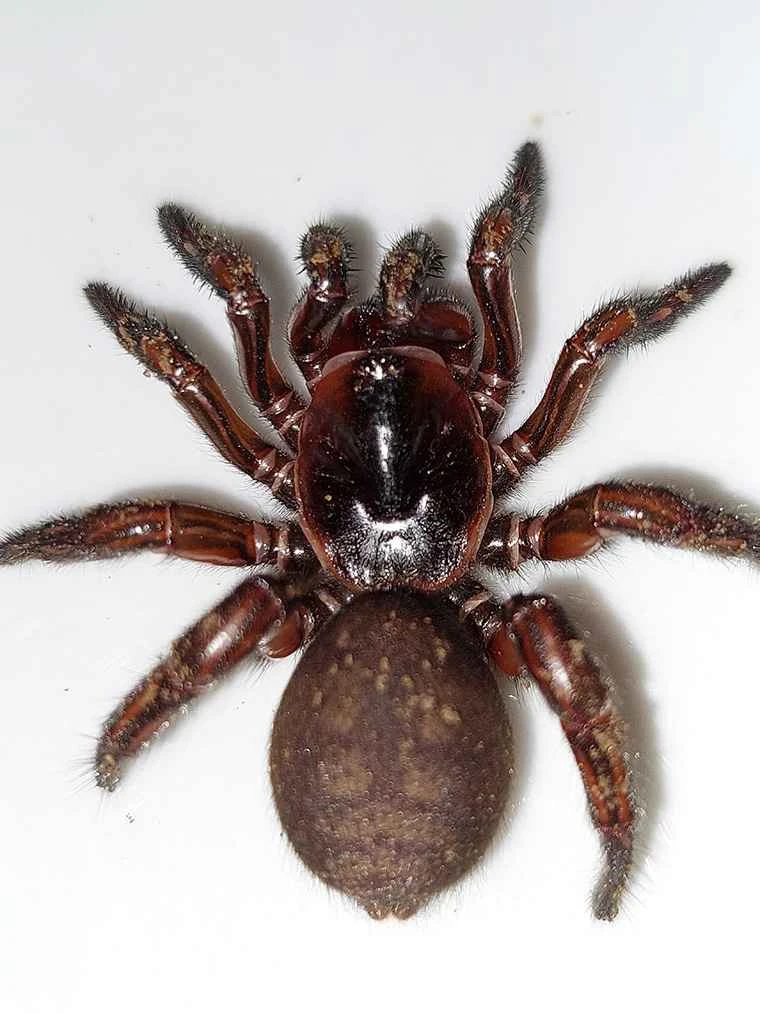
Queensland trapdoor spider : Commonly found in residential areas of Australia, with a mild temperament.
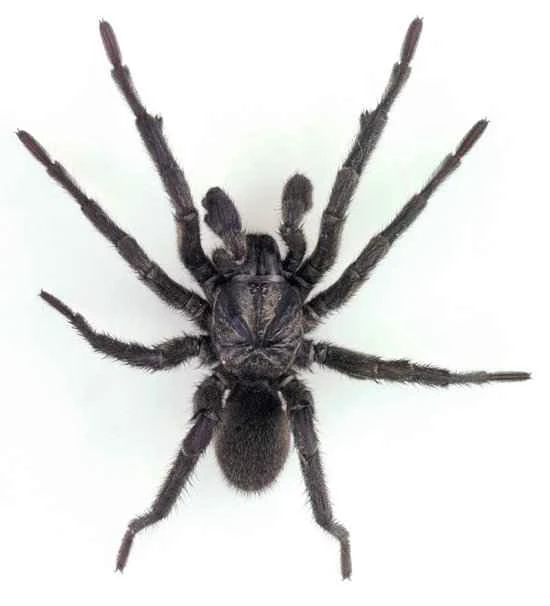
African trapdoor spider : Large in size and relatively fierce in nature, commonly found in arid regions of Africa.
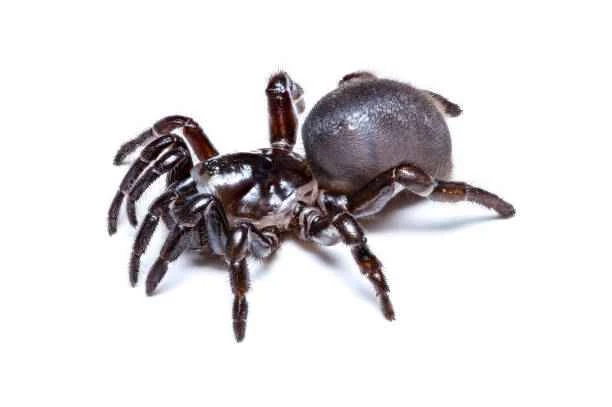
These spiders have adapted to diverse environments in different parts of the world, from rainforests to deserts.
Life cycle and behavior
Trapdoor spiders are solitary and primarily nocturnal creatures. Their life cycle is quite interesting, and their long lifespan is the best proof of their hunting efficiency.
Mating and Reproduction
Mating : Male spiders leave their burrows to find females. After mating, the female lays her eggs in the burrow.
Egg sac : The female will protect the egg sac until the eggs hatch, and sometimes she will also watch over the spiderlings until they are able to survive independently.
life
Compared to many spiders, trapdoor spiders have a very long lifespan. Some species can live up to 20 years, while the average lifespan is between 5 and 10 years.
Are trapdoor spiders dangerous?
Although trapdoor spiders are venomous, they pose minimal threat to humans. Their venom is primarily used to subdue prey, rather than to attack large animals.
Venom properties
Effects on humans : Their bites usually only cause mild redness and stinging. In rare cases, they can trigger allergic reactions.
Will they attack unprovoked? Trapdoor spiders are generally not aggressive unless provoked.
Trapstraps as pets: How to raise them
While not as popular as tarantulas, trapdoor spiders can be kept as pets. However, due to their secretive lifestyle, they are relatively difficult to keep.
Feeding tips
Keeping environment : The enclosure should mimic their natural burrowing environment, providing a substrate suitable for digging, as well as materials for making "trap doors".
Diet : Mainly feed small insects, such as crickets, mealworms and small cockroaches.
Is it suitable to touch? Due to its reclusive nature and rapid movements, direct contact is not recommended; it is more suitable for observation than handling.
Protection and Threat of Trapdoor Spiders
Like many species, trapdoor spiders face the threat of habitat destruction. Their natural habitats are gradually decreasing as urbanization expands.
Preserve the status quo
Habitat protection : Protecting natural ecosystems is crucial for these spiders.
Public education : Raising awareness of their ecological value can reduce unnecessary hunting.
Interesting facts and popular culture
The mystery and superb ambush skills of trapdoor spiders have made them a popular subject for nature documentaries and scientific research.
Interesting facts
They can use seismic waves to sense their prey, making them miniature "seismographs" of nature.
In ancient Egypt, spiders were considered symbols of mystery and death, and the trapdoor spider was often mistaken for a mythical creature.
Trapdoor spiders showcase the boundless creativity of nature with their amazing adaptability and hunting skills. They are not only master ambushers but also an important part of the ecosystem, captivating researchers and enthusiasts alike with their unique charm.