How are fossils formed?
Fossils form in many ways, but most occur when a living organism (such as a plant or animal) dies and is quickly buried by sediment (such as soil, sand, or volcanic ash). Soft tissue often decomposes, leaving only hard bones or a shell (though in special cases the soft tissue may be preserved). After the organism is buried, more sediment, volcanic ash, or lava accumulates on top of it, eventually hardening all layers into rock (they become "petrified"). Only when erosion occurs (the rock is worn away and washed away) do these once-living organisms emerge from within the stone.
What does the word "fossil" mean?
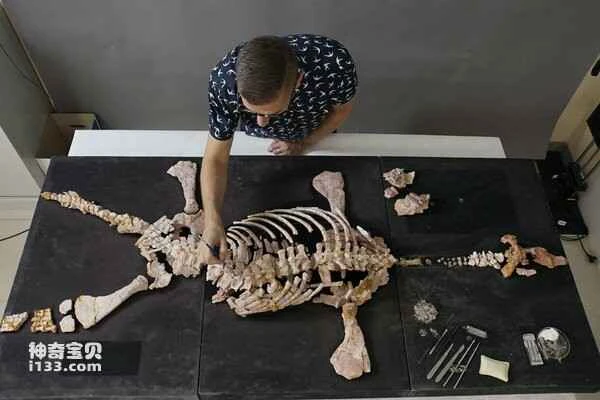
The word fossil literally means "dug out," and it comes from the Latin word *fossilis*. Fossils are any remains or traces of past life preserved in the rock record. Fossils include the remains of organisms, such as plant or animal tissues, shells, teeth or bones, and even bacteria (!), but can also include traces of life, such as footprints or worm burrows. Fossils tell us about the history of life on Earth; we call this the fossil record.
Five common ways fossils are formed
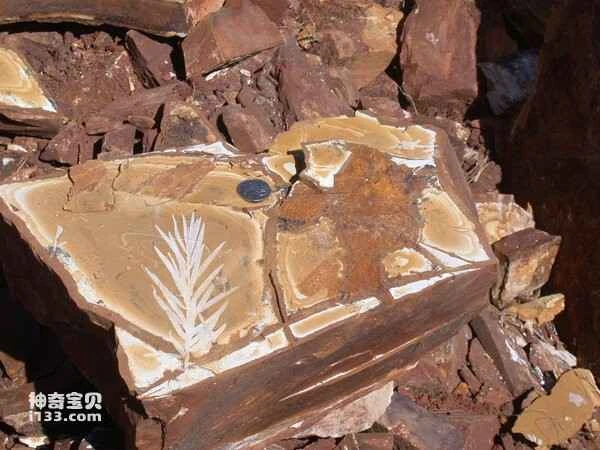
1. Mineralization occurs when dissolved minerals carried by groundwater fill the spaces within the cells of plants and animals. The dissolved minerals crystallize within these cellular spaces, eventually forming rocks in the shape of animals or plants. This is the most common type of fossil preservation; examples include teeth, bones, shells, and wood. We can call these fossils petrified.
2. Fossil impressions are formed when the original skeleton or tissues of an organism are removed by processes that occur after burial (such as groundwater flow). If the remains of the organism completely decompose, leaving a blank space in the shape of the organism, it is called a casting. If minerals fill this blank space and form a mineralized 3D shape of the organism, it is called a mold. Many marine invertebrates, such as shells, are fossilized in this way.
3. If organisms are trapped in resin, amber can protect them. This resin eventually hardens to form golden amber, which has been shown to preserve fossils from 100 million years ago.
Trace fossils record the activities of organisms. They include nests, burrows, footprints, and coprolites (more commonly known as fossilized feces!).
4. Soft tissue can also be preserved. These include complete remains of organisms, typically including well-preserved skin, muscles, bones, hair, and internal organs. Soft tissue fossils form under specific conditions, usually requiring rapid burial and a low-oxygen environment to prevent decomposition or removal by other organisms. This happens when an entire organism is rapidly encased in materials such as ice or volcanic ash, buried in peat bogs, or trapped in amber! Although this is a rare form of preservation, when it does occur, the fossils are exceptionally well-preserved and provide a wealth of information about these past life forms. When fossil sites with this special soft tissue preservation are found, they are often referred to as Lagerstätte (meaning "storage site" in German). An example of this soft tissue preservation is the world's best-preserved woolly mammoth (a small mammoth called Lyuba), discovered in ice layers formed 40,000 years ago.
How did dinosaurs become fossils?
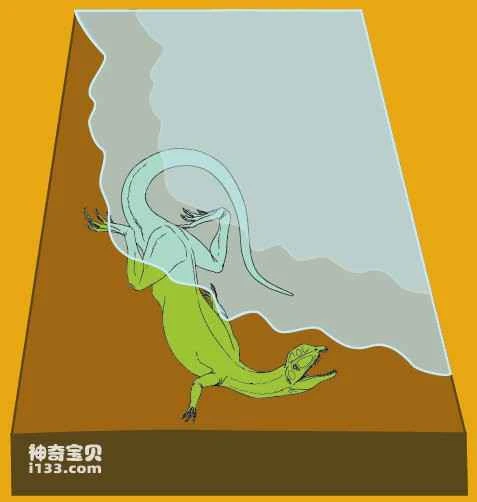
Phase 1: The dinosaur died while swimming in the lake. Its flesh decomposed, but its hard bones remained intact at the bottom of the lake.
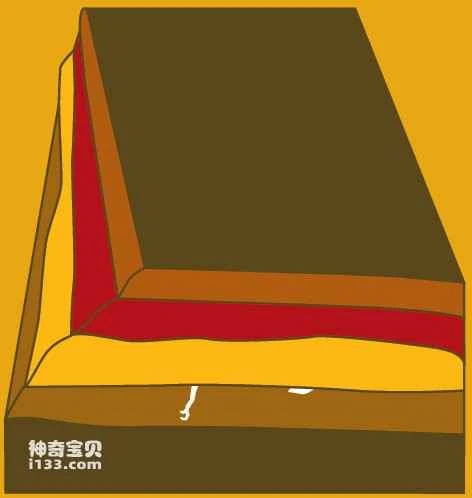
The second stage: Sediment accumulates on the dinosaur remains, and over time, a thick bed of sediment builds up on top, protecting the dinosaur bones from scavengers.
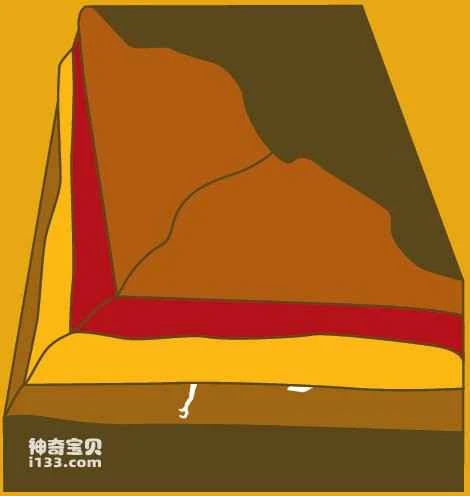
The third stage: Gradually, the bones are replaced by minerals transported by groundwater, turning them into stone (this process is called total mineralization, as described above). Over time, as more sediment accumulates, pressure and compaction increase, eventually transforming the bone and sediment layers into bedrock.
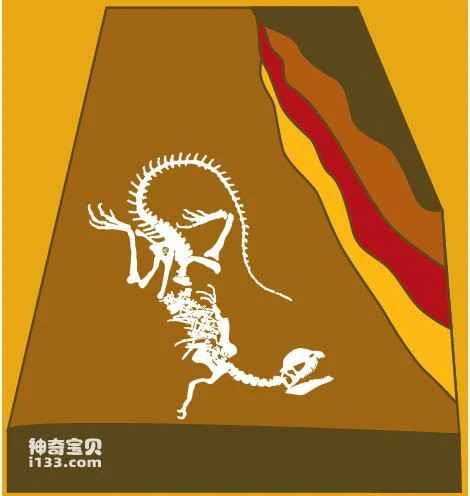
What is the fossil record?
The fossil record refers to the record of life on Earth preserved, discovered, and studied by paleontologists. However, the record is incomplete and often biased towards certain organisms rather than others.
For example, the most common fossil remains to date are those of shelled invertebrates that lived in aquatic environments (lakes, rivers, and oceans), such as snails, corals, and clams.
Fossils of terrestrial organisms are far rarer than those of aquatic creatures. For terrestrial organisms to become fossils, they must either be buried in aquatic environments such as lakes or rivers, or be buried by volcanic ash produced during volcanic eruptions. Because of this, most terrestrial organisms never have the opportunity to become fossils. There may be some terrestrial biota that have yet to be found in the fossil record. But this means there is still much to be discovered about the history of life on Earth! Therefore, we continue to investigate, explore, and unravel the mysteries of Earth's fossil record.