Russia spans across Eurasia, covering approximately 17.09 million square kilometers, and boasts diverse ecosystems ranging from Arctic tundra and coniferous forests (taiga) to high mountains, deep lakes, and great rivers. This vast and varied natural environment has fostered an exceptionally rich array of wildlife. This article compiles information on 15 of the most representative Russian animals , providing key details such as distribution, habitat, morphological characteristics, and conservation status, facilitating quick understanding for both scientific and observational purposes.
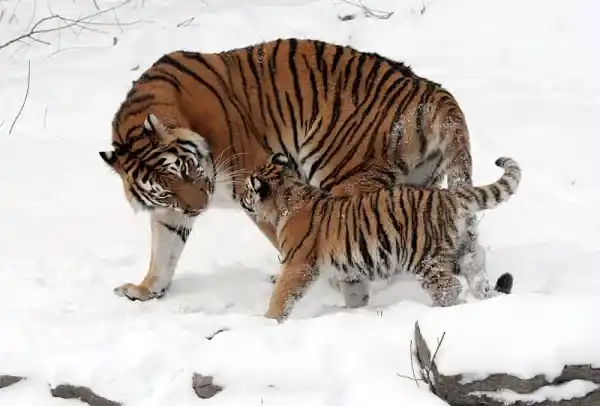
1) Siberian tiger ( Panthera tigris altaica )
Distribution and Habitat : Primorsky Krai in the Russian Far East (east of the Amur River to Khabarovsk Krai), Sikhote-Alin Mountains and East Manchuria (within China) coniferous and broad-leaved mixed forests.
Morphological characteristics : The coat color is lighter than other tiger subspecies, and the winter coat is dense to keep warm; there are fewer stripes and the brown color is lighter, and each individual has a unique stripe pattern.
Threats and Conservation : Long-term impacts from poaching and habitat fragmentation. The wild population was estimated at only about 390 individuals in 2005. To strengthen habitat and population connectivity, Russia initiated the construction of protected areas on islands off the coast of Vladivostok in 2018.
Ecological note : Large apex predators play a crucial role in maintaining the food web structure of Far Eastern forests.
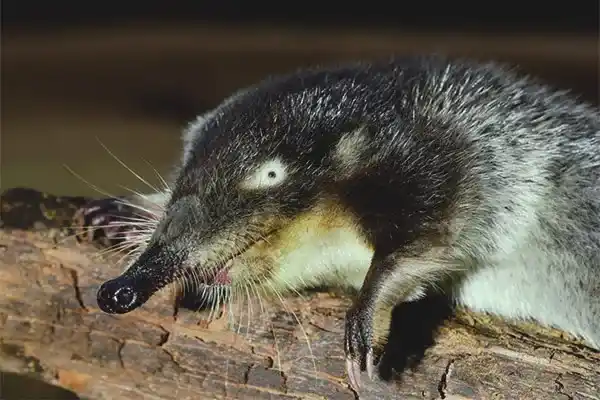
2) Russian muskrat/Russian long-nosed mole ( Desmana moschata )
Distribution and habitat : Western Russia, waters and wetlands of the Tang River, Ural River and Volga River basin (Europe's longest river); semi-aquatic.
Morphological characteristics : Belongs to the family Mole, and its body shape is similar to that of a water shrew; it has a flexible "long nose"-like snout with extremely sensitive touch; the glands in its tail can secrete a strong musky scent.
Human use and threats : Historically, it was heavily hunted for its hides and musk; today it is still threatened by illegal fishing and habitat degradation.
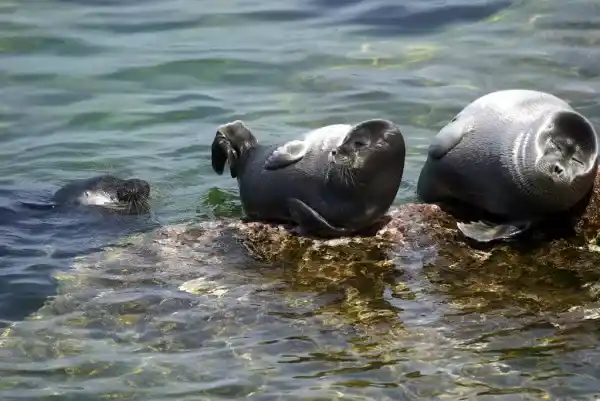
3) Baikal seal/Nerpa seal ( Pusa sibirica )
Distribution and Habitat : Endemic to Lake Baikal and its adjacent water systems; flagship species of the world's deepest ancient lake.
Key characteristics : Small to medium-sized, lives its entire life in freshwater, and is one of the few freshwater seals in the world.
Threats : Industrial and agricultural pollution (such as organochlorine/organophosphorus compounds), habitat disturbance, and illegal hunting of juveniles.
4) Bareheaded blimp/Transparent fish " Comephorus spp."
Distribution and habitat : A deep-water fish endemic to Lake Baikal, inhabiting cold, deep layers.
Morphological characteristics : The body surface is transparent, without scales or swim bladder; the body fat content is extremely high (about 35% ), and in ancient times the oil was extracted for use as lamp oil and medicinal resources.
Ecological relationship : It is one of the important food sources for Baikal seals.

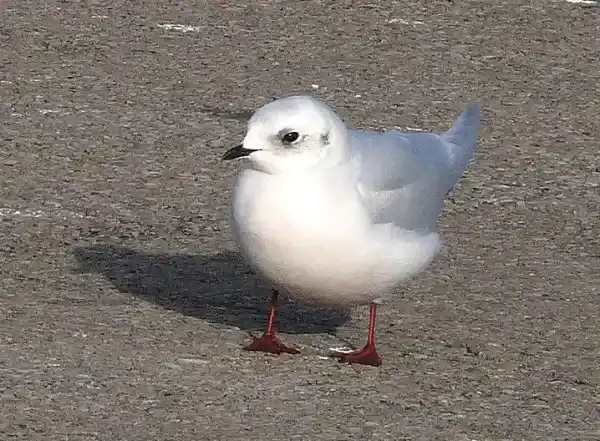
5) Roseate Gull ( Rhodostethia rosea )
Distribution and habitat : Near the Arctic high latitudes; breeds in Siberia, northern tundra and wetlands, and is active in the Arctic Ocean ice belt and coastal airspace during the non-breeding season (the literature also records observations near Manitoba and other places).
Key identification features : small in size, some individuals have pale pink plumage; rare in number, vulnerable .
Birdwatching tips : Due to the remote habitat and small population size, birdwatching in the wild is quite difficult.
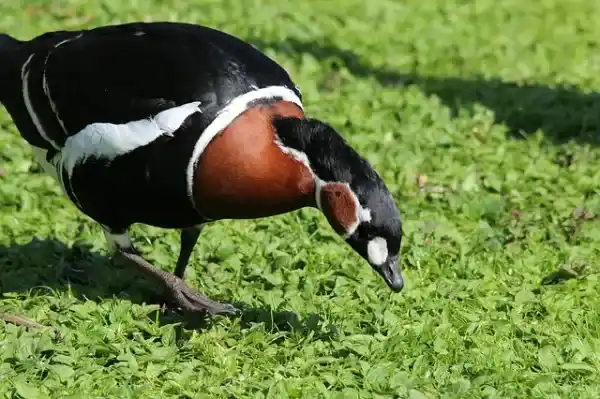
6) Red-necked Goose ( Branta ruficollis )
Distribution and Habitat : Tundra-forest transition zone of the Yamal and Taimyr Peninsulas in Siberia; most overwinter on the southern coast of the Caspian Sea, with a few reaching the cold waters of Iran and Iraq.
Ecology : They breed in small groups, often forming small flocks of several pairs, and their habits are somewhat isolated from other geese.
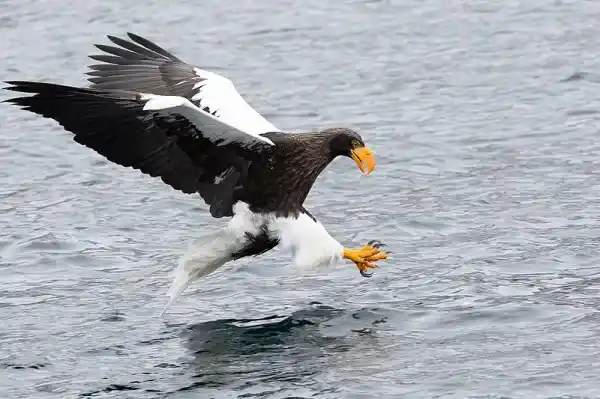
7) Steller's Sea Eagle / Steller's Sea Eagle ( Haliaeetus pelagicus )
Distribution and habitat : Northern coast of East Siberia, coast of the Sea of Okhotsk, Kamchatka Peninsula, lower Amur River, Sakhalin Island, etc.; closely associated with salmon migration and carcasses of aquatic mammals.
Morphological characteristics : One of the largest birds of prey in the world; black head and back, with a striking white tail, legs and wing folds; a huge yellow beak used to peck at large fish and carcasses.
Observation tip : Group activity is common in salmon estuaries during winter.
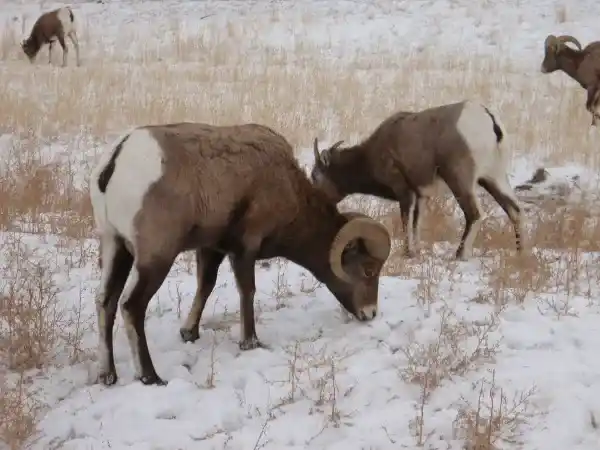
8) Snowy Sheep ( Ovis nivicola )
Distribution and Habitat : Far northeastern mountains such as Kamchatka and Chukotka; mostly found on steep rocky slopes and scree hills .
Key characteristics : Both males and females have horns, with females having shorter horns (about 30 cm); they are extremely sensitive to "trophy hunting".
Conservation tip : Strict control of hunting pressure and disturbance to core breeding grounds is key to the survival of the population.
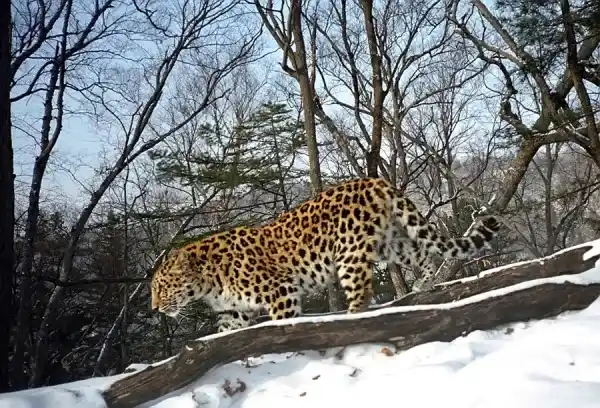
9) Far Eastern Leopard/Heilongjiang Leopard ( Panthera pardus orientalis )
Distribution and Habitat : From the Amur River basin in eastern Siberia to the coast of the Sea of Japan; broad-leaved forests to mixed coniferous and broad-leaved forests connected with Northeast China.
Conservation status : One of the rarest leopard subspecies in the world, with only 25–34 individuals remaining in the wild (historical estimates), classified as critically endangered; suffering from poaching, habitat loss, and inbreeding .
Morphological characteristics : Long and dense coat in winter, with the color gradually lightening from golden yellow to facilitate camouflage in the snow; strong limbs, with a running speed of up to about 55 km/h .
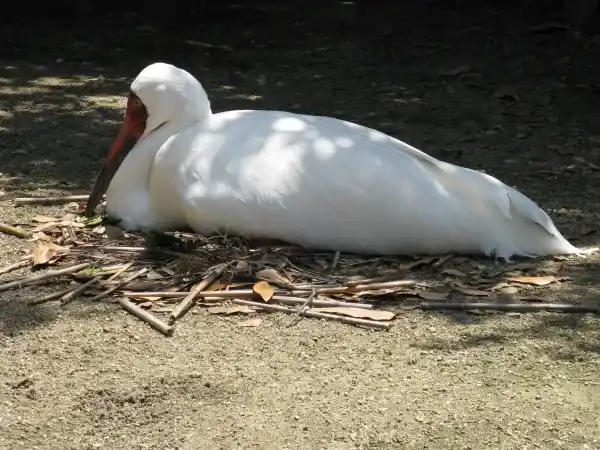
10) Siberian Crane ( Grus leucogeranus )
Distribution and migration : They mainly breed in Russia (southern Western Siberia, Yakutia, Arkhangelsk Oblast, Komi Republic and Yamal-Nenets Autonomous Okrug, etc.); their migration distance can reach 6,000 km , and their wintering grounds include parts of India, Iran and China.
Conservation : Overall endangered, with the western population particularly vulnerable (approximately 20 individuals in the wild). Rehabilitation measures such as artificial incubation and release of chicks have been implemented.
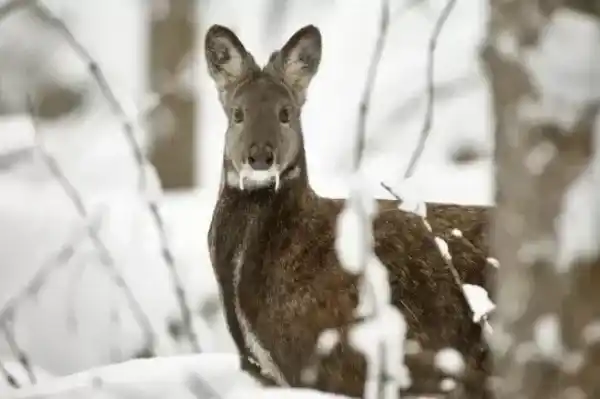
11) Siberian Musk Deer ( Moschus moschiferus )
Distribution and habitat : From the eastern edge of the Tibetan Plateau and the eastern section of the Himalayas northward to the Far East, the Korean Peninsula, Sakhalin, Amur and Primorsky Krai.
Morphological characteristics : Males are hornless , but have long, curved canine teeth below the upper lip; hind limbs are long, and they are good at jumping and making sharp turns.
Behavior and intelligence : Avoiding predators and hunters by changing their tracks and weaving through rock crevices.
Human stress : Musk is highly valued, and historically there has been significant hunting pressure.
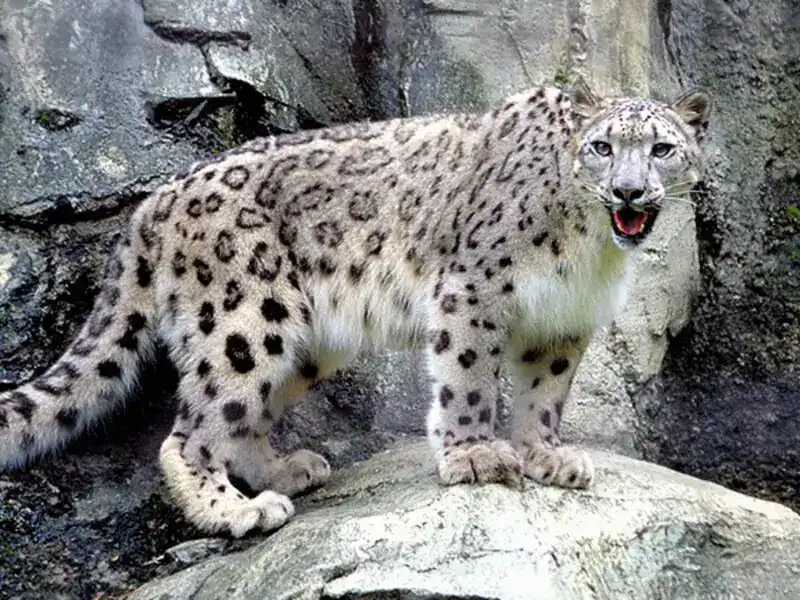
12) Snow leopard / Leopard ( Panthera uncia )
Distribution and habitat : In Russia, it is mainly found in the high mountain areas such as the Sayan Mountains and Altai Mountains in Siberia.
Morphological characteristics : The extremely long and thick tail helps maintain body temperature and balance in cold environments; the gray-white base color with black rose-shaped markings serves both as insulation and camouflage.
Conservation status : The global wild population is estimated to be no more than 4,000 ; poaching, habitat loss, and climate change (rising snow line) are the main threats.
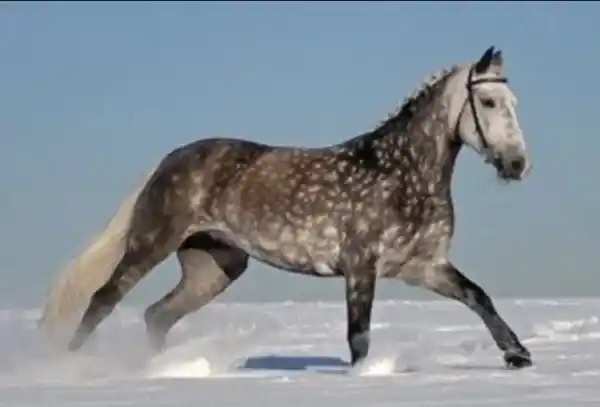
13) Orlov Trotter ( Equus ferus caballus , breed)
Origin and distribution : One of the oldest and most well-known native horse breeds in Russia; systematically bred by the nobleman Alexei Orlov in the suburbs of Moscow in the 1770s.
Variety characteristics : Commonly gray and white mixed colors (also light gray and dark brown); tall and long body, light frame but fast speed, noble posture, and thick mane; lively and friendly temperament.
Uses : Historically used for pulling carriages, racing, and ceremonial purposes, it is a versatile instrument.
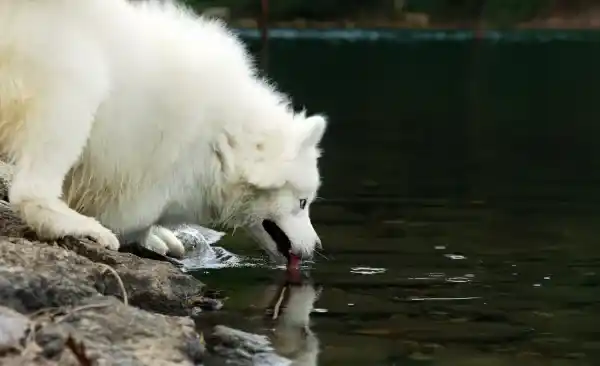
14) Samoyed Guard Dog ( Canis lupus familiaris , breed)
Humanistic and ecological background : They have lived alongside the Samoyedic indigenous people of the Arctic Circle for thousands of years, assisting with hunting, sledding, guarding , and herding.
Key characteristics : The Samoyed has a distinctive "smiling" face, a thick double coat, and is extremely cold-resistant; it is affectionate, obedient, and has excellent physical fitness. Its long-term purebred breeding in remote areas has made it one of the oldest and best-preserved dog breeds.
Traditional uses : Dogs were once used to care for children and to sleep with people for warmth, reflecting the symbiotic relationship between humans and dogs in harsh environments.
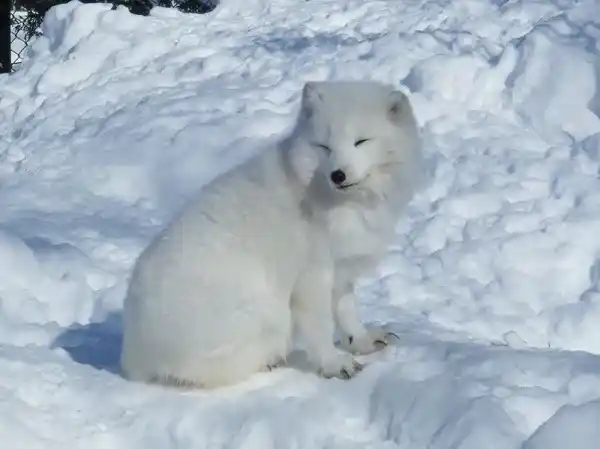
15) Arctic fox ( Vulpes lagopus )
Distribution and Habitat : Typical tundra inhabitants, found throughout the Russian Arctic coast and islands.
Seasonal costume change : In winter, it is covered with pure white long fur to hide in the snowfield; in summer, it is changed to brown and gray to match the snowless terrain.
Ecological pressures include prolonged periods of extreme cold, food shortages, and competition from large predators; human commercial use of hides also poses a major threat.
Conclusion
From snow tigers in the dense forests of the Far East and Steller's sea eagles on the Arctic ice seas, to the unique freshwater seals and transparent fish of Lake Baikal, the Russian fauna spans extreme cold and temperate zones, mountains and lakes, coasts and tundra. These species not only demonstrate extraordinary adaptability to extreme environments but also play irreplaceable ecological roles in their respective food webs. Protecting them is also protecting the natural heritage and ecological security covering Eurasia.