Fish are the most numerous vertebrates on Earth. Although we cannot distinguish them as easily as we do mammals or birds, they can be found in polar seas, tropical coral reefs, rivers, lakes, and estuaries. Their amazing adaptability and morphological diversity make "fish classification" a systematic and fascinating subject.
I. Taxonomy of Fishes
According to biological hierarchy, "fish" can be placed in the following positions (simplified presentation for ease of understanding):
Domain : Eukaryote
Kingdom : Animalia
Subkingdom : Eumetazoa (possessing true tissues)
Superphylum : Deuterostomia (embryonic development begins with the anus, followed by the mouth)
Phylum : Chordata (possessing a notochord, dorsal nerve tube, gill slits, and tail)
Subphylum : Vertebrata (possessing a vertebral column/vertebrae)
Major Classes :
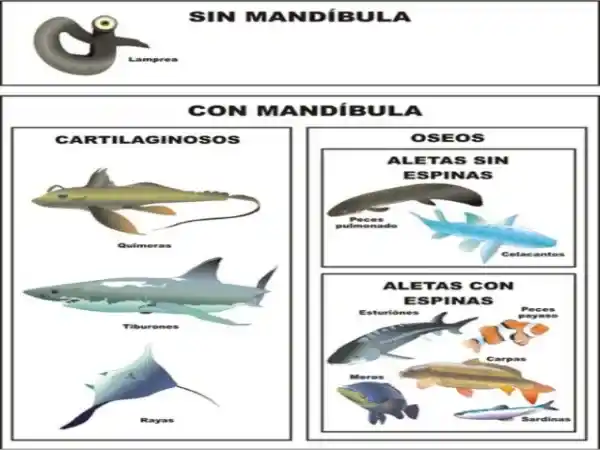
Jawless (Agnatha)/Cyclostomata : such as lampreys and hagfish
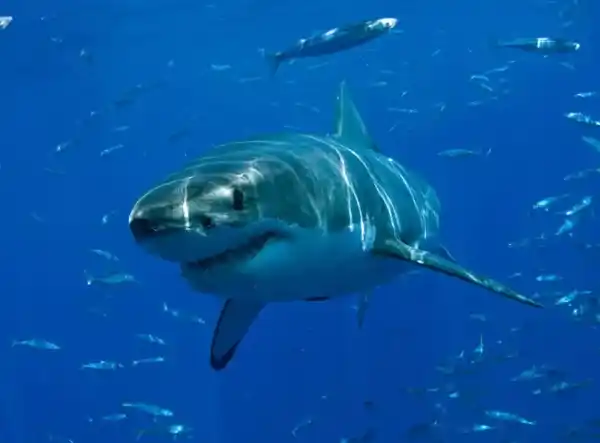
Chondrichthyes : such as sharks, rays, stingrays, and chimaeras.
Osteichthyes : Spinnerfish + Lobefinfish
Note: Modern classifications are more refined, but the above framework is sufficient to cover common knowledge points about "fish".
II. Chondrichthyes
Key characteristics : The skeleton is made of cartilage ; the body surface is covered with dermal denticles ; there is no swim bladder (it balances itself mainly through fatty liver, dynamic rising and sinking); the gill slits are exposed and clearly lateral; the development and reproduction methods are diverse (oviparous, ovoviviparous, and viviparous).
Representatives and Examples
Sharks : such as the whale shark Rhincodon typus (the world's largest living fish, a filter feeder).
Rays/ Skates: such as those in the family Gymnuridae , have extremely broad and flat pectoral fins and are adept at moving close to the bottom.
Electric rays (family Torpedinidae): possess electric organs, which can be used for defense or predation.
Silver Shark/Ghost Shark (Chimaeras, order Chimaeriformes): Deep-sea type, its appearance differs from that of a shark.
Morphological and ecological key points
It has a well-developed sensory system: in addition to the lateral line, it also has the ampulla of Lorenz to sense weak electric fields, which is beneficial for predation.
Teeth can grow in a "replacement" manner; most are apex or secondary predators in the ocean, but there are also filter-feeding giant sharks.
3. Osteichthyes (boneless fish)
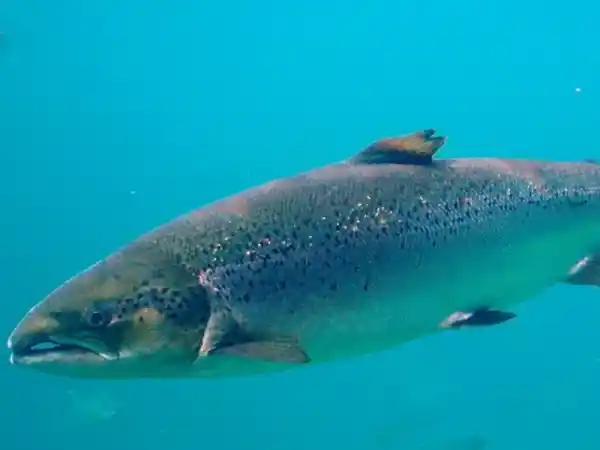
Key characteristics : bony skeleton ; gills protected by operculum ; most possess swim bladders (for regulating buoyancy/sound resonance, etc.). Divided into two main lineages:
1) Actinopterygii
Characteristics : Fins are supported by **fin rays (hard/soft rays); they are numerous and occupy almost all water areas and ecological niches.
Common examples :
Salmon (such as Atlantic salmon)
Salmon and trout genus Oncorhynchus (Pacific salmon/rainbow trout, etc.)
Sardines (Sardina pilchardus)
Cyprinus (carp)
Tuna ( Thunnus ) are high-speed ocean migratory fish.
2) Sarcopterygii
Features : The fleshy fins are supported by bones and muscles, and are considered a " sister group " of tetrapods (amphibians, reptiles, birds, and mammals).
Representative of living fossils :
Lepidosiren paradoxa (South American lungfish)
Neoceratodus forsteri (Queensland lungfish)
IV. Cyclostomata (Agnatha; Cyclostomata)
Key features : jawless, round mouth ; mostly worm-like/eel-like; no paired fins (or very underdeveloped), but unpaired dorsal/anal fins may be obvious; scaleless skin ; serpentine swimming motion; single dorsal nostril ; gill sacs arranged in a sac-like pattern .
Two representatives
Lampreys (Petromyzontidae) : Adults are mostly marine parasites or freshwater migratory, using a disc-shaped mouth to attach and scraping with the edges of their teeth; some species migrate upstream to spawn.
Hagfish (Myxinidae) : such as the Atlantic hagfish Myxine glutinosa , live on the deep sea, secrete mucus for self-protection, and have obvious eye degeneration.
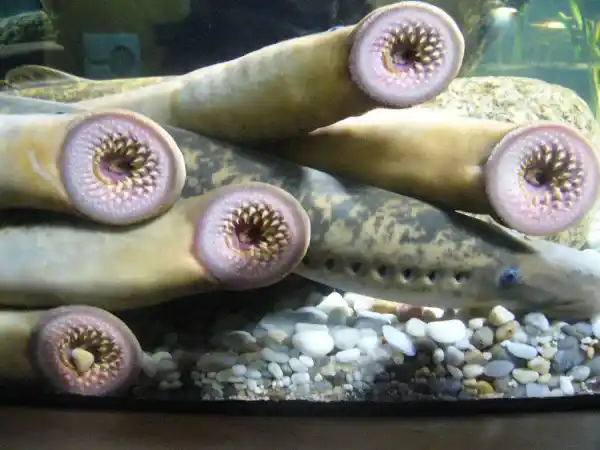
Cyclostomata are one of the most "primitive" branches of vertebrates, showcasing key stages in the evolution from chordates to gnathostomes.
V. Common Characteristics and Ecological Diversity of Fish
1) Physiology and body surface
Cold-blooded/polythermothermic animals : Their body temperature fluctuates with the environment.
Fins and body shape : Fins replace limbs; body shape varies greatly.
Fusiform (high-speed cruising, like a tuna).
Flat (flounder, stingray)
Snake-shaped (eel)
Spherical (pufferfish)
Deep-sea "alien" creatures, etc.
Covering and color : Mostly covered with scales (round scales, ctenoid scales, ctenoid spines, etc.); colors and camouflage are varied—blue-silver, dark, transparent, metallic, striped/spotted; many species have contrasting colors (lighter belly and darker back) for concealment.
2) Breathing and Sensation
Gills are the primary organ (a few also have skin/intestine as secondary organs; lungfish have lung-like structures).
Lateral line systems sense water flow vibrations; some have electric organs (such as electric eels and electric rays) or light-emitting organs (deep-sea bioluminescent fish).
3) Behavior and Sociality
Forming schools (fish groups/fish colonies) improves foraging and defense efficiency;
Cave-dwelling/territorial species defend their reproductive and food resources;
There is a symbiotic/mutualistic relationship (such as cleaner fish removing parasites).
4) Feeding type
Top predators (sharks, tuna, etc., feeding on fish/cephalopods/seabirds, etc.);
Filter feeders (such as whale sharks and basking sharks that filter-feed plankton);
Omnivorous/herbivorous (many reef-dwelling fish mainly feed on algae);
Parasitism/parasitism (such as some lampreys feeding on the host's body fluids).
5) Reproduction strategy
Gender differentiation is widespread, but gender systems are diverse:
External fertilization/high egg production (mostly bony fish);
Mouthbrooding/caring for juveniles (Cichlidae, etc.);
Cis/reverse sex conversion (such as common sex conversion in grouper and wrasse);
Cartilaginous fish commonly exhibit diverse reproductive methods, including oviparous, ovoviviparous, and viviparous .
Migration : Going upstream or descending to the sea to spawn (salmon, eel, etc.) constitutes a famous life cycle.
VI. Quick Memorization of the Three Major Categories
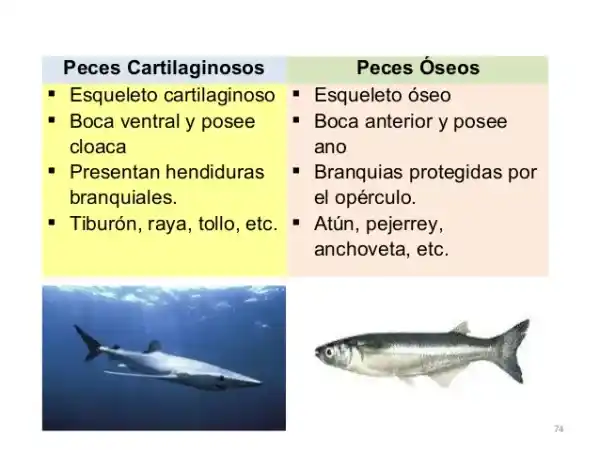
Cartilaginous fish : Cartilaginous skeleton, exposed gill slits, rough skin and teeth, no swim bladder (mostly marine).
Bony fish : bony skeleton, gill covers protecting the gills, (most) have swim bladders , and have the most diverse morphology and ecology.
Cyclostomata : jawless , round mouth, scaleless skin, gill sac-like, eel-shaped body, mainly lampreys and hagfish.
summary
Fishes are not a single class, but a large collection of vertebrates that have evolved independently in water and exhibit highly differentiated morphology and ecology. From jawless to jawed, from cartilaginous to bony, from shallow seas to deep seas—understanding their taxonomic context and key characteristics can help us better identify species, interpret behaviors, and recognize their unique roles in aquatic ecosystems.
References
Serrano, A. (1999) Fishes (an article on Argentine zoology). El Tabano Journal, Vol. 6 (1), pp. 2–9.
Granado, C. (2002) Fish Ecology. University of Seville, Publications Secretariat, Vol. 45, pp. 15-28.
Espinosa, H. (2014) Fish biodiversity in Mexico. Mexican Journal of Biodiversity, Vol. 85 (1), pp. 450-459.