Monotremata are the most unique and oldest group of mammals. They possess characteristics of mammals, reptiles, and birds: they lay eggs , nurse their young with milk , have fur on their bodies, and retain some reptilian skeletal structures. Today, monotremata are found only in Australia, Tasmania, and New Guinea , and are extremely rare in the wild.

What are monopore classes (definition and classification)?
Scientific name and meaning : Monotremata comes from Greek and means " one opening ", referring to its cloaca (a single body cavity opening used for excretion and reproduction), which is similar to that of birds and reptiles.
Evolutionary position : Monotremes belong to the subclass Prototheria within the class Mammalia. They are homologous with **Marshmallows (Metatheria) and Eutheria (Placenta), and the three share an earlier mammalian ancestor.
Date of emergence : Fossil and molecular evidence suggests that monotremes appeared at least 110 million years ago (Early Cretaceous).
Extant members typically include one species of platypus and one species of echidna (one species of short-beaked echidna + two to three species of long-beaked echidna, depending on the classification system). In other words, there are views that there are between four and five extant monotremes .
Key features of monoporous classes
1) Reproduction and Development
Oviparous : The only living mammal that lays eggs . The eggs are leathery (with a membranous outer layer, not a hard shell), more like those of reptiles and birds.
Hatching and raising young : The number of eggs laid each year is very small (1–2) . The incubation period is short, and the hatchlings are extremely immature . They rely on the mother's pouch or abdominal folds for carrying and keeping warm.
Unique nursing method : Monoporean mammals do not have nipples ; milk seeps out from the mammary gland secretion area (mammary pore or hair area) on the abdomen, and the young suckle the fur to obtain it.
Sex chromosomes : Unlike placental/marsupial animals, monotremes **have 5 pairs of sex chromosomes (10 in total)** involved in sex determination, some of which have similar sequences to the avian Z chromosome.
2) Body temperature and metabolism
Their body temperature is lower than that of other mammals (commonly around 31–32 °C ), and their metabolic rate is also lower, which helps them survive in environments with limited energy intake.
3) Anatomy and Sensory Organisms
Cloaca structure : Excretion and reproduction share a single opening ("single orifice").
Teeth and jaws : Juveniles have primitive deciduous teeth for hatching, while adults are mostly toothless and use horny pads or beaks to process food.
Hearing : The middle ear of mammals has three ossicles .
Gait and shoulder girdle : The limbs are abducted to the side, and the shoulder girdle retains more "crawling-like" elements, which is a primitive feature.
Sensory system : The platypus has electroreceptors and mechanoreceptors in its beak, which can sense changes in the muscle electrical potential of its prey in muddy water; the echidna has a sensitive tactile snout.
4) Defense and Adaptation
Venomous stings : Male platypuses have spurs on their hind limbs that are connected to venom glands . The venom becomes more potent during the breeding season and is used for competition and defense among males. The spur glands of echidnas have degenerated into non-venomous ones .
Body surface and insulation : The echidna's body surface is densely covered with hard spines and coarse hair; the platypus's fur is dense, waterproof, and has strong insulation properties.
Ecological habits : Widely adapted to environments such as water edges, woodlands and alpine rainforests, and generally feeds on insects and small invertebrates .
Representative species and key identification points
1) Platypus Ornithorhynchus anatinus
Distribution : Rivers, streams and swamps in eastern Australia and Tasmania.
Size and appearance : Body length is about 40 cm (excluding tail), with a wide and flat beak like a duck's bill , webbed feet , and a flat and thick tail like a beaver.
Behavior and diet : Skilled at diving and digging nests, nocturnal or active at dawn and dusk; feeds on freshwater benthic invertebrates (such as insect larvae, worms, and crustaceans), and uses electrosensory perception to locate prey in murky water.
Venomous stinger : The male's hind limbs have a stinger connected to a venom gland, and being stung will cause severe pain and edema.
Conservation : Overall, they are still relatively common, but habitat pollution, damming that alters hydrology, and entanglement in fishing nets put pressure on the population.
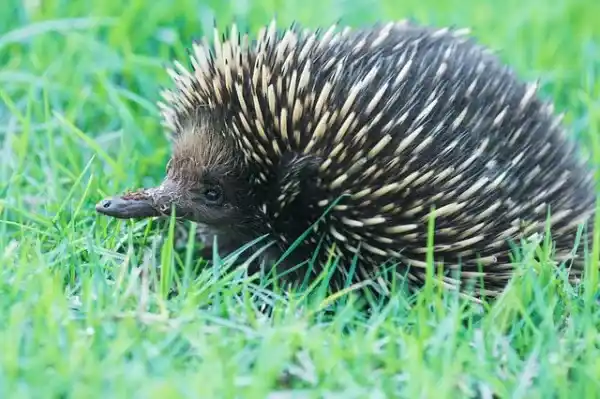
2) Short-beaked echidna Tachyglossus aculeatus
Distribution : Mainland Australia, parts of Tasmania and New Guinea.
Appearance : Body length 50–75 cm , covered with hard spines and coarse hair ; short and thick snout, toothless , with a retractable sticky tongue .
Diet : It feeds exclusively on ants, termites , and their larvae; its forelimbs have strong claws, making it adept at digging nests.
Reproduction : After laying one egg, the egg is placed in a temporary brood pouch . After hatching, the larva (called a puggle) is carried by the mother's abdominal folds and feeds on her milk.
Adaptability : Tolerant of temperature differences, highly flexible in activity rhythm, individuals are common but regional density is affected by fire and land use.
3) * Zaglossus * genus (long-snouted echidna )
(Depending on different classification viewpoints, 2–3 species are generally recognized, all of which are mountain species in New Guinea and are larger than the short-snouted echidna.)
Western long-snouted echidna ( Zaglossus bruijni)
Eastern long-nosed echidna ( Zaglossus bartoni)
Attenborough Echidna ( Zaglossus attenboroughi) (some taxonomic series are separate species)
Common characteristics :
Distribution and Habitat : High-altitude rainforests and tundra shrublands in New Guinea, at elevations of over 3000 m.
Appearance and diet : The snout is more slender and the forelimbs have large claws, which facilitates deep digging in the soil; the main food is insects and larvae in the soil .
Defense : Dense hard spines; when threatened, it curls into a ball or quickly burrows into the ground to "dive" .
Conservation : They generally face habitat fragmentation, canine predation, and human hunting pressure, and are mostly assessed as endangered to critically endangered , with very few sightings in the wild and difficult monitoring.
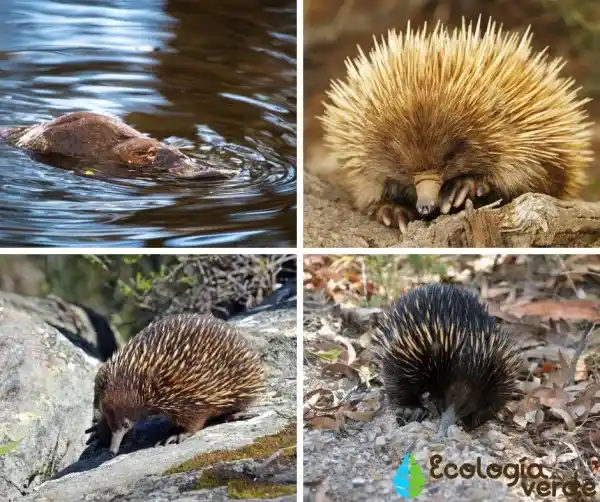
Monotremes and other mammals: similarities and differences
Commonalities (Essential characteristics of mammals)
It has hair and mammary glands that secrete milk to nurse its young;
A mammalian auditory/maxillary structure consisting of three middle ear ossicles and a mandibular dentary-squamous bone joint .
Differentiated features
Oviparous (non-viviparous), cloacal , nippleless breastfeeding method;
Low body temperature and low metabolism ;
It retains more of the original skeleton and gait;
Specialized electrosensors (platypus) and spur venom glands (male platypus).
summary
Monotremes show us another path in mammalian evolution: they found a unique balance between oviparity and lactation , and have survived to this day in the diverse aquatic and terrestrial environments of Oceania thanks to their low metabolism, specialized feeding, and remarkable sensory systems . Whether it's the platypus that "reads electric fields" underwater or the echidna with its armor like a hedgehog , they are all precious "living fossils" for understanding the origins and adaptive radiation of mammals.
References
Martinelli, A., Forasiepi, A., and Rougier, G. (2008) Southern Cuneiformes: Close Relatives of Mysterious Monotremes. Science Today, Vol. 18 (104).
Flores, D. (2015) World Handbook of Mammals: Monotremes and Marsupials. Lynx Publishing House, Tucumán Mammal Research Society of Argentina, Vol. 22 (2), pp. 423-424.
Bruna, C. (2008) Venomous Animals: Venomous Terrestrial Vertebrates Harmful to Humans in Spain. Aragonese Naturalists Association (ANSAR), pp. 32-34.