The vast deep sea undoubtedly holds many secrets currently unknown to humankind, attracting the continued attention of many scientists. On April 3rd, media reported that scientists photographed a snailfish in southern Japan. They used an automated machine called "Landing" to capture images of this snailfish at a depth of 8336 meters in the Ogasawara Trench of Izu, southern Japan. Snailfish are suckers, feeding on tiny crustaceans in the trench. They currently have no natural predators, and once caught, they instantly "melt" into a jelly-like substance.
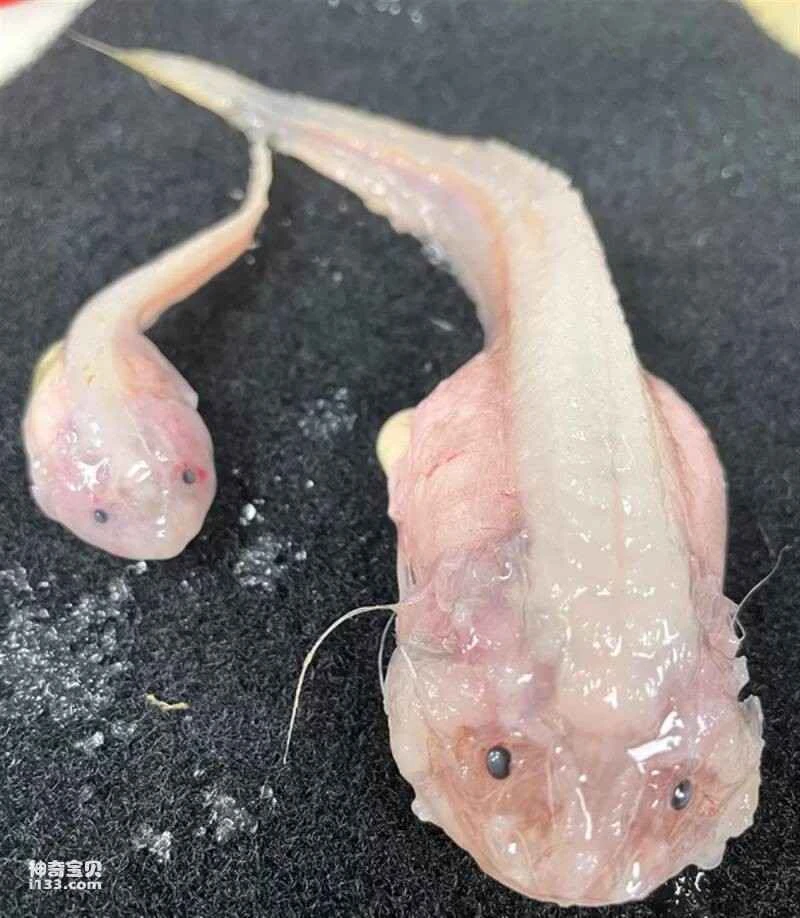
Prior to this, the record for the deepest seabed fish was at a depth of 8,178 meters in the Mariana Trench. This new discovery extends that record by 158 meters. Scientists speculate that the water temperature in the Izu-Ogasawara Trench is warmer than that in the Mariana Trench, which may be the reason why fish can survive at greater depths.
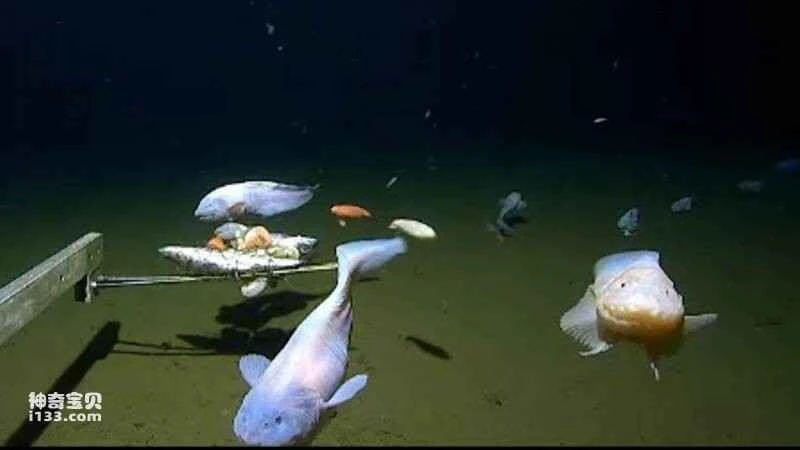
Long ago, scientists believed that the maximum depth at which fish could survive in the deep sea was between 8,200 and 8,400 meters below the sea surface. One figure showed that the pressure on fish below 8,000 meters was 800 times that at the sea surface.
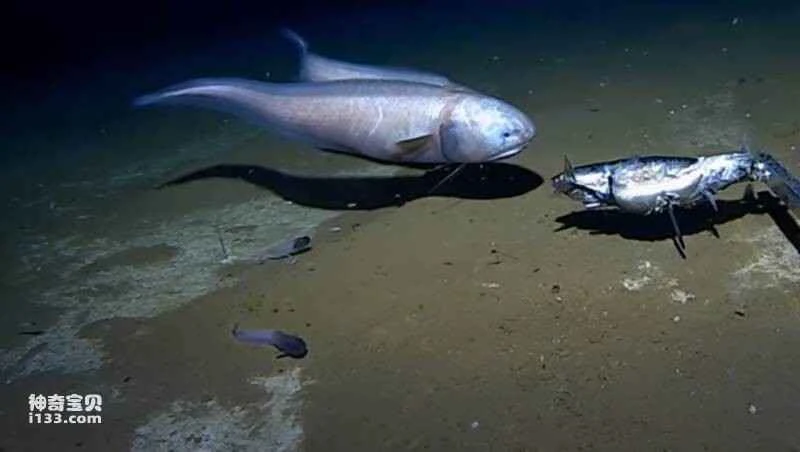
It is understood that there are about 300 species of snail fish, most of which are actually shallow-water creatures. However, due to the lack of a swim bladder and a gelatinous body, they are extremely adaptable. Once these fish are caught on land, they will instantly melt into a "jelly-like" state.
The reason for this amazing phenomenon is that, in order to adapt to this extreme living environment, their bodies have evolved into a soft, jelly-like state. This state can withstand high pressure and low temperature, but it also requires extremely high water pressure and extremely cold environment to support the body. Once it floats to the surface, it will be unable to maintain its original body due to changes in pressure and temperature, and will melt rapidly.