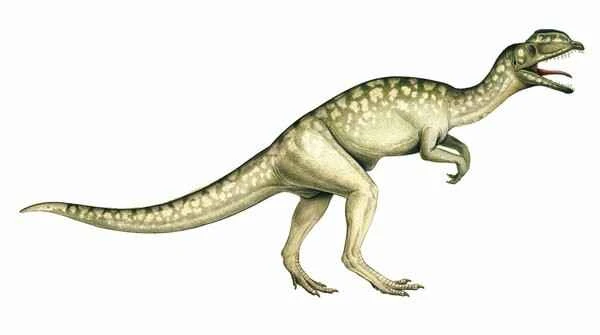
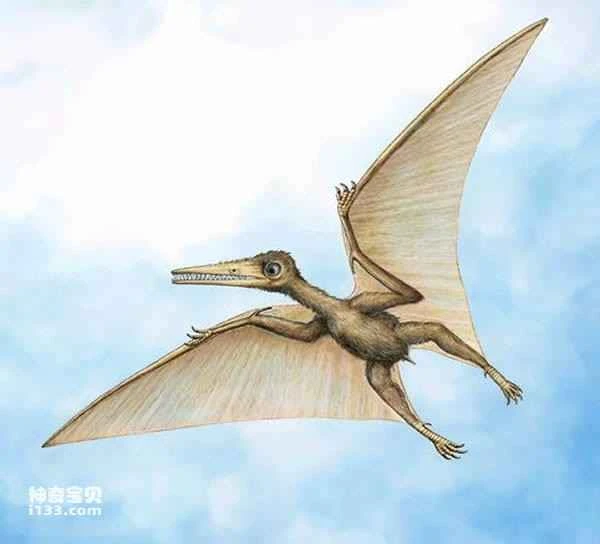
A new study suggests that the extinction of dinosaurs 65 million years ago after being struck by a meteorite during the Late Cretaceous period was entirely due to "bad luck." The new research argues that if the meteorite impact had occurred millions of years earlier or later, the dinosaurs might not have gone extinct. British scientists point out that the meteorite struck during a period when the dinosaurs' ecological environment was at its most vulnerable, making their extinction almost inevitable.
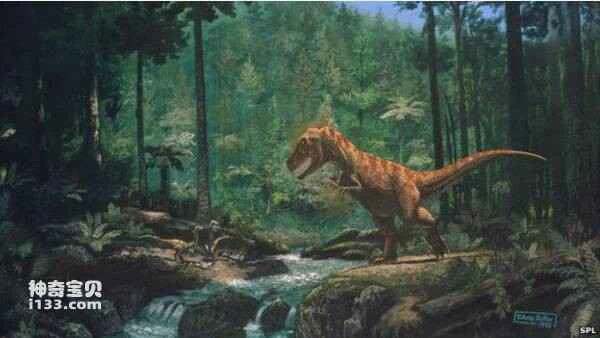
Dr. Steve Brusatte of the University of Edinburgh in Scotland said that before the meteorite struck Earth, the planet was already experiencing rising sea levels and frequent, intense volcanic activity due to global warming, and many species were already on the verge of extinction.
He believes that if the meteorite had struck the Earth millions of years earlier or later, the dinosaurs might have had a chance to avoid extinction, thus making them truly "extremely unlucky."
The research findings, involving eleven senior dinosaur experts from the UK, US, and Canada, have been published in the latest issue of the biology journal *Biological Reviews*.
Inescapable
Dr. Brusat told the BBC about the extinction of the dinosaurs: "It was a perfect storm – an event where almost all bad luck came together, and it just so happened that the dinosaurs' ecosystem was at its most vulnerable."
Previous evidence suggests that many dinosaur species had already begun to die out even before the meteorite impact; therefore, some scientists question whether dinosaurs would have gradually gone extinct naturally even without the meteorite impact.
However, many experts believe that while global warming, rising sea levels, and increased volcanic activity did cause some herbivorous dinosaurs to go extinct, there is no indication that dinosaurs faced total extinction before the meteorite impact.
New research suggests that if a meteorite had struck Earth millions of years earlier or later, most dinosaurs might still be alive and multiplying, and might even still rule the Earth today.
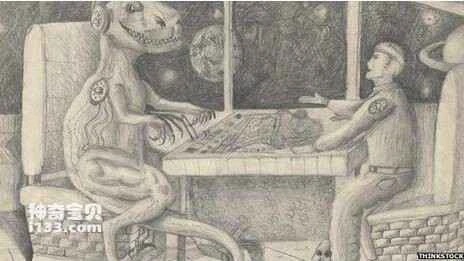
Science fiction illustrations depict dinosaurs coexisting with humans, possessing similar intelligence and language.
“The ecological environment was much better five million years before the meteorite impact, with a greater variety of flora and fauna and a more robust food chain, making it difficult for a single natural disaster to cause species extinction,” Dr. Brusat said.
"Similarly, if the meteorite had struck a few million years later, dinosaurs and the ecosystem would have had a chance to evolve and recover to a more diverse state."
He pointed out that dinosaurs lived and evolved on Earth for 160 million years, during which time they faced numerous giant natural disasters and extraterrestrial catastrophes, but they always managed to overcome these challenges and did not face a survival crisis.
In other words, if the timing of the meteorite impact had been different, dinosaurs might still be "ruling" the Earth today.
Humanity's Gospel
Of course, scientists have also pointed out that although the meteorite impact was a devastating blow to dinosaurs, without the dinosaur extinction, mammals, including humans, might have disappeared from the earth, because they would not have been able to compete with dinosaurs or reproduce and evolve to the present day.
“If the dinosaurs hadn’t gone extinct, we wouldn’t exist,” Dr. Brusat said with a laugh. “Because mammals would never have had the opportunity to evolve and thrive in a world dominated by dinosaurs.”
Many people may have wondered: if dinosaurs had truly continued to evolve to the present day, would they have become intelligent animals and perhaps even possessed language?
“It’s possible!” Dr. Brusat said. “In the natural process of evolution through survival of the fittest, anything is possible. Dinosaurs could certainly have evolved into intelligent life.”
On this point, Cambridge University professor Simon Conway Morris theoretically agrees with Brusatte's statement; however, he does not believe that dinosaurs would have ruled the earth forever.
dissenting voices
Professor Conway Morris believes that even without the mass extinction caused by a meteorite impact, dinosaurs would have gradually disappeared through natural evolution, just like any other species.
He believes that in a dinosaur-dominated world, other species, under immense survival pressure, are more likely to evolve intelligence and the ability to make and use tools first.
“From that moment on, the dinosaurs were doomed,” Professor Conway Morris said.
Not all scientists support Dr. Brusatte's theory. Many have pointed out that while Brusatte's new theory makes sense, the research results do not convincingly prove that dinosaurs would have survived if the meteorite had struck Earth earlier or later.
Dr. Butler from the University of Birmingham said, "We cannot travel back in time millions of years to prove whether the asteroid impact would have caused the mass extinction earlier or later, but we agree that the dinosaurs' living environment was indeed unfavorable at that time."
Dr. Barrett of the Natural History Museum in London also stated that it is difficult to say that dinosaurs would not have gone extinct without the meteorite impact, but the new research at least proves one point: the direct cause of dinosaur extinction was definitely the meteorite impact rather than climate change at the time.