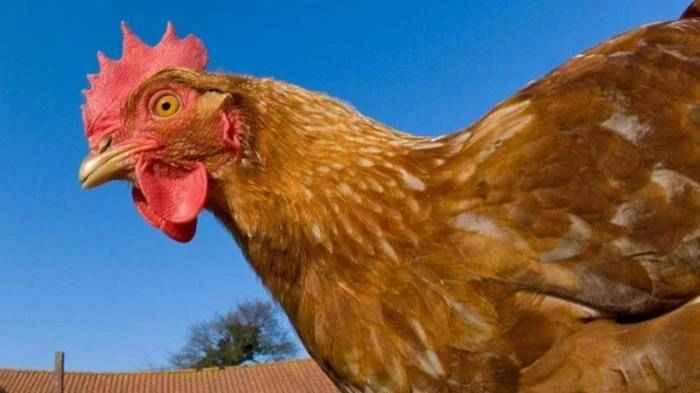
Legend has it that even among birds, chickens are considered dull-witted; they are merely a group of walking meat factories, their only skill being laying eggs.
In fact, this most common bird in the world is actually quite intelligent and may even care about the well-being of its kind—which could present a difficult ethical dilemma for the chicken industry.
There are many facts about chickens that you might not imagine. As one of the most numerous vertebrates in the world, there are a total of 19 billion chickens globally. However, most people don't have much contact with chickens, or even any contact at all—at least not with live chickens.
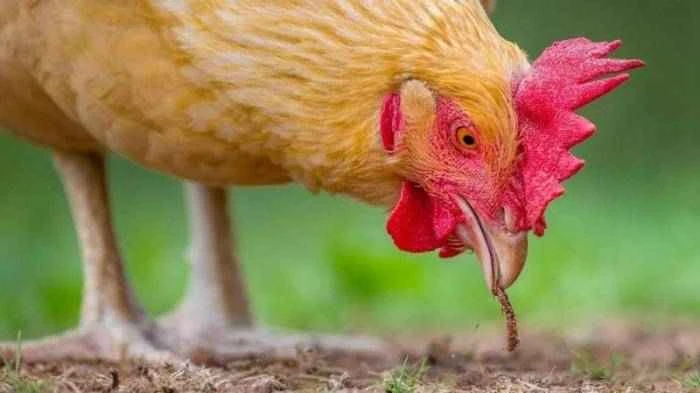
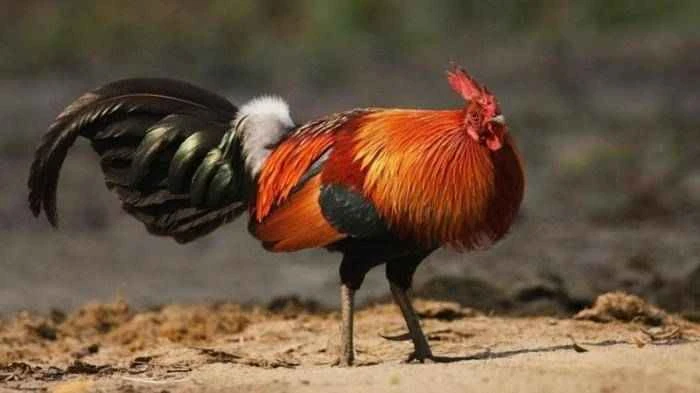
As a result, people have developed some strange stereotypes about chickens. Some studies suggest that many people don't even consider chickens to be birds. In fact, chickens are a representative species of Galliformes, an order that also includes turkeys, partridges, and pheasants.
Chickens don't appear to possess the complex psychological characteristics of "higher" animals like monkeys and apes, leading to the common perception that they are not very intelligent. Certain elements in popular culture have further reinforced this impression, while also reducing the psychological stress people experience when eating eggs or chicken.
However, chickens are not actually stupid animals.

Chickens can count, possess a degree of self-awareness, and can even scheme against each other. In fact, chickens are very intelligent animals, and even short-term contact with them is enough to change long-held misconceptions. In a 2015 study, Lisel O'Dwyer and Susan Hazel taught an undergraduate course at the University of Adelaide in Australia. To study psychology and cognitive science, students conducted a series of experiments, including training chickens.
Before the course began, students were asked to fill out a questionnaire. Most students said they had little prior experience with chickens. They believed that chickens were simply creatures that did not exhibit complex emotional responses such as boredom, annoyance, or pleasure.
However, after just two hours of training, most students were convinced that chickens were absolutely capable of perceiving the three emotional states mentioned above.
"Chickens are much smarter than I imagined," one student wrote in a follow-up questionnaire. Another student commented, "I never knew chickens were such intelligent animals; they learn incredibly quickly."
As a follow-up to this unpublished study, Oldowey organized a similar experiment with workers in the chicken farming industry, with the same conclusion. "Two completely different social groups showed similar attitudes toward chickens, and the attitude shifts after the experiment were also quite similar," she said.
She is currently researching whether this experience will affect human eating habits—for example, whether people will be more inclined to eat chickens raised in a more humane way.
In January 2017, Lori Marino of the Kimmela Center for Animal Advocacy in Kanab, Utah, released a series of reviews and assessments of research findings on chicken cognition, of which Oldowey's findings were just one.
"This paper is part of the 'Someone Project,' a joint initiative between Farm Sanctuary and Kimmela Animal Advocate," Marino said. "The project aims to provide the public with scientific data related to livestock."
Marino stated that scientific evidence confirms that domestic chickens are not as ignorant and unintelligent as most people believe.
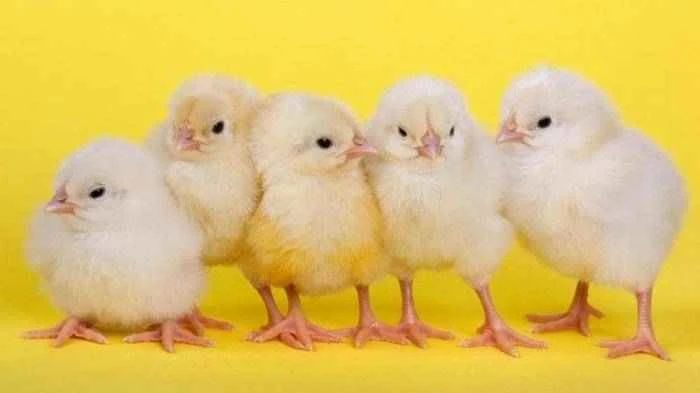
For example, Rosa Rugani and her colleagues at the University of Padova in Italy have published a series of papers over the past decade. Through their research on newly hatched chicks, they discovered that chickens can not only count, but also perform certain basic algorithms.
After the chicks hatched, five Kinder Surprise eggs were placed in the coop. A few days later, the experimenters removed all five eggs in front of the chicks, then hid three of them behind a screen and the remaining two behind a second screen. Most of the chicks ran towards the screen with the most Kinder Surprise eggs.
Subsequent experiments tested the chicks' memory and their ability to perform addition and subtraction. The experimenters hid Knockout eggs behind screens and moved them back and forth between the screens in front of the chicks. The chicks seemed to always know the number of Knockout eggs behind each screen and then ran towards the screen with the most eggs.
Even though they are newly hatched and lack life experience, chickens possess powerful numerical calculation abilities, Lujani said.
She believes this ability is more common in higher animals, and chickens clearly possess it as well. "This ability helps animals adapt to their natural environment, such as moving to places with more food or seeking protection from the largest number of their kind," she said.
Chickens can also perform "conscious time travel"—that is, the ability to imagine the future—in order to obtain more food. This was confirmed by a 2005 study conducted by Siobhan Abeyesinghe, then working at the University of Bristol in the UK.
Abiyesingh devised an experimental mechanism: two keys were placed in front of the chicken. Pecking at the first key gave a brief chance to obtain food after a 2-second delay. Pecking at the second key gave a longer chance to obtain food after a 6-second delay.
Most chickens choose to peck at the second key: although the wait is longer, they get more food. In other words, chickens have self-control—some biologists believe that self-control implies a degree of self-awareness.
Chickens exhibit complex social behaviors.
Studies have confirmed that birds can sense the fate of their kind and take advantage of this premonition.
If a rooster finds delicious food while foraging, it will dance for the hen next to it, giving a feeding signal to attract her attention.
However, if a lower-ranking rooster also performs the usual dance/calling routine, it may be attacked by a higher-ranking rooster. Therefore, if a higher-ranking rooster is nearby, a lower-ranking rooster will often remain silent while performing a unique dance to attract the hen's attention without being noticed by the higher-ranking rooster.
Meanwhile, some roosters will make enticing calls even when they don't find food, in an attempt to lure the hens. The hens can quickly identify which roosters are frequently using these tricks.
There is evidence that chickens have basic empathy for their own kind.

Over the past six years, Joanne Edgar of the University of Bristol in the UK has conducted a series of studies. The aim of the research is to test the reaction of hens when their chicks are spewed air – similar spewing actions had previously been performed on hens, and the hens felt very uncomfortable when spewed air.
When the hen exhales air at the chicks, her heart rate increases, and she calls to them more frequently. However, if the air is exhaled near the chicks without affecting them, the hen does not react in the same way.
A 2013 paper stated that hens learned to associate one colored box with a jet sprayer and another colored box with safety—no jet sprayer. When chicks were placed in the "dangerous" box, the hens showed signs of worry even when no jet sprayer was being applied to them.
This suggests that hens can be aware of the potential dangers facing their chicks through self-knowledge, rather than simply reacting to the dangers the chicks are experiencing.
Research is ongoing, Edgar said. "We still can't determine whether the hen's behavior and physiological responses when chicks are in danger are an emotional reaction, or simply a stress response or an expression of interest."
If it is indeed proven that chickens can feel compassion when their kind suffer misfortune, it will pose serious problems for the chicken farming industry's breeding processes.
"In many cases, captive animals can sense the pain and suffering of their kind through sight, hearing, and smell," Edgar said. "It must be determined whether the welfare of the captive animal has been compromised in such situations."
Marino also believes it's necessary to seriously consider these issues. "People think chickens lack self-awareness and are unintelligent simply because they are food for humans," she said.
One surprising fact is that chickens possess cognitive abilities beyond most people's imagination. But whether this will change consumer shopping habits at the meat counter remains to be seen.