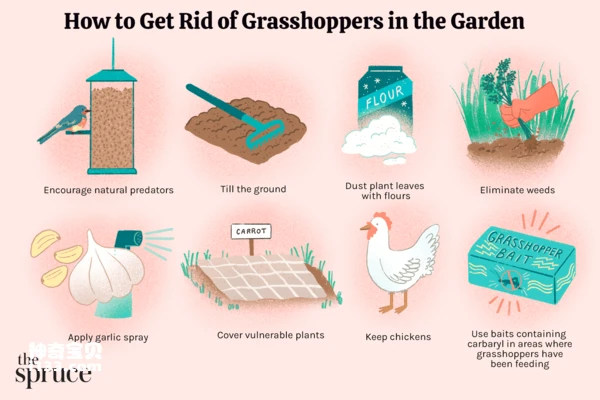
Locusts are pests that cause serious damage to crops and vegetation. The following methods are commonly used to eliminate locusts:
1. Chemical control: Spraying or fumigating areas where locusts congregate with pesticides. This method is effective, but it may also have negative impacts on the environment and human health, and should be used with caution.
2. Biological control: Using natural enemies or parasites to control locust populations. For example, natural enemy insects or birds can be introduced to prey on locusts, or parasitic insects can be used to parasitize locusts and limit their reproduction.
3. Mechanical control: Use mechanical equipment (such as insect-catching lamps, nets, traps, etc.) to collect and kill locusts. This method is suitable for small-scale locust outbreaks, but may not be effective for large-scale outbreaks.
4. Ecological control: By altering the structure and function of the ecosystem, the habitat and food sources of locusts can be reduced. For example, by changing farming practices and increasing vegetation cover, the damage caused by locusts can be mitigated.
5. Integrated pest management: Utilize a variety of methods, including chemical, biological, and mechanical approaches, and adopt targeted integrated management measures to achieve the best control results.
In practice, appropriate control measures should be taken based on the type, number, and distribution range of locusts, as well as local environmental conditions and agricultural production, in order to minimize the damage of locusts to crops.
Detailed introduction to locusts
Locusts are a type of insect, mainly including those in the families Acrididae and Grasshopperidae. Both their larvae and adults feed on plants, making them a significant agricultural pest. The characteristics and habits of locusts are as follows:
Physical characteristics: Locusts are relatively large, with an elongated oval body, two pairs of short wings, and well-developed hind legs adapted for jumping. The larvae and adults are similar in appearance, but the larvae are smaller.
Habitat and Habits: Locusts mostly live in arid, grassland, and other similar environments. They like to gather together, forming large swarms. They are usually active at night or in the early morning, and mostly remain still during the day.
High reproductive capacity: Locusts reproduce extremely quickly. A pair of adults can lay hundreds of eggs, and the hatched larvae can grow into adults in a short time to form a new colony.
Wide range of food sources: Locusts feed on a variety of plants, including crops and grassland vegetation, causing serious damage to agriculture and ecosystems.
Strong migratory ability: Some locusts have the ability to migrate long distances, causing the spread of pests across borders.
Few natural enemies: Locusts have relatively few natural enemies. Common natural enemies include birds, spiders, and parasites, but it is difficult to effectively control locusts.
Because locusts are numerous, reproduce rapidly, and have a certain migratory ability, outbreaks can easily cause severe agricultural disasters. Therefore, timely and effective measures are needed to control locusts and minimize losses to agricultural production.
Locusts, also known as grasshoppers, are a general term for a group of insects, mainly including those in the families Acrididae and Locustidae. They are typical herbivorous insects, feeding on various plants, including crops and wild plants, and are considered one of the important pests in agricultural production.
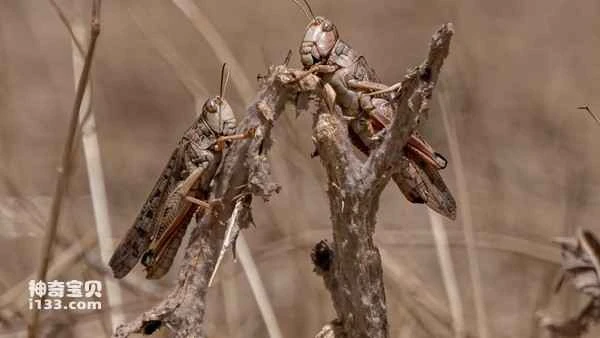
The main characteristics of locusts include:
Physical characteristics: Adults are relatively large with slender bodies, usually with two pairs of wings and relatively long hind legs adapted for jumping. Larvae are similar in appearance to adults but smaller.
High reproductive capacity: Locusts reproduce quickly. A pair of adults can lay hundreds of eggs. After hatching, the larvae grow rapidly and can become highly reproductive adults in a short period of time.
Swarming behavior: Locusts often form huge swarms, numbering in the hundreds of millions, causing enormous damage to crops and vegetation.
Migratory ability: Some locusts have a strong migratory ability and can migrate long distances, causing the spread of pests across borders.
Wide range of diets: Locusts feed on a variety of plants, including grasses, vegetables, and grassland vegetation, causing serious impacts on agricultural production and the ecological environment.
Locusts have historically caused severe disasters, severely damaging human agricultural production and the ecological environment. To control locusts, integrated measures such as chemical, biological, and mechanical control are typically employed to reduce their harm to crops.
Are locusts beneficial or harmful insects?
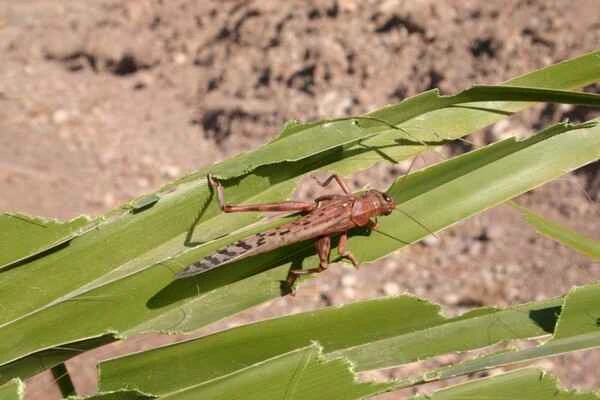
Locusts can be both beneficial and harmful insects, depending on their numbers and behavior.
The beneficial insect side:
Role in the balance of nature's ecosystem: In nature, a suitable number of locusts are part of the ecological balance. They can serve as a link in the food chain, providing food for other animals.
Soil improvement: In certain quantities, locust excrement can improve soil texture and promote plant growth.
Herbivorous role: Locusts, within a suitable range, can control the excessive growth of plants and help maintain the health of vegetation.
The side of pests:
Large-scale crop destruction: When locusts become too numerous, they form massive swarms that devour crops and wild vegetation over large areas, causing severe agricultural and ecological disasters.
Economic losses: Locust plagues can lead to large-scale crop failures, affecting farmers' incomes and causing significant losses to the agricultural economy.
Impact on ecosystems: Large-scale locust breeding and cannibalistic behavior disrupt the balance of ecosystems and affect the survival of wild flora and fauna.
Therefore, the beneficial or harmful effects of locusts depend on their numbers and environmental conditions. A moderate number of locusts can serve as part of the ecosystem and provide some benefits; however, an excessive number can become a serious pest, causing severe damage to agriculture and the ecological environment. To maintain ecological balance and protect agricultural production, effective control measures are needed to manage locusts.