Chameleons belong to the family Chameleonidae in the order Squamata, and their scientific name is Chameleon. As masters of camouflage in the animal kingdom, chameleons are adept at changing their body color to adapt to their surroundings. Therefore, they are often considered top-tier pets. Do you know which chameleons are the most captivating? Today, we'll introduce ten of the world's most beautiful chameleons, including the Leopard Chameleon, Rainforest Jewel Chameleon, King Chameleon, Veiled Chameleon, Carpet Chameleon, Jackson's Chameleon, and Spotted Chameleon, among others. Let's admire their charm together.
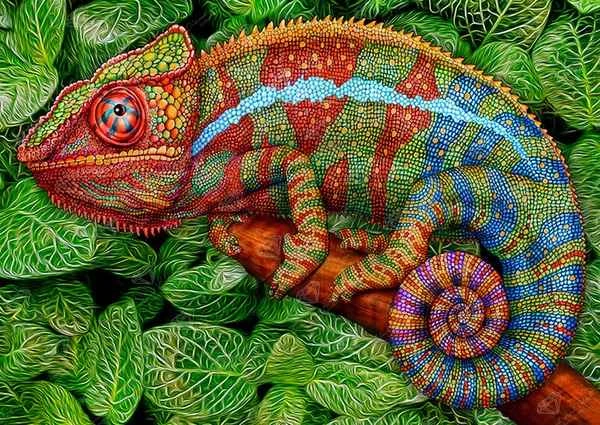
1. Leopard Chameleon (rich colors and varied patterns)
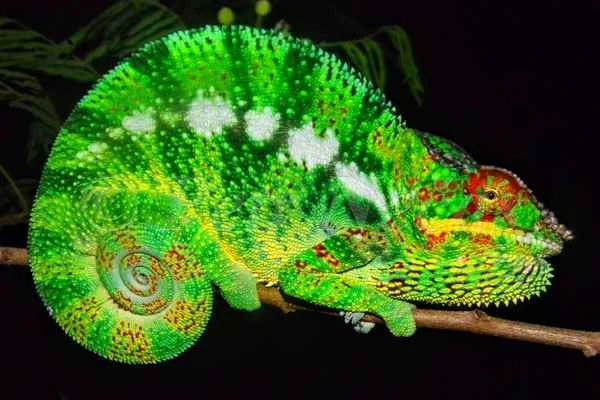
The leopard chameleon, also known as the rainbow chameleon, is one of the most beautiful chameleons, renowned for its rich colors and ever-changing patterns. Its striking appearance is captivating. Its color changes are closely related to its mood; for example, it may lighten in heat, turn red when angry, and turn gray when fearful. Some well-known chameleons, such as the Ambilube, Nosipae, and Nosifari, all fall into the leopard chameleon category. The difficulty of keeping leopard chameleons is comparable to that of veiled chameleons, but their price is slightly higher.
2. Rainforest Jewelry Chameleon (spherical scales, banded patterns)
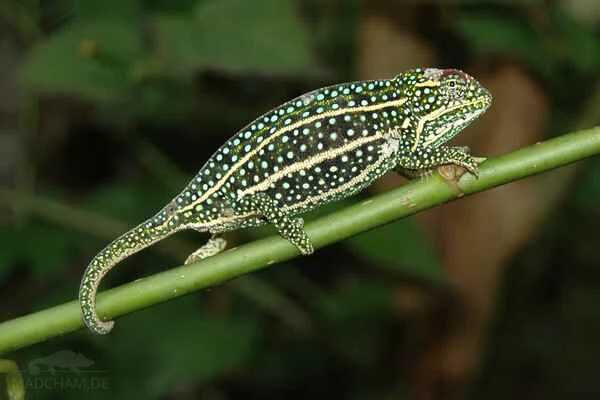
Jewel chameleons are widely considered the most captivating of all chameleon species, with the rainforest jewel chameleon being the most famous. Despite being called "jewel chameleons," the term doesn't refer to their dazzling, jewel-like colors, but rather to the delicate beauty of their spherical scales. These chameleons possess an incredible ability to change color, sometimes making it difficult to even determine their base color. Although the rainforest jewel chameleon is stunningly beautiful, its population has dwindled due to the near impossibility of transporting them and the extreme difficulty of capturing them in the wild. This lack of attention from the illegal pet trade has hindered its development.
3. The King Chameleon (the largest chameleon)
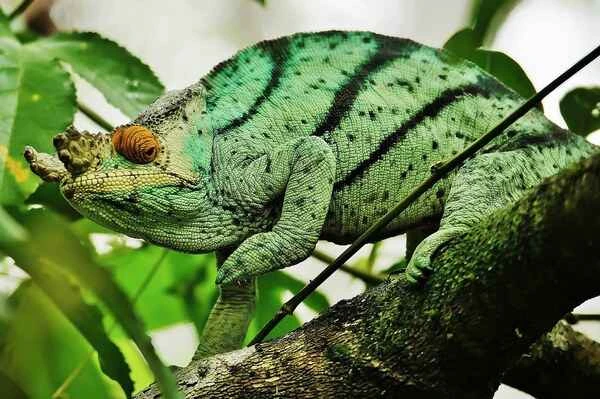
The King Chameleon is a large chameleon endemic to the remote, humid rainforests of Madagascar. Adult King Chameleons can reach 65 cm in length, with a few individuals reaching 70 cm. They are adept at hunting small mammals, birds, and even other reptiles, using their powerful tongues to capture prey in a single strike; the tongue can be up to 1.5 times the length of their body. This chameleon thrives on the island of Madagascar off the east coast of Africa. Not only are King Chameleons enormous, but they are also extremely rare and ferocious. They are considered one of the rarest chameleons.
4. Veiled Chameleon (adapts to a wide temperature range and is the cheapest chameleon)
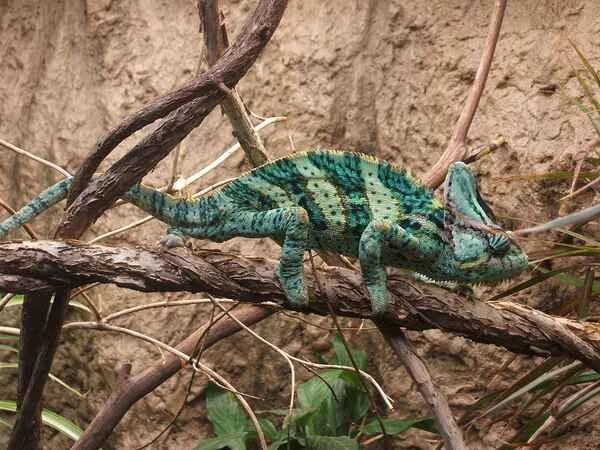
The hooded chameleon is famous for its prominent crest on its head. This chameleon is relatively rare, with a few found in Asia and the majority in Africa, particularly Madagascar. The hooded chameleon is adaptable to a wide range of temperatures, making it one of the easiest chameleons to breed and a perfect beginner's choice. It is therefore one of the most common and affordable chameleons kept by reptile enthusiasts worldwide.
However, it should be noted that in China, the veiled chameleon is listed as a Class II protected animal and is protected under the Convention on International Trade in Endangered Species of Wild Fauna and Flora (CITES). Therefore, it is illegal for individuals to buy, sell, or keep veiled chameleons, and it is prohibited to acquire or keep them privately.
5. Carpet Chameleon (short lifespan, beautiful during pregnancy)
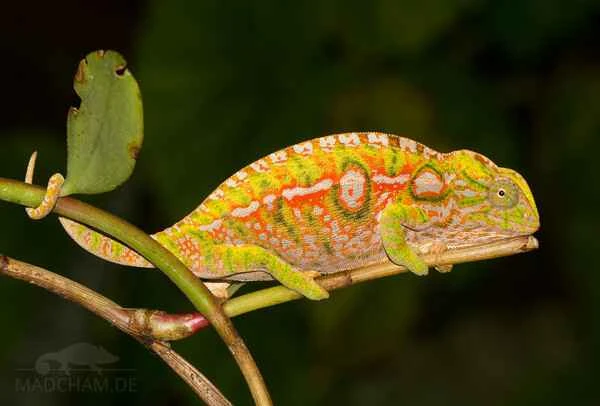
Carpet chameleons are an essential part of any chameleon overview, being a common species. They belong to the smaller arboreal chameleon group, and despite their small size, their reproductive capacity is remarkable, laying eggs year-round, producing 3-6 clutches per year. Wild carpet chameleon eggs typically have a higher hatching success rate than captive-bred eggs. During pregnancy, female carpet chameleons display vibrant and varied colors, making them more striking and eye-catching than males. However, carpet chameleons have a relatively short lifespan, typically only 2-3 years.
6. Jackson Chameleon (Triangular Chameleon, gentle temperament)
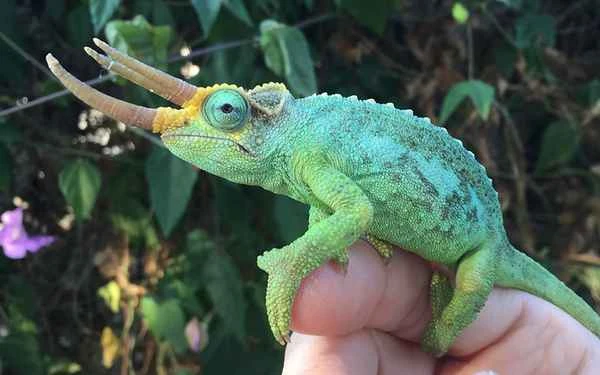
There are three most common types of chameleons kept as pets: the rainbow chameleon, the veiled chameleon, and the Jackson's chameleon. The Jackson's chameleon is one of these, found only in Kenya and Tanzania. They are known for their striking appearance and unique behaviors. Their eye-catching looks and amazing color-changing ability make them highly sought after by pet owners. Although Jackson's chameleons are not particularly aggressive, their captivating appearance and unique color-changing properties often lead to them being captured and trafficked worldwide as pets. While Jackson's chameleons have limited aggression, they are best kept alone to maintain their natural state. Compared to the other two types of chameleons, Jackson's chameleons are more difficult to keep.
7. Spotted chameleon (the most numerous type of chameleon)
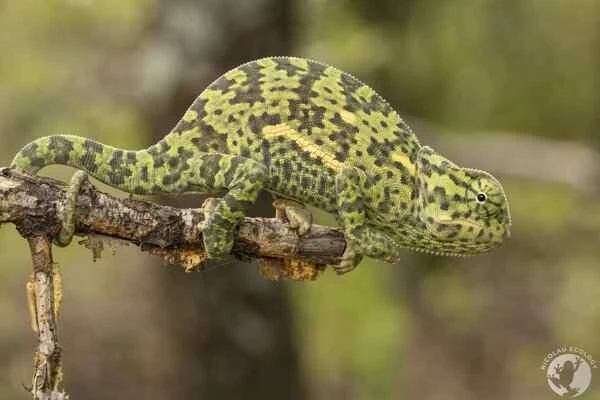
The spotted chameleon is one of the most widespread and numerous chameleons in the world. Due to its wide distribution, the spotted chameleon is generally more adaptable to different environments than other chameleon species. This species encompasses many subspecies, but these are not clearly distinguished, resulting in significant variations in body coloration. The main body color ranges from tan to green, all featuring black spots covering their bodies, and all possessing ear crests that can change their erection depending on their mood. However, due to differences in distribution areas, the size of the ear crests can vary considerably among spotted chameleons.
8. Mino Chameleon (vibrant colors, changes skin color in a very short time)
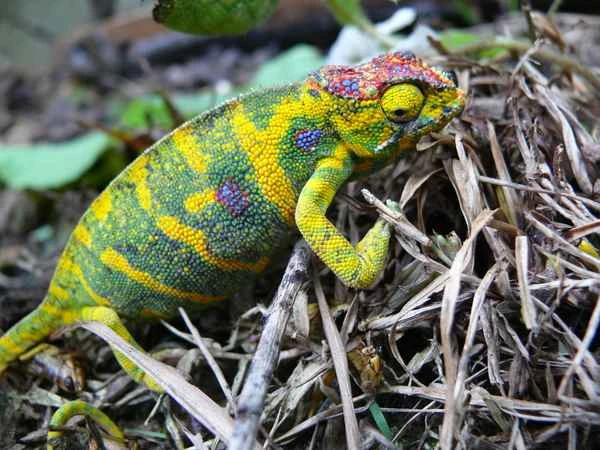
The Manno chameleon is a fascinating chameleon endemic to Madagascar, Africa. They primarily inhabit humid tropical forests at altitudes of 1000 to 1650 meters, and can even be found in coffee and cocoa plantations. Manno chameleons are typically solitary, active both day and night, and utilize their long tongues for highly efficient hunting of insects. This chameleon can breed three times a year. Males reach approximately 24 centimeters in length, while females are slightly smaller, around 16 centimeters. The Manno chameleon is renowned for its vibrant and varied colors, capable of rapidly changing its skin color to display astonishing color shifts.
9. Giant crowned chameleon (large spines, head crown covered with round scales)
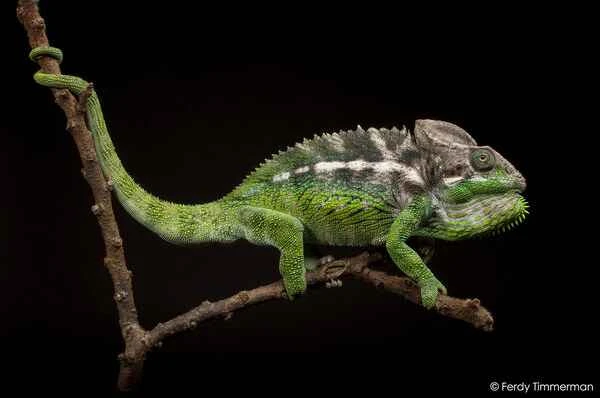
The Giant Crowned Chameleon is another large Madagascar chameleon, similar in appearance to the Orix chameleon, but with larger spines, a more slender body, and varied body colors. However, its most striking feature is the large, round scales covering its head and back, extending to behind its eyes, resembling fleshy warts, hence its common name, Giant Crowned Chameleon. With an understanding of their habits and a varied diet, training them is not more challenging than that of the Crested Chameleon. For keepers who prefer large chameleons, this type is a relatively easy option for successful breeding.
10. Miller Chameleon (Africa's largest chameleon)
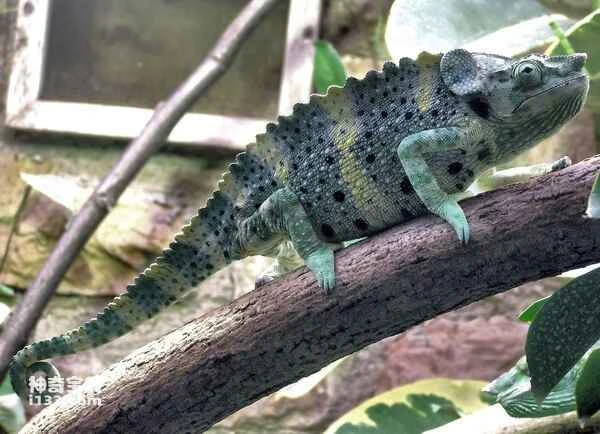
Miller's chameleon is the largest chameleon on the African continent. Adults can reach 61 centimeters in length, with a few reaching 76 centimeters and weighing up to 600 grams. This chameleon has a tongue up to 51 centimeters long, two fan-shaped occipital lobes resembling ears at the back of its head, and a row of semi-circular ridges covering its back. Typically, their skin patterns are yellow-green interspersed with spots, or alternating between white and green.
Miller chameleons are among the few chameleons that can live in groups and are more selective about their food than other chameleons. Both adults and juveniles prefer to hunt flying prey.