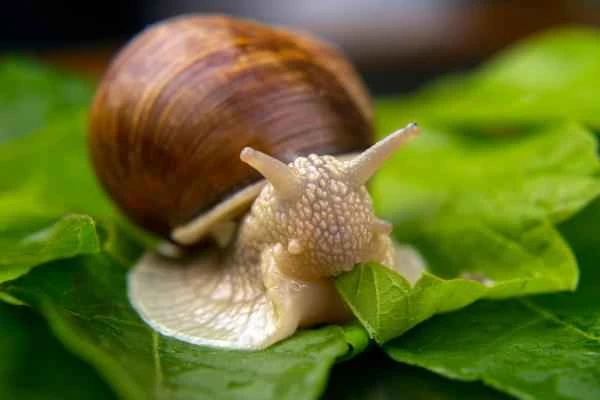
Land snails are visible mollusks with distinctive shells and soft, moist bodies. They belong to the class Gastropoda within the phylum Mollusca, the most diverse and widely distributed group of mollusks. Land snails are adapted to terrestrial life by breathing with lungs, inhabiting diverse environments, and primarily feeding on plants.
What is a land snail?
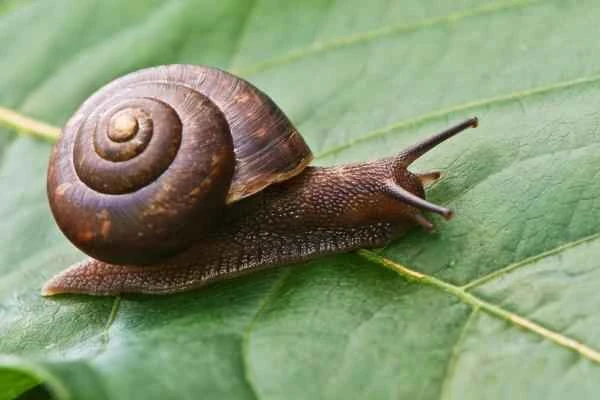
Terrestrial snails are invertebrates with a lung-like respiratory system, belonging to the order Stylommatophora in the class Gastropoda (also known as "straight-eyed snails"). Unlike aquatic snails, terrestrial snails have lost their gills and possess lung structures adapted to breathe air, a crucial adaptation that enabled them to successfully traverse land.
Main characteristics of land snails
Having lost their original gills, the lungs are transformed from a mantle rich in blood vessels, with air inlets and outlets called spiracles.
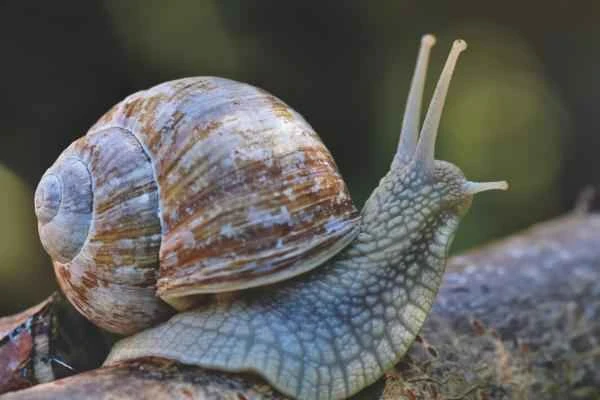
It has a hard shell that protects its internal organs, preventing dehydration and attacks from predators.
Some species (such as those in the Clausiliidae family) have a clausilium structure that can close the shell opening to protect the soft tissue.
It has flat, muscular feet and glands that secrete mucus, which help it glide and attach to different surfaces.
It has two pairs of tentacles, with eyes at the tips of the posterior pair of tentacles.
The mantle covers the internal viscera and body cavities, forming a protective layer.
Common types of land snails
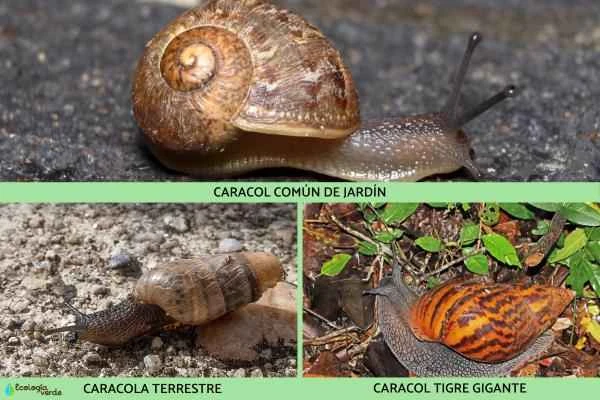
Common garden snail (Cornu aspersum) : Native to Europe, now widely distributed globally, and an invasive species in some regions; commonly found in Mediterranean cuisine.
Cocoon snail (Rumina decollata) : Found in the Mediterranean and North Africa, it is omnivorous and preys on other snails, slugs and their eggs.
White-shelled snail (Helicella stiparum) : with a hard white shell, drought-resistant, found in arid vegetation regions of Spain.
Megalophaedusa martensi : Endemic to Japan, the largest member of the Clausiliidae family.
Giant tiger snail (Achatina achatina) : Native to West Africa, it can reach a length of 18 cm and is one of the largest land snails in the world.
Rock snail (Plagiodontes rocae) : Endemic to southwestern Buenos Aires, Argentina.
Habitat of land snails
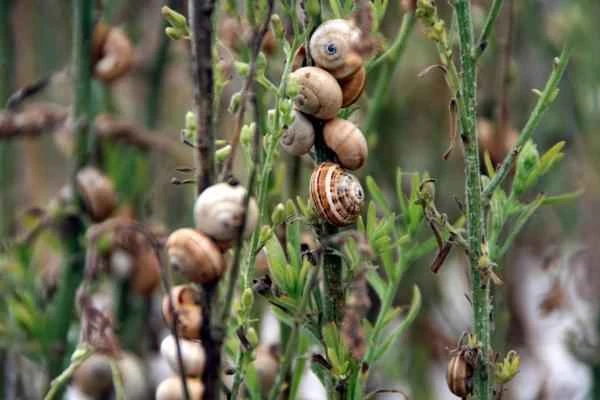
The distribution of terrestrial snails is influenced by soil mineral composition, humidity, temperature, and pH. While they prefer moist, shady locations, some species can survive at high altitudes and in harsh environments. They are commonly found in forests, grasslands, roadside areas, and in leaf litter, tree roots, and soil depressions in urban green spaces. They are also adapted to arid, alkaline, and volcanic soil environments, and even near streams and mountain edges.
Diet of land snails
Most terrestrial snails are herbivorous, feeding on various plants at night. Some species are omnivorous, preying on other mollusks. Their shells and eggshells are mainly composed of calcium carbonate, requiring them to supplement their calcium intake through their diet to ensure the shells remain strong. Calcium deficiency or changes in environmental pH can lead to thinning or damage to the shells.
Reproduction of land snails
Terrestrial snails are hermaphroditic and mate through complex courtship behaviors, using spermatophores to transfer sperm. Some species exhibit unique spicule behavior to enhance mating stimulation. Eggs are laid in the soil, encased in albumen and a protective capsule providing calcium support; they typically lay only a few eggs.
If you would like to learn more about land snails, you can refer to our articles on "Snail Body Structure" and "Snail Lifespan".