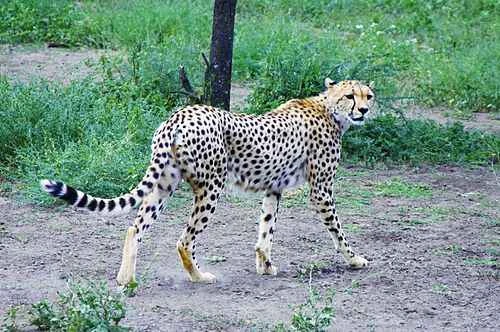
The cheetah (scientific name: *Acinonyx jubatus*) is a large cat species that inhabits Africa and parts of Asia. Below is a detailed overview of the cheetah's characteristics and habits:
Distribution and Habitat
Distribution: Cheetahs are mainly distributed in Africa, including East and Southern Africa, and have also been found in a few areas of Iran.
Habitat: Cheetahs typically inhabit open grasslands, savannas, and some desert areas, which are conducive to their fast running and hunting.
Appearance and characteristics
Physical characteristics: Cheetahs have a slender, muscular body and possess a very agile body and exceptionally high running speed.
Characteristics: Cheetahs are characterized by the black spots covering their bodies, especially on their fur. In addition, they possess relatively large nostrils and lungs, which helps them to better absorb oxygen while running at high speeds.
Diet and hunting habits
Diet: Cheetahs are carnivores, mainly feeding on medium-sized herbivores such as gazelles, zebras, and antelopes.
Hunting: Cheetahs are known for their speed and keen eyesight. They usually hunt by ambushing and chasing their prey over short distances, rather than by tracking them for long periods of time.
Social Structure and Behavior
Sociality: Cheetahs are usually solitary animals, but mother cheetahs will live with their cubs.
Communication: They communicate through body language, vocalizations, and chemical signals. Communication behaviors mainly occur during the breeding season and territorial disputes.
Reproduction and raising young
Reproduction: Female cheetahs give birth to cubs 80 to 98 days after mating, with each litter typically containing 2 to 4 cubs.
Cub rearing: The mother leopard raises her cubs alone until they have mastered hunting and self-defense.
Endangered status and protection
Endangered status: Cheetahs are threatened by habitat loss, hunting, trafficking and conflict with humans, and are listed as “vulnerable” by the International Union for Conservation of Nature (IUCN).
Conservation measures: Local governments and conservation organizations are implementing plans to protect cheetahs and their habitats and reduce cheetah-related conflicts.
Overall, cheetahs are fascinating felines that play an important role in the ecosystem, but they face ongoing conservation challenges due to various threats and habitat loss.