In nature, birds' feathers are not only essential tools for flight, courtship, and survival, but also exquisite works of art that attract human attention. Among all birds, those with exceptionally long tail feathers are undoubtedly the most eye-catching. Today, we'll take a look at the world's ten longest-feathered birds and see which birds' tail feathers can truly be called "nature's luxury"!
1. Onagadori – with tail feathers reaching 6-7 meters in length, the king of feathers!
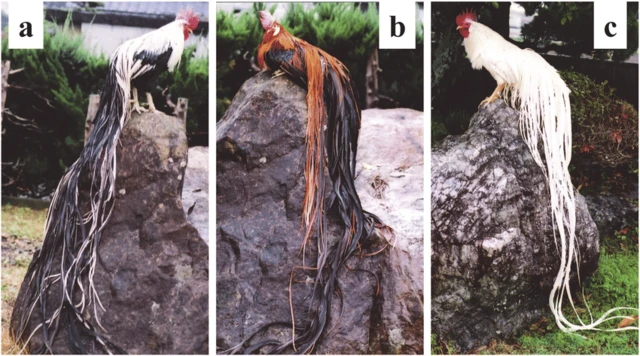
The long-tailed chicken, also known as the Japanese pheasant, is a national treasure-level poultry, famous for its exceptionally long tail feathers. Their tails can grow to 6-7 meters, and in extreme cases, even more than 10 meters! This is mainly due to their special genes, which allow their tail feathers to continue growing throughout their lives instead of falling out naturally.
The breeding history of the long-tailed chicken dates back to the 17th century. Through careful selection, Japanese breeders have cultivated this breed whose plumage is now stunning worldwide. Due to its unique appearance and symbolic meaning, the long-tailed chicken is highly revered in Japanese culture and is regarded as a symbol of good fortune and nobility.
2. Peacock – with tail feathers approximately 1.5 meters long, a dazzling "king of displaying its plumage".
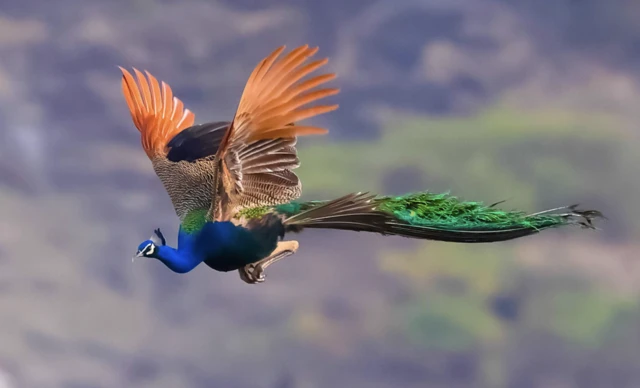
When it comes to magnificent long-tailed birds, many people immediately think of peacocks. Male peacocks, in particular, display their colorful tail feathers, which can reach up to 1.5 meters in length, during the mating season. The peacock's tail feathers are not only long but also have a metallic sheen, changing colors with the light. This visual effect is due to the interference of light by its microscopic structure.
Peacocks are mainly distributed in South Asia and Southeast Asia. The most common varieties are the Indian Peafowl and the Green Peafowl, with the Green Peafowl having longer and more vibrant tail feathers.
3. White-crowned Reeves' Pheasant (Syrmaticus reevesii) – Tail feathers 1.01-1.66 meters, the "long-tailed warrior" of the wild.

The White-crowned Long-tailed Pheasant is a pheasant native to China, renowned for its 1.66-meter-long tail feathers. The male's tail feathers are long and straight, with a unique white base and black spots that give it extremely high ornamental value.
This bird mainly inhabits the mountainous forests of central and eastern China, is omnivorous, and has an alert temperament. The White-crowned Long-tailed Pheasant is not only a Class II protected animal in China, but also a favorite among bird lovers worldwide, and is kept by many zoos and private bird collectors.
4. Resplendent Quetzal (Pharomachrus mocinno) – with tail feathers exceeding 1 meter, the emerald spirit of Central America.
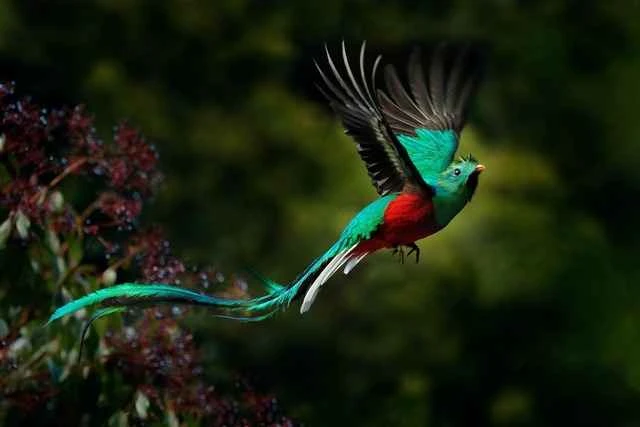
The Great Quetzal, also known as the Lady Quetzal, Gretchen, Eysalk, Green Quetzal, and Giant Quetzal , is an iconic bird of the tropical cloud forests of Central America , renowned for its magnificent emerald green plumage and exceptionally long tail feathers. During the breeding season, the male's tail feathers can exceed one meter in length, creating a dreamlike spectacle as they flutter in the wind.
These birds primarily feed on fruit, especially avocados , and play a vital role as seed dispersers in the Central American ecosystem. Due to habitat destruction, the Recurve Trogon is declining in numbers and is listed as Near Threatened (NT) by the IUCN, and is revered as the national bird of Guatemala .
5. Menura – A singer with a 70cm tail and the ability to mimic a variety of sounds.
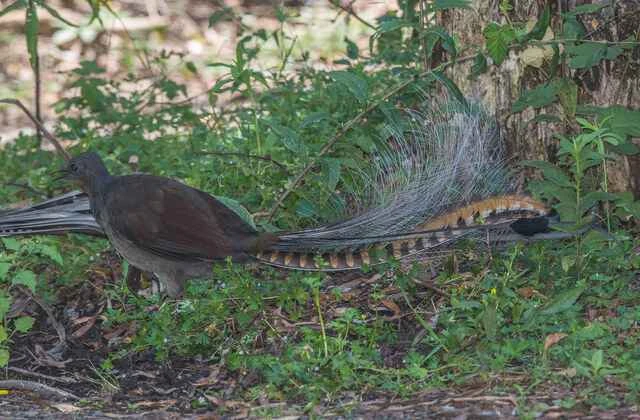
The lyrebird is endemic to Australia and is known for its exceptionally long tail feathers and remarkable mimicry skills. The male lyrebird's tail feathers can reach up to 70 centimeters in length and are shaped like a lyre, hence its name.
The lyrebird is not only elegant in appearance, but it can also mimic various sounds in its environment, such as the sound of a camera shutter, a chainsaw, or even human conversation! This amazing ability to mimic makes it a unique species in the bird world.
6. Black Long-tailed Pheasant (Syrmaticus mikado) – The King of the Formosan Alpine Pheasants, an elegant black-feathered noble.
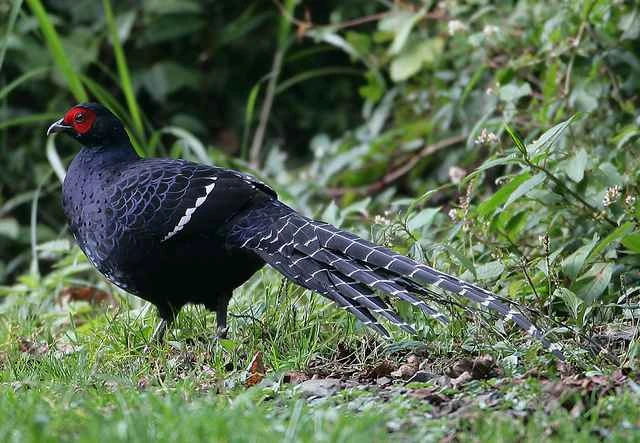
The Black-tailed Pheasant, also known as the Mikado Pheasant, Taiwan Mikado Pheasant, Sea Pheasant, and Black Pheasant , is endemic to Taiwan and mainly inhabits high-altitude forests at elevations of 1,600–3,200 meters . The male has deep blue-black plumage with a metallic sheen , and its long, black and white striped tail feathers can reach 50–53 centimeters in length, giving it a majestic and elegant appearance.
This bird feeds on insects, seeds, tender leaves, and fruits. It is rather secretive and is usually active at dawn or dusk. Due to habitat limitations and human disturbance such as poaching, the Black-tailed Pheasant is listed as "Near Threatened (NT)" by the IUCN . It is one of Taiwan's important protected birds and a symbolic bird species of Taiwan.
7. Long-tailed Widowbird (Euplectes progne) – with a 50cm tail, a dancer in the African wind.
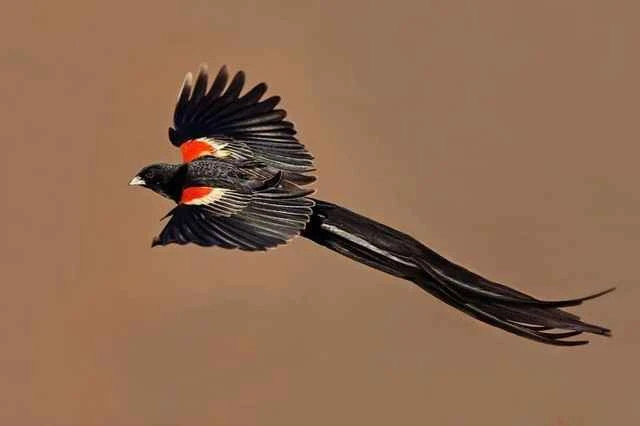
The Long-tailed Widowbird, also known as the Long-tailed Weaver , is a passerine bird that lives on the African savanna. It is famous for its long tail feathers and magnificent courtship dance. The male's tail feathers can reach 50 centimeters in length, and when it flies, the tail feathers flutter in the wind, making it look like an elegant dancer.
This bird is mainly distributed in sub-Saharan Africa and feeds primarily on seeds and insects. Due to its striking appearance, it is highly sought after in the birdwatching market.
8. Black-necked Long-tailed Pheasant (Syrmaticus humiae) – Tail feathers 48.6-50.5 cm, a rare pheasant species in southwestern China.
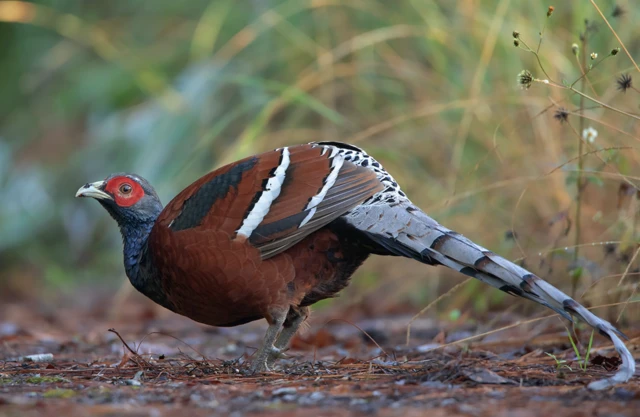
The Black-necked Long-tailed Pheasant is native to South Asia and southwestern China. The male's tail feathers can reach 50.5 cm in length, and its plumage is mainly black, brown, and metallic blue, giving it an overall understated and mysterious appearance.
This bird typically feeds on insects and plant seeds and prefers to inhabit deep forests. Due to habitat fragmentation and increased hunting pressure, the wild population of the Black-necked Reeves' Pheasant is declining, and it is listed as a Class II protected animal in China .
9. White-necked Long-tailed Pheasant (Syrmaticus ellioti) – Tail feathers 39-47 cm, a rare native bird of China.
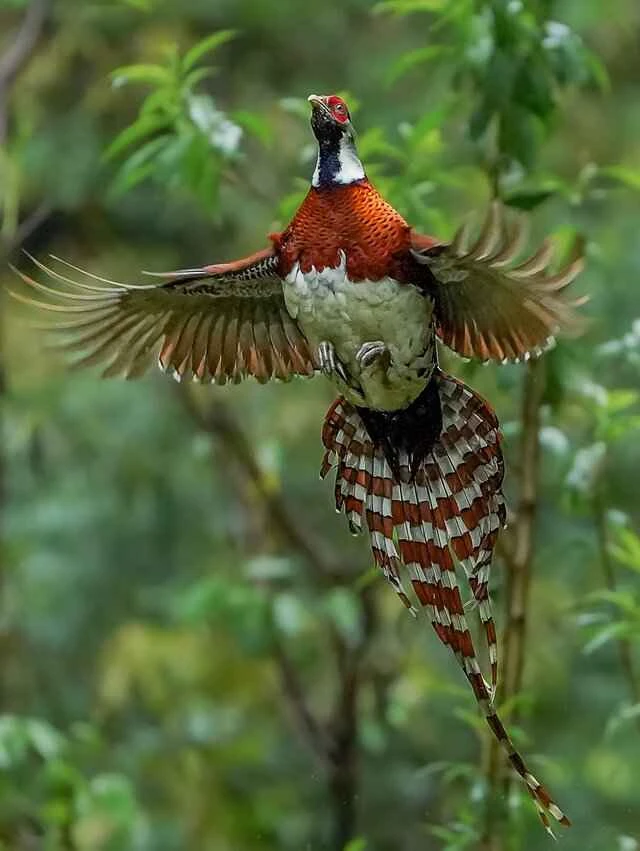
The white-necked long-tailed pheasant is a rare pheasant species endemic to China, mainly distributed in the forests of Guizhou, Hunan, and Jiangxi provinces. The male's tail feathers can reach 47 centimeters in length, and the overall plumage displays a beautiful pattern of black, chestnut, and silvery-white.
They prefer to live in mountainous and forested areas, feeding on plant seeds, insects, and small invertebrates. Due to deforestation and habitat destruction, the number of white-necked long-tailed pheasants is declining, and they are listed as a national second-class protected animal .
10. Oriental Paradise Flycatcher (Terpsiphone paradisi) – Tail feathers 27-30 cm long, a graceful "forest fairy"
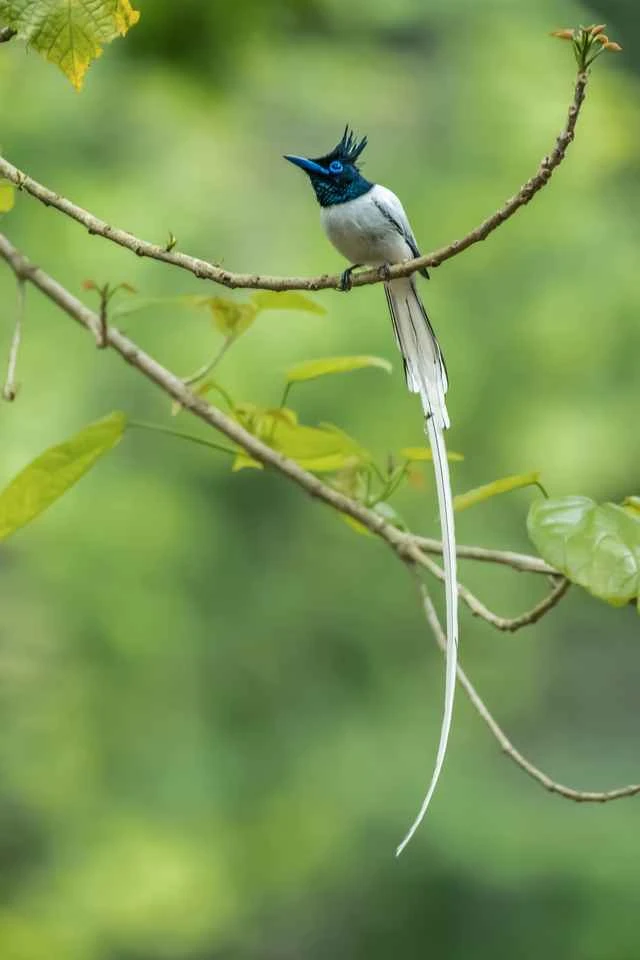
The Oriental Paradise Flycatcher, also known as the Indian Paradise Flycatcher or the Indo-Burmese Paradise Flycatcher, is a bird belonging to the family Muscicapidae in the order Passeriformes. In 2022, the Chinese name of the Indo-Burmese Paradise Flycatcher was changed to Indian Paradise Flycatcher in the "List of Birds of China, Version 10.0". It is a small passeriform bird. Although it is not large in size, the tail feathers of the male can reach 27-30 centimeters, which is more than twice the length of its body.
They mainly live in the forests and scrublands of Asia and feed on insects. The Oriental Paradise Flycatcher flies gracefully, and its tail feathers sway in the air like flowing ribbons, hence its nickname "fairy of the forest".
Conclusion: Works of Art from Nature
These long-tailed birds are not only a miracle of nature but also an important part of the ecosystem. Whether it's the Japanese long-tailed pheasant, the peacock, or the resplendent quetzal, each has its own unique survival strategies and charm. Hopefully, this article will give you a deeper understanding of these beautiful birds and inspire you to explore the natural world further!