In the survival strategies of many animals, "large eyes" are a key advantage: either for hunting in the dark, for surviving the darkness and pressure of the deep sea, or for gaining an extremely wide field of vision. Below is a summary of 25+ animals with large eyes , along with their scientific names and easy-to-understand key points.
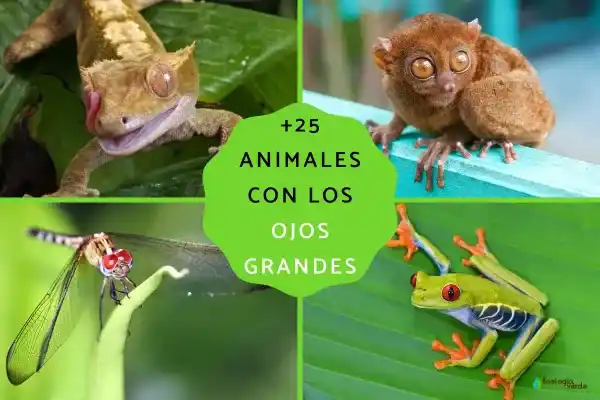
Table of contents
Tarsius bancanus
Giant squid ( Architeuthis )
Slow Loris/Honey Badger (belonging to Nycticebus )
Dragonflies (Anisoptera)
Red-eyed tree frog ( Agalychnis callidryas )
Black lemur ( Eulemur macaco )
Web-eating spider / "Face-faced spider" (family Deinopidae )
Owls (order Strigiformes)
Skygazing goldfish/Dragon Eye ( Carassius auratus )
Chameleon (family Chamaeleonidae)
Horse ( Equus ferus caballus )
Other big-eyed animals (extended list)
Tarsius bancanus
Distribution : Lowland rainforests of Indonesia and many islands in Southeast Asia.
Size : Body length approximately 10 cm ; tail length approximately 17 cm .
Highlights of its large eyes : Each eyeball is about 1.6 cm in diameter, which is relatively large compared to its body; it has excellent night vision, making it easy to catch insects at night.
Ecology : They mainly feed on insects and are usually solitary or live in small groups of 2–6 individuals.
Conservation : Threatened by habitat destruction, poaching, and the exotic pet trade, it faces a high risk of endangerment.

Giant squid ( Architeuthis )
Distribution : Deep sea layers in most ocean areas around the world, except for tropical and polar regions.
Size : Body length can reach 15 m .
Big Eye Highlights : The largest eyes in the animal kingdom, with a single eye diameter of approximately 30 cm , giving it a significant advantage in detecting distant targets in the dark deep sea.
Diet : Preys on fish and crustaceans.

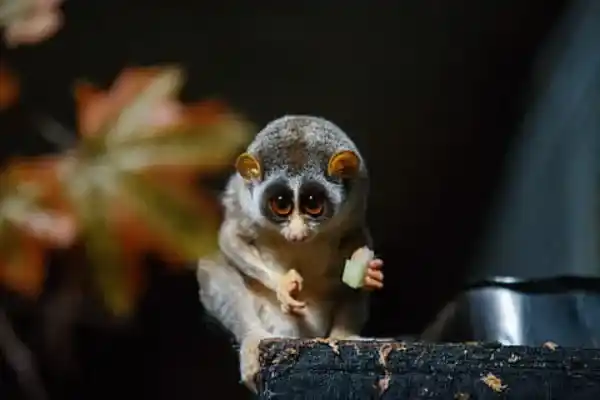
Slow Loris/Honey Badger (belonging to Nycticebus )
Distribution : South Asia to Southeast Asia.
Big Eyes Highlight : Extra-large eyes help with nighttime activity and foraging.
Ecology : Nocturnal, omnivorous, individuals communicate by marking each other with scent; males are highly territorial.
Special characteristics : It is the only known primate with toxicity (the secretions from the axillary glands mixed with saliva can cause poisoning).
Protection : Listed by CITES; many species are endangered due to illegal trade and habitat loss.
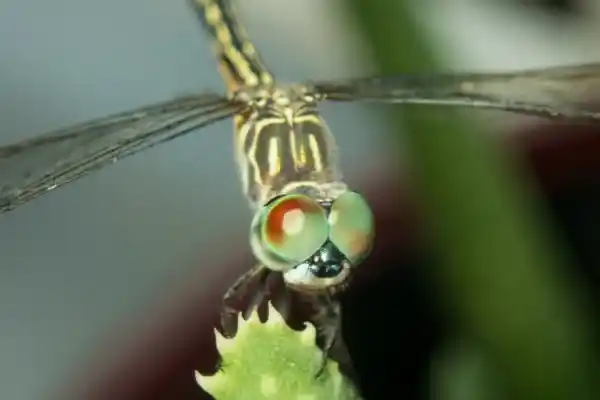
Dragonflies (Anisoptera)
Distribution : Near rivers, lakes, swamps and other bodies of water.
Big Eye Highlights : The compound eye is composed of approximately 30,000 ommatidia, which almost encircle the head, making it extremely sensitive to movement.
Diet : It preys on flying insects (mosquitoes, flies, bees, etc.) and is an important natural enemy insect.
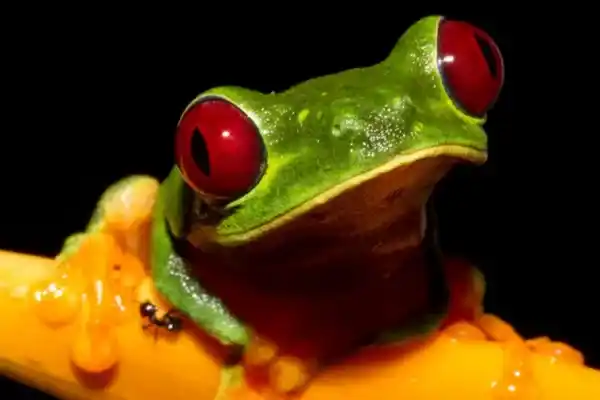
Red-eyed tree frog ( Agalychnis callidryas )
Distribution : Lowland rainforests and valleys in southern Mexico, Central America and northern South America.
The highlight of large eyes : vertical pupils + bright red irises , forming a strong visual signal.
Body color : Green on the back, blue/yellow on the sides, with vibrant colors.
Size : The data states that males are about 71 mm and females are about 56 mm (sexual dimorphism exists).
Ecology : Arboreal, nocturnal, insectivorous; skin contains toxins, but not strong.
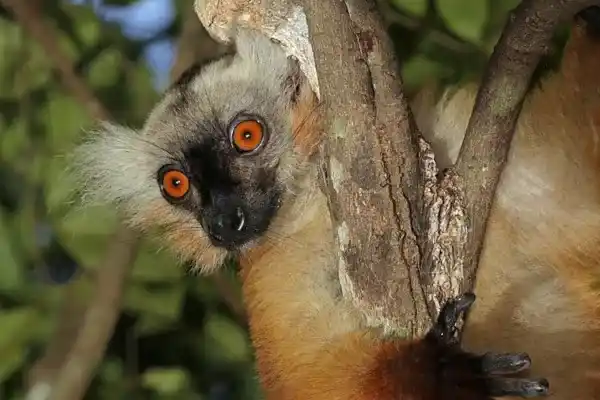
Black lemur ( Eulemur macaco )
Distribution : Moist rainforests of northern Madagascar.
Big Eye Highlights : Striking colors, ranging from amber to a rare blue (the only primate besides humans with visible blue eyes).
Behavior : They live in groups (approximately 10 individuals) and have close social relationships; their sense of smell and hearing are more important in communication.
Diet : Mainly fruits.
Protection : IUCN Vulnerable (VU).
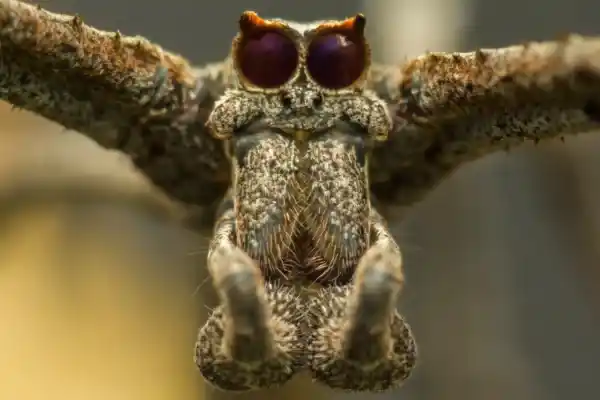
Web-eating spider / "Face-faced spider" (family Deinopidae )
Distribution : Australia, Africa, the Americas, etc.
Size : Body length approximately 1.5–2.5 cm .
Highlights : "Big Eyes" with exceptional night vision and a unique hunting method: setting up a "hand net" at night to ambush and throw the net to trap the prey.
Origin of the name : Its frontal appearance resembles a "strange face" due to its giant eyes.
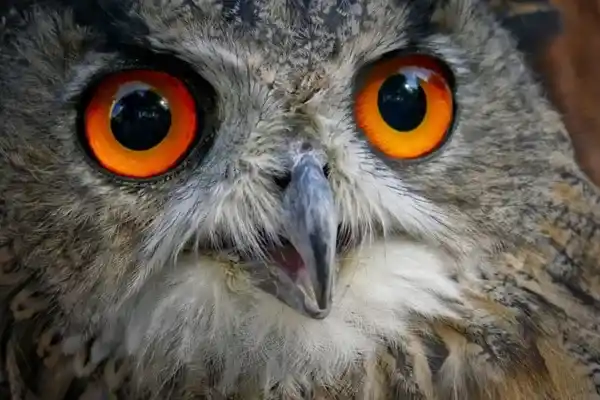
Owls (order Strigiformes)
Distribution : Found almost all over the world except Antarctica, with over 200 species.
Highlights of large eyes : Forward-facing large eyes with extremely strong vision and hearing; the eyeballs are fixed in the orbit and cannot move , requiring head turning to compensate.
Neck flexibility : can rotate to approximately 270° (not a full 360°).
Diet : Nocturnal bird of prey, preying on insects, small mammals, fish, and small birds.
Distinguishing it from barn owls : Some owls have distinct "ear tufts" on the top of their heads.
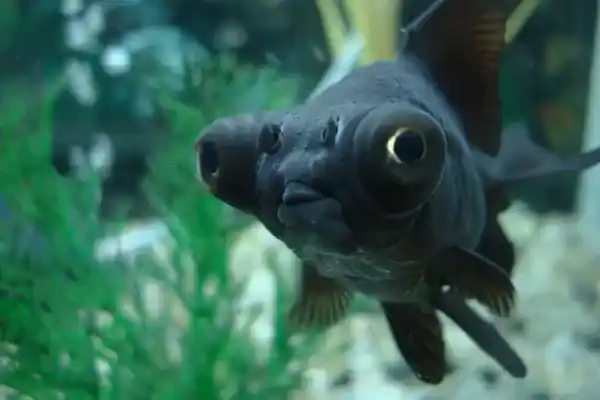
Skygazing goldfish/Dragon Eye ( Carassius auratus )
Distribution : Freshwater fish raised in captivity.
Highlight of large eyes : Protruding eyes are extremely sensitive, so sharp decorations and direct sunlight should be avoided when keeping them.
Size and color : Common body length ≈ 5.5 cm , various single/two-color patterns.
Personality : Group-oriented, active, and possesses a certain memory ability (can remember things for about 3 months).
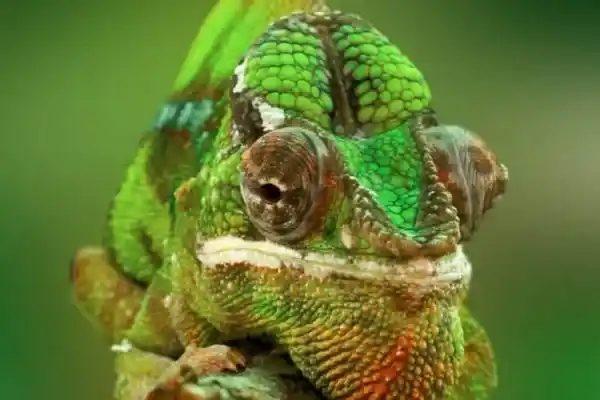
Chameleon (family Chamaeleonidae)
Distribution : Mainly found in sub-Saharan Africa, and also in parts of the Americas; approximately 160 species are known.
Highlights of the large eyes : Both eyes can rotate independently , with a field of vision of nearly 360° ; advantageous for ambushes and stealth attacks.
Other characteristics : camouflage through skin color change; high-speed, sticky tongue for preying on arthropods and small vertebrates; diurnal, passive ambush hunter.
Horse ( Equus ferus caballus )
Large eyes are a highlight : they are considered to have one of the largest eyeballs among terrestrial mammals ; each eye has a wide field of vision , which is beneficial for alerting the surrounding environment.
Vision : Extremely sensitive to motion, and the image has a magnifying effect on perception.

Other big-eyed animals (extended list)
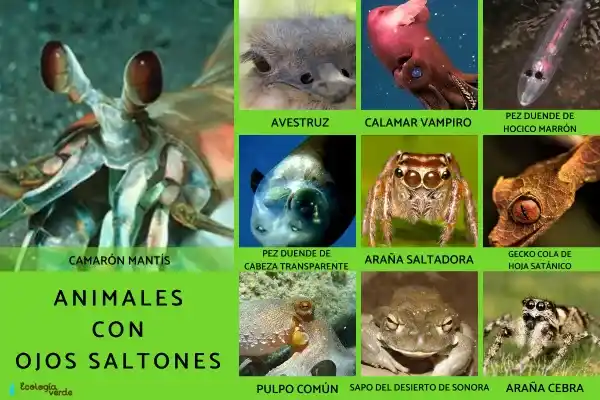
Mantis shrimp ( Gonodactylus smithii )
Ostrich ( Struthio camelus )
Vampyroteuthis infernalis
Brown-snouted flying fish/deep-sea bream ( Dolichopteryx longipes )
Transparent Helmet Fish ( Macropinna microstoma )
Jumping spider (Salticidae)
Devil Leaftail Gecko ( Uroplatus phantasticus )
Octopus ( Octopus vulgaris )
Sonora desert toad ( Incilius alvarius )
Zebra jumping spider ( Salticus scenicus )
Ostracoda
Cystisoma (a genus of deep-sea amphipods)
Paraphromina (a genus of deep-sea amphipods)
Domestic cat ( Felis silvestris catus )
Some breeds: Chihuahua, Pug ( Canis lupus familiaris )

summary :
Large eyes are not just about "cute looks," but also about functional adaptations to the environment: night vision, wide-angle vision, deep-sea low-light detection, motion sensitivity, and spatial positioning. Whether in the forest canopy, the desert night, or the darkness of the ocean thousands of meters below the surface, the size, structure, and position of an animal's eyes subtly determine how it sees the world and survives.