The earliest eutherians were insectivorous animals that appeared in the Cretaceous period. Entering the Cenozoic era, eutherians diverged from this foundation and evolved rapidly, resulting in a wide-ranging adaptive radiation. This led to the first evolutionary explosion in the history of Cenozoic mammals from the Paleocene to the Eocene. As a result of this explosion, an ancient mammalian group adapted to a variety of different ecological environments dominated the Paleocene and Eocene. This ancient mammalian group included the following taxa:
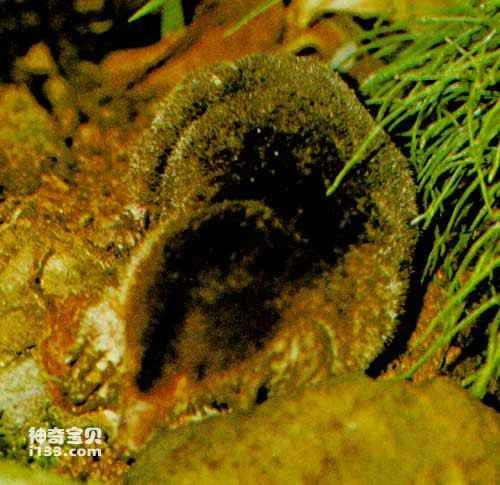
Mole – a type of extant insectivorous animal
A large number of primitive groups within the order Insectivorous (egg-eating) animals.
Chiropterans (order): the flying champions among mammals. They likely diverged from their insectivorous ancestors very early on, and their evolutionary rate was rapid in the early stages, as known Eocene bats were already highly evolved and not significantly different from their modern relatives. Bats continuously emit ultrasonic waves during flight, reflecting these waves back when there are obstacles or insects in front of them; the bat's ears detect these "echoes," allowing them to take evasive or predatory actions. Therefore, bats can fly and hunt at night without relying on sight. This unique adaptation may be the reason they have been able to survive successfully to this day.
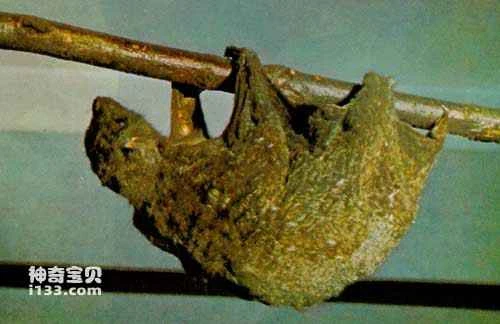
flying squirrel
The ancestral type of dermatopteros, whose descendants, flying squirrels, have continued to thrive in the tropical forests of Southeast Asia to the present day.
Paleo-Panthera, a class of Panthera (order).
Nematodontidae (order).
Carnotodonts (order): This is a group of peculiar large animals that lived in the early Tertiary period. For example, Carnotodonts were as large as a bear; their strong bones, heavy limbs, and clawed "hands and feet" were also very similar to those of bears. However, their skulls were very similar to those of rodents, with enlarged chisel-like incisors on their upper and lower jaws.
The lower primates (order Primates) include the extinct flat-headed monkeys, brachiocephalic monkeys, and serratus monkeys, as well as lemurs, slow lorises, and tarsiers.
(Amalonidae) mammals: Small animals whose skeletons resemble those of lagomorphs and rodents. They first appeared in the Cretaceous period, were highly diverse in the Paleocene, and became extinct by the early Oligocene. They are endemic to Asia, with the largest number found in my country. Major representatives include *Strong-toothed Beast*, *Amalonidae*, *Pseudo-Hedgehog*, *Cyprinus*, and *Mossula*.
Paleocarnivora (order): A group of ancient carnivorous mammals that appeared as early as the Late Cretaceous, including trigonodonts, hyenadonts, and oxhyenas. Most of them became extinct at the end of the Eocene, except for hyenadonts, which survived until the early Pliocene.
Ankyloides (order): Primitive ungulates from the Paleocene and Eocene epochs, the most primitive ungulates evolved from insectivorous animals. They include two families: Caniscidae and Mesotherridae.

Ewing Beast
Obtusepods (order): Originating from the genus *Arthropoda* in the Paleocene, these are ungulates that evolved towards gigantism early in their evolution. Representative animals include *Ceratodon* and *Deinotherium*. Most became extinct at the end of the Eocene, with a few surviving in Asia until the Oligocene, after which they became extinct. Their evolutionary pinnacle is represented by *Uyinthes* from the Late Eocene, which was the size of a large rhinoceros; it had a long skull with six horns—two small horns on its nose, two above its canines, and two on the back of its head.
Southern ungulates (order): Originating from a certain anthelmintic ancestor in Asia during the Late Paleocene, they migrated to North America in the Early Eocene and continued to South America, eventually settling as a single, primitive ungulate group distributed only in South America. Among them, the genus *Hygotherium* and *Hygotherium* were extremely diverse and abundant during the Middle Tertiary, with some species persisting into the Pleistocene.
Gastropoda (order): Originating in the Paleocene from a type of anklebone in South America, they remained confined to the South American continent until the Pleistocene epoch of ungulates. Among them, the Protoequinidae evolved very similarly to horses, also undergoing a process of gradual degeneration of the lateral toe. When the Pliocene horse invaded South America from North America, the Protoequinidae lost out in competition with the horse and became extinct. The Messoproterozoa converged physically with the camels of North America, but its nose likely possessed a short, retractable snout, similar to that of the modern tapir.
Semithelminthes (order): A type of ungulate that originated in South America during the Eocene and remained confined to the South American continent until the Miocene. They evolved towards a large size in their early stages; Semithelminthes of the Oligocene and Miocene had a shoulder height of over 1.5 meters when standing.
Pyrotheriformes (order): A giant South American ungulate that lived only in the early Tertiary period, and is likely one of the relict species of some kind of ankle-shaped ungulate.
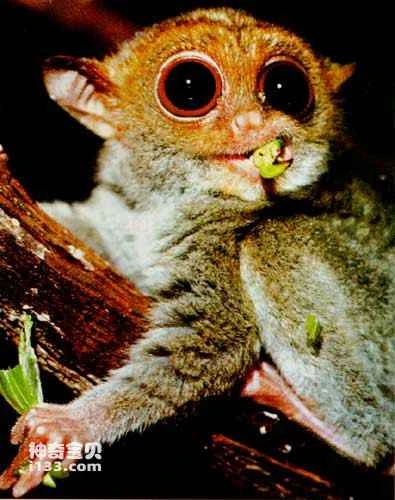
Tarsiers
Heterodontia (order): Another South American ungulate from the Paleocene, likely one of the relict species of some kind of ankle-shaped ungulate.
On most of Earth's landmass, this vast ancient mammalian group was largely replaced by the ancestors of modern mammals by the end of the Eocene. Only a few groups survived into later eras, with individual species such as lemurs and tarsiers still living in specific regions of the Earth. However, South American ungulates, including southern ungulates, glissodactyls, scintillans, pyrothoraxes, and heteroungulates, continued to reproduce and diversify for most of the Cenozoic era due to their unique environment of isolation from other continents. Among them, southern ungulates persisted until the Pleistocene, while glissodactyls did not become extinct until the Pliocene.