Around the same time as the origin of marsupials, another more advanced mammal diverged from ancient mammals. They inherited the allantoic membrane from the eggs of their ancient reptilian ancestors, which came into contact with the mother's uterine lining, forming their unique placenta. From then on, nutrients and oxygen could be supplied to the developing embryo and fetus through the placenta, ensuring normal fetal development within the mother's womb. Therefore, when the offspring of these mammals were born, they were more mature than marsupials, thus ensuring their future development and growth. This acquisition of an advanced trait enabled them to outcompete almost all terrestrial rivals in the Cenozoic era, resulting in widespread adaptive radiation and filling the ecological niches left vacant after the extinction of dinosaurs and other reptiles. For this reason, these advanced mammals are called placental mammals or eutherians, becoming one of the most successful subclasses of mammals.
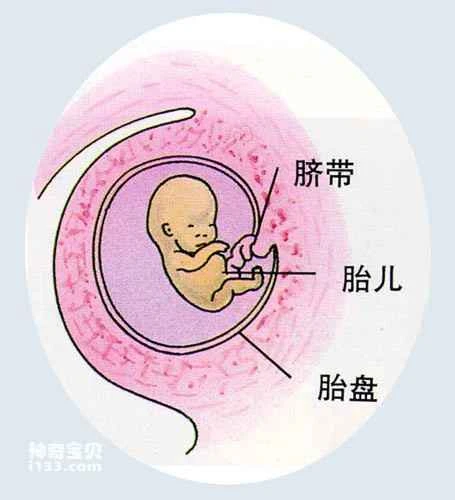
Placenta and fetus
In terms of skeletal structure, eutherians also possess a series of advanced features.
The enlarged cranial size of eutherians suggests higher intelligence compared to marsupials.
Euthorax teeth further differentiated, with the basic dental formula fixed at 3 incisors, 1 canine, 4 premolars, and 3 molars on each side of the upper and lower jaws, represented by the numerical model 3-1-4-3. The morphology of the molars was fixed at the tri-wedge pattern and its various variations.

Tri-wedge molar diagram
The so-called triwedge molar pattern refers to the upper and lower molars forming opposite triangles. The three principal cusps of the upper molars are called the primitive cusp, the anterior cusp, and the posterior cusp; the former is located on the inner side of the tooth, while the latter two are on the outer side. In addition, between the principal cusps of the upper molars are two intermediate cusps, namely the primitive cusp and the posterior cusp. On the lower molars, the outer cusp is called the lower primitive cusp, and the two inner cusps are called the lower anterior cusp and the lower posterior cusp. The calcaneus of the lower molars usually also has three cusps: the outer one is called the subciliary cusp, the inner one is called the submedial cusp, and the last one, the cusp at the very back of the basin-shaped calcaneus, is called the subciliary cusp.
In many more advanced eutherians, there is a fourth primary cusp—a secondary cusp—on the inner posterior angle of the upper molar. Many eutherians also have various ridges or ridges on their molars; and some additional small cusps on the edges of the teeth.
Among true mammals, jaw movements cause four types of interlocking movements between the upper and lower molars: (1) the sharp points of the upper and lower molars bite together to grab and tear food; (2) the edges or ridges of the teeth shear each other to cut food; (3) certain parts of the teeth press against each other to crush food; (4) the opposing tooth surfaces grind each other like a pulverizer to grind food.
It can be said that the success of eutherian mammals in the Cenozoic era was largely due to the adaptive radiation of four actions—interbite, shearing, compression, and grinding—on the teeth, which originated from the triwedge-shaped molars.