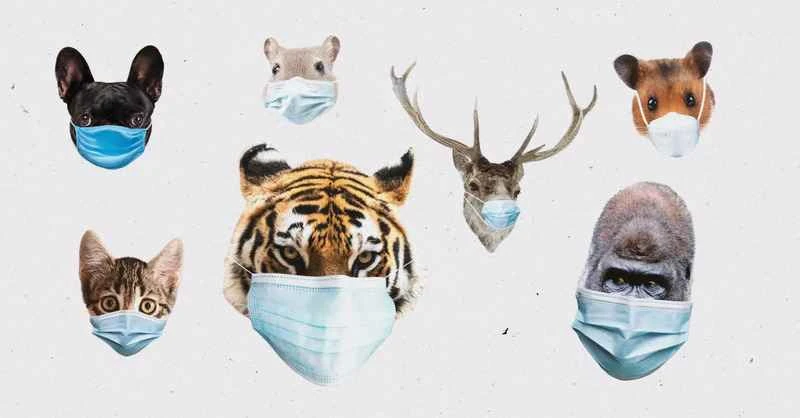
When people talk about rats or mice, they always think of their bad habits such as stealing food, destroying crops, and even spreading diseases. The idiom "When a rat crosses the street, everyone shouts to kill it" perfectly expresses humankind's deep hatred for rats.
However, not all rodents are harmful. Some rodents are economically valuable; for example, squirrel fur can be used to make leather goods. If you visit a university medical school, biology department, or research institute, you'll find countless rats used as laboratory animals. It can be said that every new advancement in modern humanity's conquest of disease and every breakthrough in biological research owes something to these experimental rats. Therefore, we should honestly say that rats are truly remarkable.

squirrel
In fact, rodents, to which mice and rats belong, are even more remarkable in terms of vitality and evolution. If we take the number of species and the range of adaptive radiation as the criteria for evolutionary success, then from the perspective of animal evolution, rodents far surpassed all other mammals in their evolution during the Cenozoic Era, tens of millions of years ago, making them a very successful mammalian group in terms of evolution.
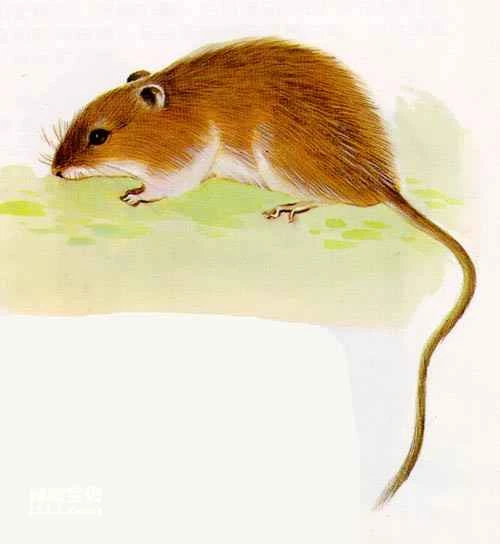
Brown rat
Modern rodents are the most diverse group of mammals, with over 2,500 species, accounting for one-third of all mammal species. In terms of genera and species, they outnumber all other mammalian orders and genera combined. Furthermore, the total weight of all rodents in the world is far greater than the total weight of whales. Paleontologists speculate that this situation remained largely unchanged throughout most of the Cenozoic era.
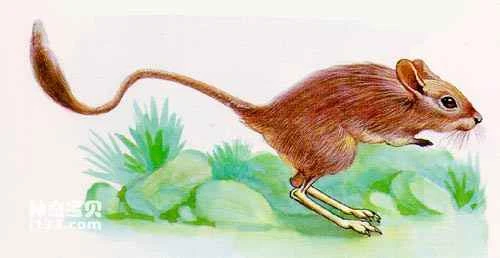
jerks
So why have animals like mice been so successful in evolution? There are many reasons. First, throughout their evolutionary history, these animals have mostly maintained small bodies, which allowed them to develop into large populations and easily adapt to environments that larger animals cannot. We know that rodents can adapt to a vast range of environments, from the hot equator to the icy polar regions; rodents exist in virtually every terrestrial environment on Earth. Besides house mice and large rats that frequently inhabit and near human dwellings, we are familiar with arboreal squirrels; jerboas that burrow underground; rock squirrels that nest in rock crevices; swamp beavers that live in swamps; and midday gerbils that roam the desert. There is even a species of hot spring rat in Vikula, Greece, which has adapted to the extreme temperature of over 90 degrees Celsius by living in such hot springs year-round. Even when placed in boiling water, they float and dive, darting about without fear of being burned. This wide range of adaptability has enabled rodents to establish themselves in the tens of millions of years of mammalian evolution.
Another important reason for the success of these small animals is their early sexual maturity; some species can reproduce even before their bodies are fully developed. Therefore, rodents have exceptionally high reproductive rates and reproduce at an extraordinary speed, meaning they can quickly occupy new territories and easily adapt to changing ecological conditions. For example, guinea pigs can live up to 3 years, with a gestation period of only 63 to 68 days, typically producing 2 to 3 offspring per litter, but sometimes as many as 8 to 10. The offspring can eat solid food 3 days after birth, are weaned in 2 weeks, and reach sexual maturity and can reproduce in about 3 weeks. This powerful reproductive capacity often allows rodents to win in competition with other mammals due to their overwhelming numerical superiority.
These factors have enabled rodents to thrive in Earth's ecosystems for a long time, allowing them to survive tenaciously in places where other mammals have failed. Therefore, it is no exaggeration to say that rodents are exceptionally successful in animal evolution, representing the pinnacle of mammalian success in many ways.