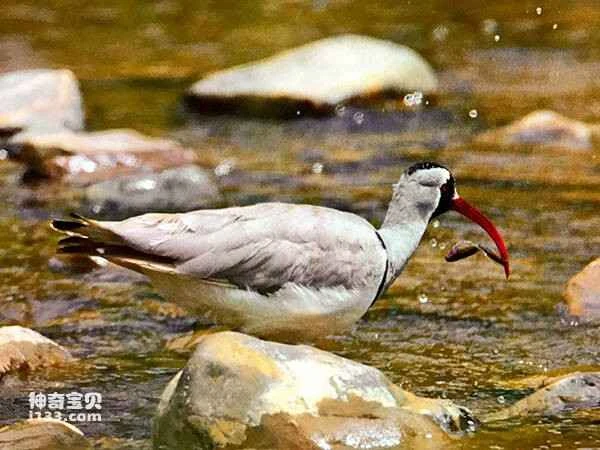
Dinosaurs were oviparous reptiles, and like birds, they reproduced by laying eggs. We know that some bird eggs are very large, such as goose eggs, which weigh about half a pound (250 grams), while ostrich eggs can reach about 1,500 grams. So how big should dinosaur eggs be?
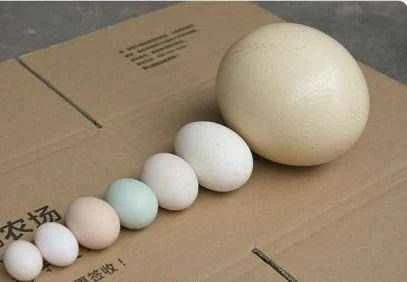
In fact, dinosaurs varied in size. Some dinosaurs were about the same size as birds today, while many others were enormous, such as Brachiosaurus, Diplodocus, and Titanosaurs, which could weigh over a hundred tons. Such enormous creatures would have laid enormous dinosaur eggs as well.
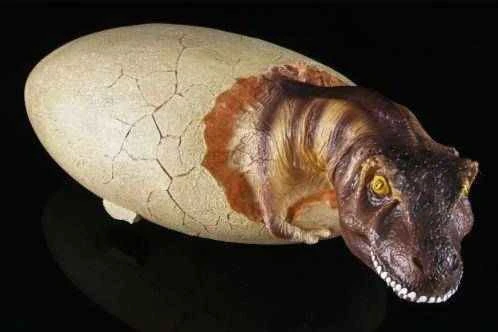
Comparing the weight of birds to the weight of their eggs, the ratio is approximately 15:1 to 50:1. This ratio may also apply to dinosaur species, since birds themselves evolved from ornithischian dinosaurs. Moreover, baby dinosaurs hatched from their eggs in a similar way to birds; some would peck the shell with their beaks, while others would use their body strength to break it open.
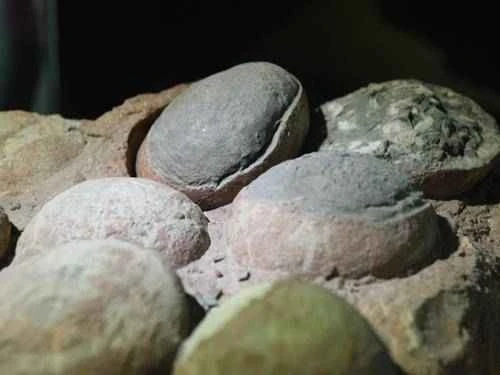
To date, no dinosaur eggs have been found that match the size ratio of birds to bird eggs, such as those of Brachiosaurus, Diplodocus, and Titanosaur. These dinosaurs could weigh over 100 tons, and according to the above proportions, their eggs should weigh around two tons. However, no dinosaur egg weighing more than 100 kilograms has ever been found.
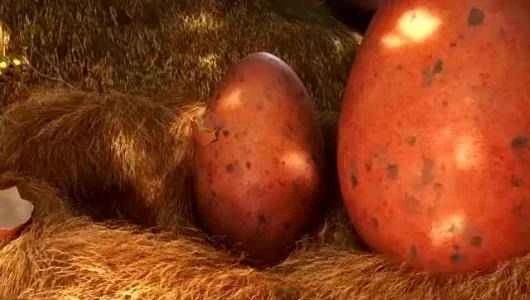
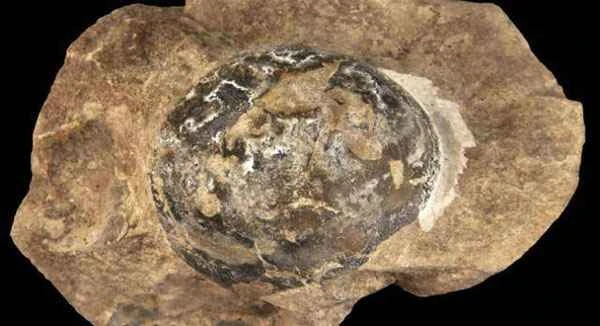
On June 18, Reference News reprinted a foreign media report stating that a Chilean research team discovered the largest animal egg from the dinosaur era in Antarctica. The egg is approximately 30 centimeters long and weighs about 6.5 kilograms (13 jin), more than four times the size of an ostrich egg. Experts believe the egg belongs to a marine reptile that lived approximately 66 million years ago, and is very likely the egg of a mosasaur.
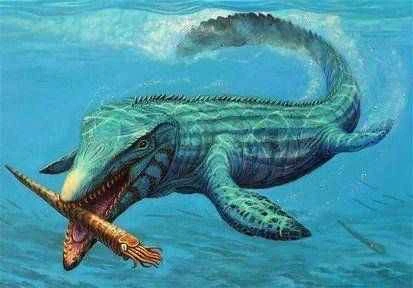
Mosasaurus is a marine reptile that lived over a period of more than 6 million years. The size of mosasaurus varied greatly between different times and different species. Smaller mosasaurus were only a little over one meter long and weighed 10 to 20 kilograms, but larger mosasaurus were unusually long, exceeding 17 meters and weighing more than 20 tons.

However, mosasaurs are not dinosaurs. They share a common origin with dinosaurs and are close relatives, but they eventually returned to living in the ocean. Therefore, the largest dinosaur egg is definitely not a mosasaur egg.
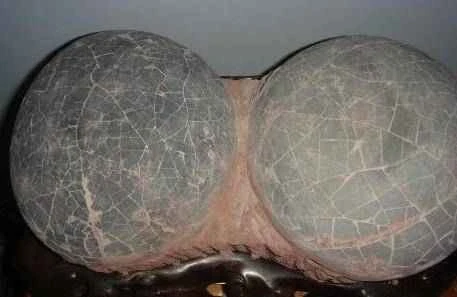
According to available information, the dinosaur egg fossil discovered in Yixing Township, Guangling County, Shanxi Province, my country in April 2014 is likely the world's largest dinosaur egg, with a long diameter exceeding 50 centimeters, a short diameter exceeding 20 centimeters, and a weight exceeding 20 kilograms. It is tentatively identified as the Wang's Giant Dinosaur Egg Fossil.
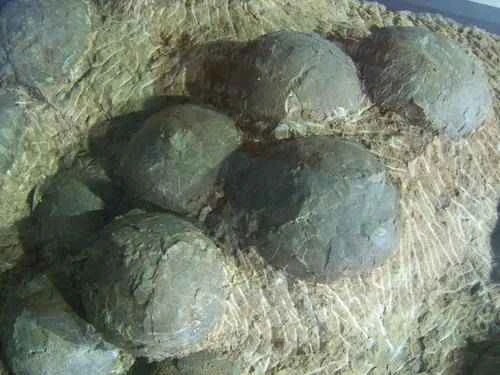
This dinosaur egg is larger than the Xixia dinosaur egg, known as the "world's largest dinosaur egg," discovered in Tiantai, Zhejiang. The largest Xixia dinosaur egg measures 43 cm in length and 14.5 cm in width, weighing over 10 kg. Both are larger than animal eggs discovered by Chilean experts in Antarctica.

Dinosaur egg fossils usually appear in clusters or nests, indicating that most dinosaurs had the habit of laying eggs in groups. The "Wang's Giant Dinosaur Eggs" in Yixing Township, Guangling County, Shanxi Province, are characterized by a single-layered nest-like arrangement, with a nest diameter of 2.5 meters. Experts estimate that each nest contains 16-20 eggs, and the nests are densely distributed, usually spaced about 0.5 to 2 meters apart, containing at least a thousand dinosaur eggs. However, it is still inconclusive which type of dinosaur laid these eggs. Experts believe that they were laid by a large sauropod dinosaur.
References:
An article in Reference News on June 19th, titled "Foreign Media: Largest Animal Egg from the Dinosaur Era Discovered in Antarctica," states...