Several U.S. media outlets reported on the 24th, citing the Texas Parks and Wildlife Service, that due to a severe drought that caused the river to completely dry up, dinosaur footprints dating back approximately 113 million years, hidden at the bottom of the river in Dinosaur Valley State Park in Somerville County, northern Texas, have recently been unearthed.
A spokesperson for the Texas Department of Parks and Wildlife told the media that the Paluxie River, which flows through the park, has dried up, and several dinosaur footprints, mostly belonging to the Spinosaurus, have been discovered on the riverbed this month. Adult Spinosaurus could grow up to 15 feet (about 4.6 meters) tall, weigh nearly 7 tons, and have three claws on each limb.
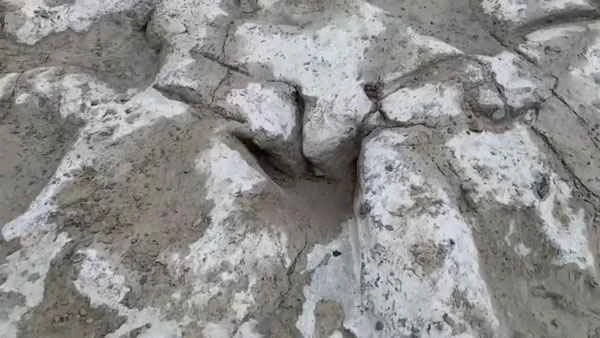
The state park is located near the ocean in ancient times, where dinosaurs left their footprints in the mud. Images posted by the park on social media show that the newly discovered footprints are large and deep. US media, citing researchers, said that these dinosaur footprints were likely buried in sediment, thus avoiding natural weathering and erosion. Over the long years that followed, these sediments hardened into the limestone we see today.
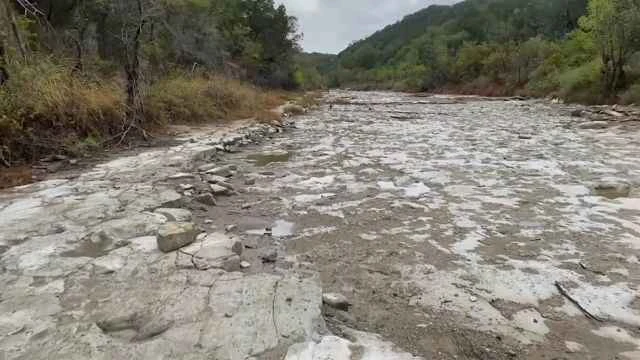
This summer's severe drought caused the rivers to dry up completely, bringing these dinosaur footprints back to light. However, according to the weather forecast, rain is expected this week, and the footprints may once again be submerged.
“This used to be the edge of a shallow sea or a beach-like area, but muddy rather than sandy,” Vimuren explained. “So the conditions and the texture of the mud were perfect, and when dinosaurs walked on it, they would most likely have left clear, perfect footprints.”
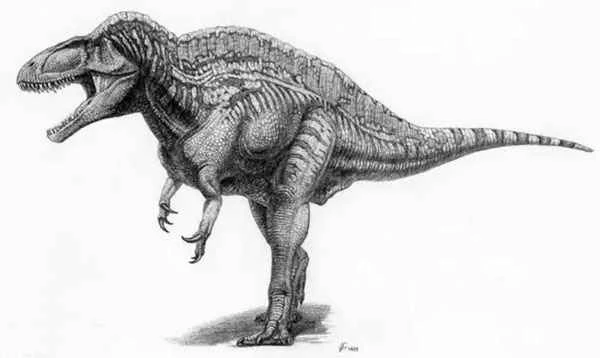
So how did these footprints on the mud survive for millions of years? Vimuren explains that after the spiny dragons moved through the area, their footprints were likely covered by sediment brought by tides or floods. This material protected them from natural erosion such as sun exposure, weathering, and freezing, and eventually, with the accumulation of silt, clay, and limestone, they became fossils.
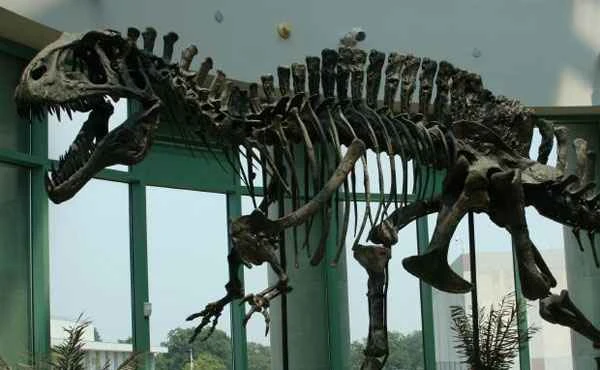
Texas is known for its diverse fossils, with hundreds of theropod dinosaur footprints discovered to date. However, this string of Spinosaurus footprints, revealed by a severe drought, is no ordinary fossil—park officials say it may be the longest single dinosaur footprint ever found in North America.
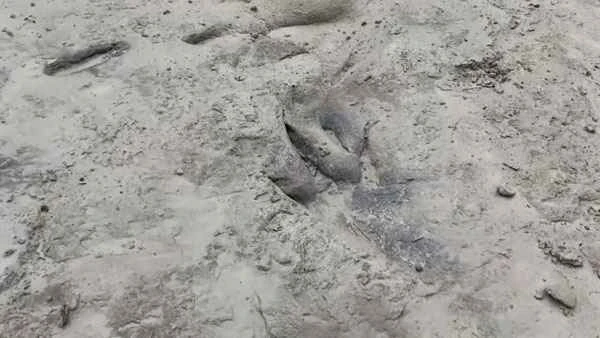
“It might seem like they’ll stay etched in the stone forever, but that’s not the case. They might disappear after the next flood,” Vimuren said. “So I’m very fortunate to have had the opportunity to see them with my own eyes.”