Humans are classified as follows in the biological classification system: Animalia, Chordata, Vertebrata, Mammalia, Primates, Anthropoidea, Cassiopeia, Hominoidea, Hominidae, Homo, Homo sapiens.
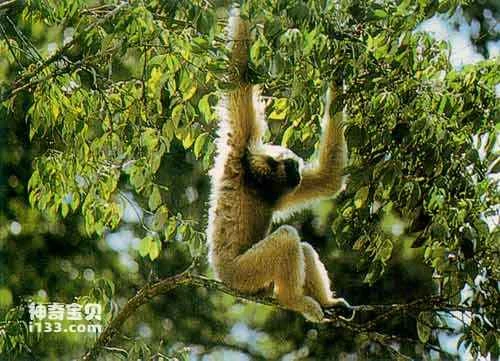
Tree-dwelling primates
It can be said that the biological characteristics upon which we humans have ultimately developed to our present state first appeared in primates. So, what distinguishes primates from other mammals? In other words, why are primates "primates"? Observations and research on extant primates offer some answers to this question.
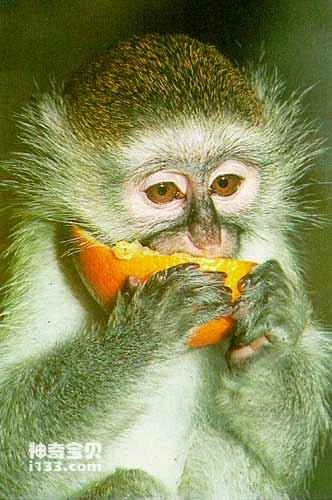
Dexterous hand movements of primates
First, the vast majority of primates are arboreal, unlike most mammals. Living in trees is unusual for primates. Without ground beneath their feet, they must grip tree trunks with their limbs. Correspondingly, the ends of their limbs gradually evolved from claws, similar to those of early mammals, into hands where each finger could move independently; eventually, the thumb could also oppose the other fingers. This evolutionary development undoubtedly improved the grasping abilities needed for primates to move among branches; more importantly, the opposition of the thumb and forefinger's tips forms a ring, greatly increasing the accuracy of grasping objects. This evolutionary feature not only greatly benefited early primates in searching for insects and other food, but also laid the foundation for later primates to skillfully manipulate various objects and eventually create and use tools.
In conjunction with dexterous hand movements, primates developed stereoscopic vision. When both eyes are focused on nearly identical targets, the brain receives a pair of visual images. After processing by the brain, these images create a sense of depth, form, and distance. This is crucial for primates to traverse and move through the forest. Dexterous hands combined with stereoscopic vision allow primates to observe objects in three-dimensional space and manipulate them at will. These are prerequisites for primates to fully grasp the characteristics of their surroundings and are the driving force behind their curiosity.
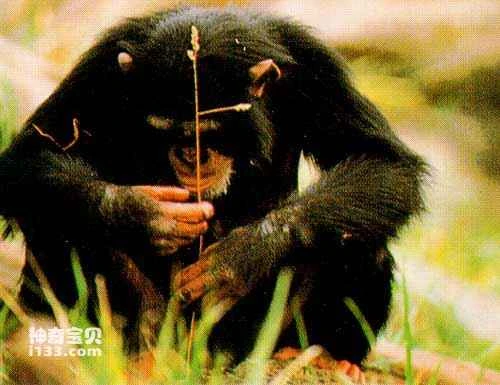
Primates use their eye-hand coordination to manipulate objects
Primates also developed the ability to distinguish colors, which is likely related to their origins in early nocturnal mammals with large eyes. The large eyes of early nocturnal mammals were designed to enhance light sensitivity at night, but as primates evolved and became more active during the day, the retina within their large eyes transformed to be able to perceive different colors. This ability to distinguish colors helps primates identify various foods, especially fruits on the dense branches of tropical rainforest trees.
In this way, primates possess a unique set of sensory organs, capable of inputting various information perceived through touch, taste, hearing, and especially color vision and stereoscopic vision into their brains. As the brain receives more and more information from the outside world, it becomes able to categorize and organize this information, ultimately leading to the development of intelligence. This kind of intelligence is unique to primates, which is why we call them "primates."