I. Primitive long-nosed animals without trunks
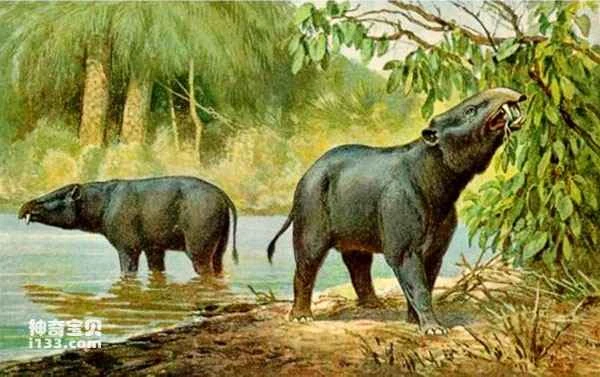
Long before the appearance of the Phosphorus aurantium, it was generally believed that the most primitive ancestor of elephants was the Eurasian elephant. It appeared in Africa during the Eocene epoch, about 50 million years ago, and lacked tusks and a trunk. The Eurasian elephant, scientifically known as *Moeritherium*, means "beast from Lake Moeris in Egypt." It was small, about the size of a modern Malayan tapir, had five toes, a long tail, and several different species. The Eurasian elephant lived in swamps and riverbanks, feeding mainly on soft aquatic plants, and its ecological niche was similar to that of today's hippopotamus.

II. Mammal elephants with true trunks
The most important evolutionary link between primitive proboscideans and modern proboscideans—mastodonts—arrived in Europe shortly after the early Tertiary period (about 30 million years ago), and then quickly spread to East Asia (during this historical period, the Sahara and Red Sea had not yet formed, and the ancient Mediterranean extended into Asia). In the Old World, mastodonts began to go extinct in the early Quaternary Ice Age (beginning 2-3 million years ago and ending 10,000-20,000 years ago), but in the New World (the Americas), they survived until the late Quaternary Ice Age.
Mastodons comprise numerous species, among which the mastodon (Mastodons) gets its name from the blunt, conical shape of its molars, resembling nipples, which facilitates chewing and crushing leaves. Its teeth have multiple layers of lamellae that are fused together.
III. The True Form of Long Noses
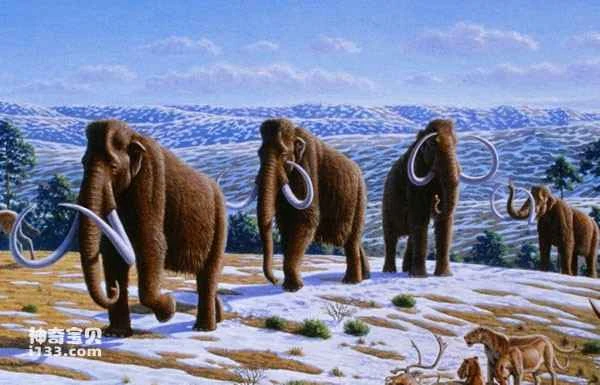
With the onset of the Quaternary Ice Age, mastodons went extinct, while true elephants, adapted to cold weather, experienced a boom, rapidly conquering Europe, Africa, and North America. These elephants, with their high-crowned tusks, could not only crush food but also grind harder plants. Among them, the species living in forest environments were called rhomboid elephants, and those living in grassland environments were called mammoths. Both originated from the southern elephant species and went extinct during the Holocene (11,500 years ago to the present). The last mammoths went extinct in North America and Siberia around 10,000 years ago; well-preserved carcasses and hair can still be found today. Some scholars attribute the mammoths' extinction to climate change, while others believe it was due to hunting by prehistoric humans.
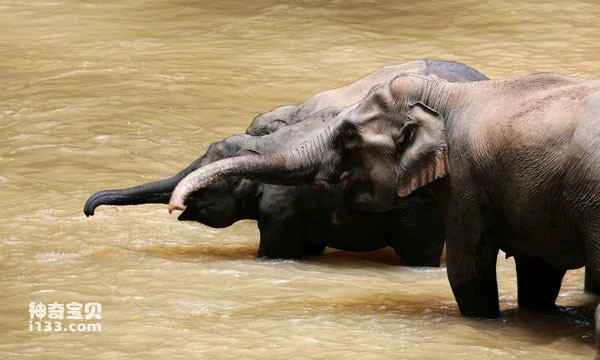
IV. The descendants of the truth-seeking class today
Among true elephants, the African elephant originated earlier than the Asian elephant. During the early Quaternary Ice Age, as the Sahara dried up and humans appeared, northern species disappeared, and the African elephant appeared on the African continent. The Asian elephant, on the other hand, was once distributed across a vast area from West Asia to southern China.
The remaining descendants of proboscis still rule the African savanna and the tropical rainforests of Asia, their distinctive long noses and teeth still gleaming with the immortal afterglow of their past lives.