1. South Africa: The "Big Five" on banknotes
South African banknotes currently come in five denominations: 10, 20, 50, 100, and 200 rand, each representing one of the five most powerful animals in Africa, commonly known as the "Big Five."
10 Rand: White Rhino
20 Rand: African elephant
50 Rand: African Lion
100 Rand: African buffalo
200 Rand: Cheetah
In fact, these "Five Giants" are also representative animals in the world's animal kingdom. Let's talk about their ecology and interesting stories.
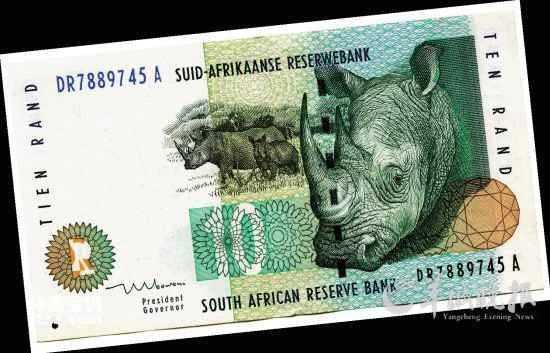
White rhinoceros on the front of a South African 10 rand
White rhinoceros: Large and majestic with a unique appearance, it is the largest rhinoceros, known as the "King of Rhinoceroses," and the third largest land mammal after elephants and hippos. Compared to the black rhinoceros, it is larger, with stronger shoulders and a flatter forehead. Due to deteriorating living conditions and hunting by humans, the number of wild white rhinoceroses has been declining year by year, and currently, they can only be found in some areas of the African continent.
African elephants are listed as endangered by the U.S. Endangered Species Act and the International Union for Conservation of Nature. They are the largest land mammals, weighing over 4 tons when fully grown, with some reaching nearly 10 tons. They have large, pointed ears, and both males and females have long, curved tusks. They are known for their aggressive temperament and will actively attack other animals.
Another branch of African elephants is the African forest elephant, which has round ears, is smaller in size, and is more similar in build to Asian elephants. Its tusks are straighter, harder, and pinkish, and it is also more docile. The UN Convention on International Trade in Endangered Species of Wild Fauna and Flora (CITES) implemented a complete ban on the international trade in ivory in 1989. However, the ban ironically spurred ivory smuggling, and the rapid rise in prices fueled a new wave of hunting of African elephants.
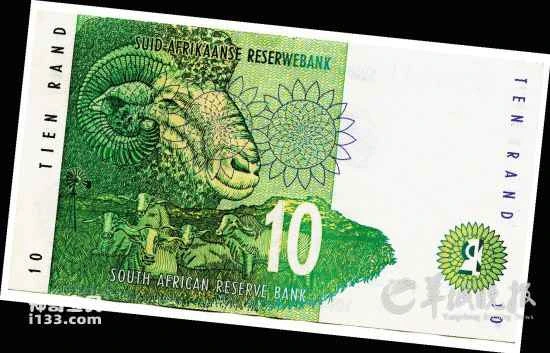
Boer sheep on the back of the South African 10 Rand
According to incomplete statistics, at least 20,000 African elephants are poached annually in recent years, making them one of the world's top ten most threatened species by trade. Therefore, South Africa's decision to print an elephant image on its banknotes serves as a wake-up call to the world.
African lions are widely distributed across the grasslands south of the Sahara Desert in Africa. Known as the "King of Beasts" for their powerful roar and majestic appearance, they are among the most powerful carnivores in Africa. Despite being the most powerful predator in Africa, their numbers have been declining and their range shrinking due to environmental degradation.
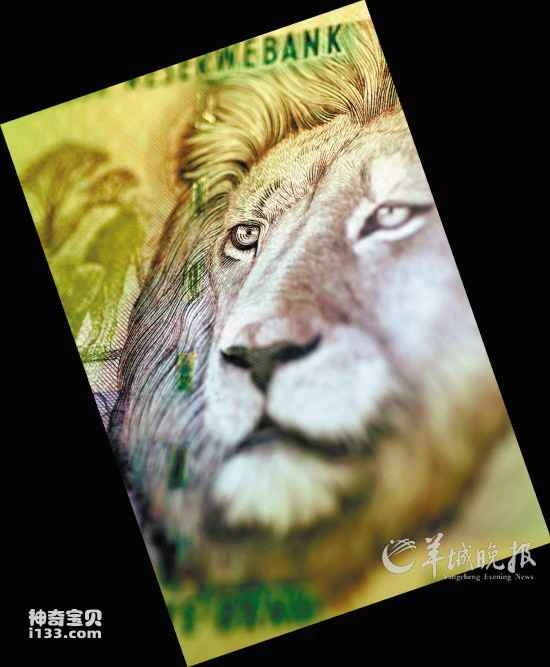
Majestic African lions on the 20 rand of South Africa
African buffalo, also known as African wild buffalo, is the most common herbivore on the African savanna. Known for its fierce temperament, it is one of the most aggressive predators in Africa. African buffalo often hunt in packs, forming large phalanxes that charge at intruders at speeds of up to 60 kilometers per hour. Even lions would be frightened into retreat by such a display. It's worth noting that the African buffalo has also appeared on the currencies of some other African countries.
Cheetah: The cheetah, the fastest land animal, is featured on South Africa's highest denomination banknote. It was also the mascot (Zakumi) of the 2010 FIFA World Cup in South Africa, making South Africans extremely proud.
These five animals are known as the "Big Five" of Africa because, in the eyes of South Africans, they are the most ferocious and the most difficult to capture alive. Even if they are hunted down, their fierce brethren will launch a deadly attack on the hunter. Their bravery, tenacity, and unyielding spirit are a reflection of the indomitable spirit of South Africans and indeed all Africans.
In addition, each animal sculpture on the banknotes is accompanied by a small illustration to the left of it, depicting in a distant view the abundant wildlife resources and harmonious animal habitats of South Africa. Starting from 10 rand, the illustrations are: a mother and baby white rhinoceros, a family of African elephants, an African lion drinking water, a pair of African buffalo, and an African cheetah climbing a tree.
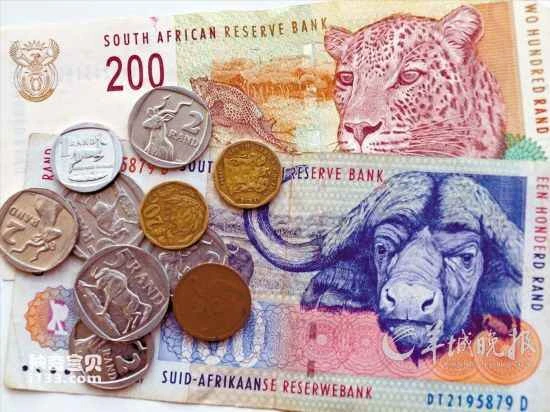
The back of the 10 rand banknote features a lively and adorable Boer sheep from South Africa, while the back of the 100 rand banknote depicts a herd of zebras galloping across the plains.
In addition to banknotes, South Africa also has nine types of coins: 5 rand, 2 rand, 1 rand, 50 centimes, 20 centimes, 10 centimes, 5 centimes, 2 centimes, and 1 centimes. Among them, the 5 rand, 2 rand, and 1 rand feature wildebeest, oryx, and springbok, respectively; the 5 centimes, 2 centimes, and 1 centimes feature blue crane, osprey, and sparrow, respectively. All of these are the most common and popular wild animals in South Africa (but the 50 centimes, 20 centimes, and 10 centimes are exceptions: their themes are not animals, but three African plants).
Therefore, it is no exaggeration to say that South Africa is the first country in the world where all currencies (including banknotes and coins) are "dominated" by wild animals (or wild plants).
The South African currency now features a complete "domination" of wild animals, a trend that began in the 1990s. Previously, South African currencies featured prominent figures. Why this dramatic shift? Some analysts believe it reflects the indifference of the people of this newly politically stable nation towards the long history of political upheaval. The inclusion of animals in the currency design caters to this subtle psychological shift.
On the other hand, as the most economically and technologically advanced country in Africa, South Africa has been more forward-thinking than other African nations in recognizing the potential ecological crisis on the continent. The new South African currency, which is "completely" replaced by African wildlife, possesses a strong connection to nature and has earned the nickname "green currency."
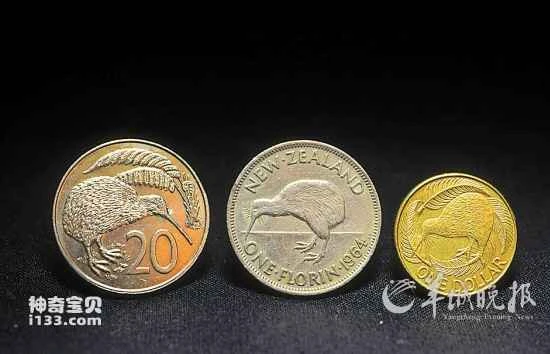
Ornithologists believe that kiwis are ancient, primitive bird species that lived in the same era as dinosaurs, and it is remarkable that they have not gone extinct. It is New Zealand’s unique living environment that has enabled kiwis to live and reproduce in peace and prosperity.
However, the kiwi is not particularly attractive at first glance: its plumage is not as vibrant as a peacock's, and its chirping is far less melodious than a nightingale's song. In fact, the kiwi is the least bird-like of birds, with a short, thick neck and no wings or tail, resembling a pear. Due to the gradual functional degeneration of its wings during evolution, it cannot fly, but its legs are short, thick, and powerful, making it adept at running at speeds up to 19 kilometers per hour. When angered, it often engages in infighting, capable of kicking its companions up to 1.5 meters away.
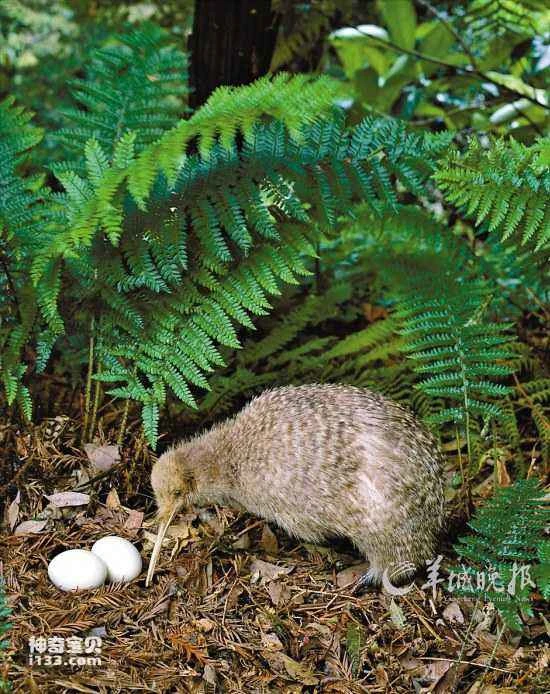
2. Kiwis living in the wild in New Zealand
Kiwis also possess a unique ability: their long, slender beaks can be used as a third leg to maintain balance when resting, resembling a tripod. Kiwis also have one of the best senses of smell among birds: they can easily detect and catch insects as low as 0.2 meters above the ground.
A rare exception to the "kiwi's absence" is the kiwi on the back of the NZ$10 note. This parrot is a species native to New Zealand, living on the South Island and known as the world's largest parrot. It was once considered New Zealand's darling bird and thus earned its place on the pantheon of currency.
In fact, the kea is inherently aggressive, often attacking flocks of sheep. Its powerful beak can pierce through the sheep's skin to peck at the delicious meat, hence the local New Zealand ranchers call it the kea. In recent years, it has become even more dangerous, attacking women and children, earning the name "man-eating parrot." In late 2011, calls arose from the New Zealand public to kill this heinous kea.
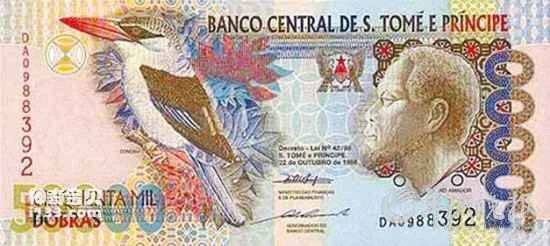
São Tomé and Príncipe banknotes
3. São Tomé and Príncipe: The Kingfisher Stands Shoulder to Shoulder with a National Hero
The Democratic Republic of São Tomé and Príncipe, located on the equatorial coast of West Africa, features a banknote with a striking image on the left side of a kingfisher endemic to the region, known for its exceptionally beautiful plumage. This kingfisher, also called the "Blue-breasted Kingfisher," is the largest kingfisher in Africa.
Because of its agile movements, graceful flight, and exceptional fishing skills, the kingfisher is regarded by local fishermen as a "spirit of nature" and a "guardian" that ensures the safe return of fishermen from the sea. It's no wonder that the kingfisher is depicted alongside Rey Amador, the national hero who opposed Portuguese colonial rule, on the same side of the banknote. This great kingfisher is reportedly listed by the International Union for Conservation of Nature (IUCN) as a rare bird species requiring immediate protection.
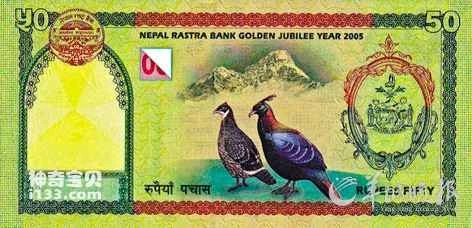
The "divine bird" on Nepalese banknotes
4. Nepal: The "divine bird" and the "holy mountain" complement each other.
The reverse side of the 50 rupee banknote issued by Nepal on September 8, 2006, features Nepal's national bird: a pair of male and female monal pheasants, with the sacred mountain Ama Dabrha Mountain in the background. Above the mountain is the inscription "Golden Jubilee of the Central Bank of Nepal 2005." The monal pheasant, a species of pheasant, is also known as the "Nine-Colored Bird" because its feathers shimmer with nine metallic iridescent colors. Nepalese people have long revered this sacred bird. The image of the sacred bird and the sacred mountain complement each other beautifully on this banknote.
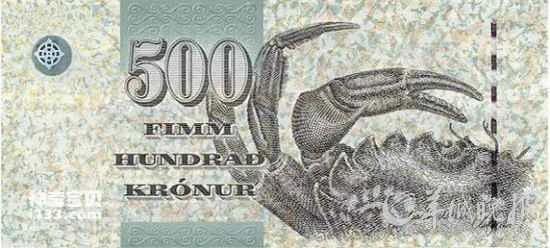
Crab on Faroe Islands banknotes
5. Faroe Islands: Crabs with outstretched claws
The Faroe Islands are an autonomous territory of Denmark. A 500-kroner banknote issued in late 2004 features a large, menacing crab on a Faroe beach. Faroe crabs are considered a world-class seafood delicacy, living in deep waters below 200 meters and weighing up to 8 kilograms. They are renowned alongside Icelandic grouper, California squid, and Alaskan snow crabs. They are characterized by their yellowish-brown color when cooked, tender and delicious meat, and rich nutritional value, making them consistently in high demand in the global seafood market. To protect these resources, the authorities implement annual catch limits.
The crab engravings on Faroe Islands banknotes are done in bold lines, especially on the claws, where the lines are thick and deep, creating a strong tactile feel that vividly portrays the powerful and robust nature of this large crab.
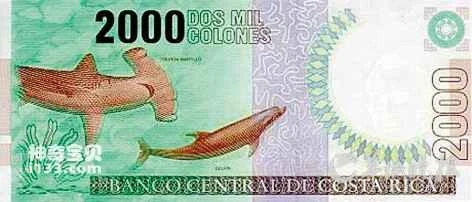
Marine animals on Costa Rican banknotes
6. Estonia: Barn swallow also becomes the national bird
Somewhat surprisingly, the barn swallow, ubiquitous in most parts of the Northern Hemisphere, was chosen as Estonia's national bird and subsequently featured prominently on the country's 500-kroner banknote. The peaceful, unassuming Estonians believe that the barn swallow, which prefers to live alongside humans, is a familiar and beloved beneficial bird among ordinary people. These "common birds," flying into ordinary homes, are seen as embodiments of their community, bringing valuable affinity and cohesion like goodwill ambassadors.
7. Costa Rica: A Grand Display of Marine Animals
Costa Rica is bordered by the Caribbean Sea to the east and the Pacific Ocean to the west. Although its area is only over 50,000 square kilometers, it has a coastline of 1,200 kilometers, making it a typical country inseparable from the sea. The 2011 edition of the 2000 colon banknote features a portrait of a Costa Rican politician on the front, while the back showcases a collective display of some of the country's most important marine animals, including sharks, corals, starfish, sea fish, and sea turtles.
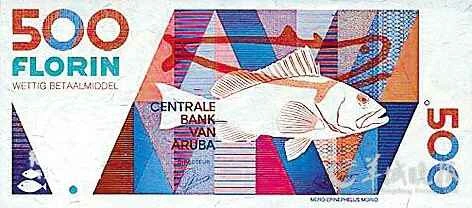
Red grouper on Aruba banknotes
8. Aruba: Red grouper takes center stage
Aruba is a typical tropical maritime country, with most residents making a living by fishing. It's no surprise that the country's prized red grouper is featured prominently on its banknotes. The red grouper, belonging to the Serranidae family, primarily inhabits the country's coral reefs and shallow, sandy waters. Its vibrant color and delicious flesh have led to its export to over 40 countries, making the fishing, processing, and export of red grouper a vital part of the country's national economy.
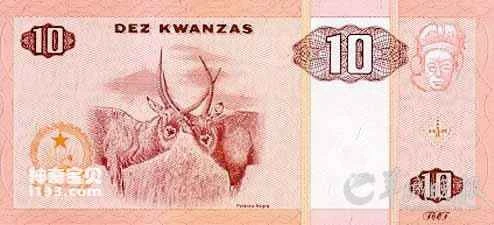
The deer on Angolan banknotes
9. Angola: The auspicious deer brings good fortune.
The reverse side of the Angolan 10 Kwanza banknote features a pair of reindeer. Reindeer, also known as antlered deer, are species of reindeer, both males and females possessing antlers. The intricate branching of their antlers is a key characteristic of their appearance, and there are reportedly as many as 17 subspecies. In fact, reindeer are not unique to Angola but are widely distributed throughout the Arctic region of the Northern Hemisphere, Eurasia, and northern North America.
Although caribou are called reindeer, not all of them are domesticated; for example, caribou in North America are purely wild. Angolans believe that caribou are friendly and sociable, bringing good fortune and harmony, and also possess significant economic value.