The animal kingdom is home to many amazing and unique creatures that astound us with their extraordinary abilities and adaptability. From chameleons that can change color to the "immortal jellyfish" that can reverse the aging process, these strange animals not only possess incredible characteristics but also demonstrate the wonder and wisdom of nature. Today, let's talk about some facts about these strange animals to help you better understand these amazing creatures.
1. Chameleons do more than just camouflage.
Chameleons are familiar animals to many, and their ability to rapidly change color often amazes people. However, chameleons don't just change color for camouflage. In fact, chameleons adjust their color according to their emotions; for example, they turn bright red or orange when angry, while appearing as a gentler green or brown when relaxed.
This color change isn't just for avoiding predators; it's also a form of communication among chameleons. They regulate their body temperature or express emotions during mating season by altering their color. Therefore, the chameleon's color changes are a perfect blend of defense mechanisms and social signals .
2. The incredible "water bear"—a tardigrade
Tardigrades , also known as water bears, are among the most resilient creatures on Earth. They can survive in extreme environments, such as the vacuum of outer space , extreme temperatures, and even radiation. They can completely lose their body water and enter a dormant state through a process called cryptobiosis , until the environment becomes suitable for survival, at which point they regain their vitality.
Tardigrades' remarkable survival abilities have sparked great interest among scientists, particularly in the fields of space exploration and research into extreme survival conditions . Their survival strategies may provide clues for human survival in future extreme environments.
3. The Octopus's Three Hearts and Strange Behavior
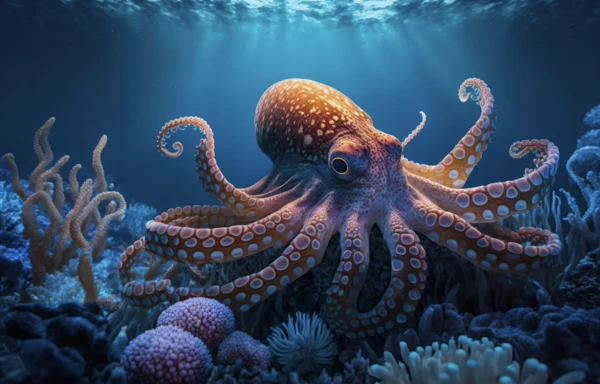
Octopuses are incredibly mysterious marine creatures, possessing three hearts and extraordinary intelligence. Two of their hearts pump blood to their gills, while the third pumps blood throughout their body. Their blood contains copper-based hemoglobin, enabling them to efficiently transport oxygen even in low-oxygen environments.
Beyond their unique physical structure, octopuses possess astonishing intelligence. They can solve complex problems, use tools, and demonstrate a high level of learning ability when faced with threats. Furthermore, their ability to change color makes them adept at evading predators. These extraordinary abilities make octopuses one of the most mysterious and intelligent creatures in the ocean.
4. Sex reversal in the seahorse
Seahorses are unique creatures in the ocean, exhibiting sex reversal . During the breeding season, male seahorses become pregnant and give birth to calves, while females transfer their eggs to the male's abdomen, and the male then assumes the responsibility of raising the young . This unconventional gender role not only makes seahorses stand out in the animal kingdom but also showcases the diversity and creativity of nature.
This behavior of seahorses often arouses curiosity and thought: why does nature assign the reproductive task to males? This may be related to the biological characteristics of seahorses and their need to adapt to the environment.
5. Unique neural regeneration ability – Axolotl (Mexican salamander)
Axolotl is an amphibian with an amazing regenerative ability. Unlike most organisms, Axolotl can regenerate lost limbs and even restore the function of parts of the spinal cord, heart, or brain. Their regenerative abilities are so powerful that scientists are researching how to apply this property to human medicine , hoping to develop similar regenerative treatments.
Furthermore, Axolotl exhibits lifelong larval stage , meaning they retain their larval form and live their entire lives in water, with exposed gills on both sides of their heads, which is one of the differences between them and other amphibians.
6. The incredible "all-purpose jellyfish"—the immortal jellyfish
The immortal jellyfish ( Turritopsis dohrnii ) is the only known animal in the world capable of reversing the aging process . When faced with environmental stress or physical damage, it can revert to its initial larval state, almost unaffected by aging. Through this transformation process, the immortal jellyfish can be reborn almost indefinitely, avoiding death caused by aging.
While this ability to reverse aging does not mean they are " immortal ," it provides scientists with extremely valuable clues for studying anti-aging and regenerative medicine.
7. The Elephant's Amazing Memory
Elephants are renowned for their exceptional memory . They can remember not only the faces of other elephants, but also humans or animals they encountered years ago. This memory is crucial for elephants, as they rely on their experience to find water , identify potential threats , and maintain strong family bonds.
Furthermore, elephants can remember past migration routes and even sense and recall events they have experienced. They also exhibit grief when faced with the death of a member of their herd, demonstrating not only a powerful memory but also a certain depth of emotion .
8. Musketeer Shrimp: The "Gunpowder" of the Ocean
The musket shrimp is a small marine creature that, though unassuming in appearance, possesses an explosive defensive capability . Its massive claws can close at incredible speeds, generating a powerful sonic wave and heat—a shockwave strong enough to stun or kill its prey. The explosive force can even reach temperatures approaching the water's surface, enough to break through the prey's defenses.
Besides their powerful weapons, musket shrimp also have a symbiotic relationship with certain types of fish. They live together in underground burrows, where the fish act as alarms, while the musket shrimp digs and protects the burrow. This cooperative relationship between musket shrimp and fish is one of the most unique in nature.
9. Narwhal: The unicorn of the sea
Narwhals are often called " unicorns of the sea " because their long, spiraling tusks resemble horns growing from their heads. These tusks are actually extensions of their left-side teeth and can reach lengths of up to 10 feet. Scientists believe that narwhal tusks are not only decorative but may also possess sensory functions , helping them detect changes in water temperature, salinity, and other environmental conditions.
Narwhals are highly social creatures, typically inhabiting Arctic waters in groups. Their tusks are also frequently used in fighting and courtship , especially among males, where the tusks become a symbol of power and status.
10. The Sleepless Whale: The Ever-Awake Giant of the Ocean
Whales are often considered gentle and quiet giants, but they also possess an amazing ability: sleeplessness . Some whale species (such as sperm whales) sleep on one side of their head, meaning their two hemispheres of the brain alternate resting. While one half of the brain is asleep, the other half remains awake. This allows whales to stay alert, avoid potential threats in the ocean, and continue swimming for extended periods.
This unique sleep pattern is crucial for whales to survive in the vast environment of the ocean, especially in the deep sea where they may need to defend themselves against attacks from large predators.
11. The "Dance Language" of Bees
Bees are not only industrious pollinators, but they also possess a surprising " dance language ." When bees find a rich source of flowers, they communicate their location and distance through a waggle dance . Bees share the location and direction of the flowers they found with other bees through this dance within the hive.
This dance language is very complex; bees use the angle and speed of their dance to indicate the distance and location of flower sources. This method is not only efficient but also allows bees to find abundant food sources for the entire colony in a short period of time.
12. Starfish regeneration ability: limb regeneration
Starfish are considered to be marine creatures with remarkable regenerative abilities . Even if a limb is damaged or severed, a starfish can recover its original shape within weeks, and some species can even regenerate an entire new body from severed limbs . This regenerative ability is a crucial weapon for their survival in nature, helping them recover their health or escape predators.
Scientists are studying how to utilize the regenerative mechanisms of starfish to provide new clues for human wound healing and organ regeneration.
13. The Chameleon's Visual System: Superb Vision
Besides changing color, chameleons have another amazing feature—their eyes can move almost independently . Each of a chameleon's eyes can rotate and focus independently, and can even look in different directions simultaneously. This ability allows them to observe their surroundings while hunting without losing focus on their prey.
Chameleons' eyes can rotate 360 degrees, and they can even enhance their perception of their environment by changing the focus of their eyes. This visual system helps them better capture prey or avoid threats.
14. The Ant's "Super Power"
Ants are among the strongest creatures on Earth. Their strength is proportional; an ant can lift an object approximately 50 times its own weight. This " super strength " is due to their body structure . Ants have extremely high muscle density, and their body structure is designed to allow them to utilize their strength more efficiently.
In addition, ants have an extremely complex social organization . They complete various tasks through cooperation, from searching for food to defending against enemies. This unity and cooperation allows ants to occupy a pivotal position in nature.
15. Bat echolocation: ultrasonic navigation
Bats are nocturnal animals that "see" their surroundings through echolocation . They emit ultrasonic waves that bounce off objects, and by receiving these echoes, they determine the object's location and shape. This ability is so precise that it allows bats to fly accurately in the dark and even catch flying insects.
Echolocation not only allows bats to move freely in the dark, but they also use this skill to detect prey and avoid obstacles, demonstrating the incredible adaptability of creatures in nature.
16. Giant Squid: Monsters of the Sea
Giant squid are mysterious behemoths of the deep sea, growing to over 20 feet in length and possessing enormous eyes, making them among the largest of all animals. Their eyes can reach 10 inches in diameter, much larger than most human eyes.
Despite their enormous size, giant squid typically live in extremely deep waters and are rarely seen by humans. They possess powerful tentacles and giant suckers , making them predators in the ocean.
17. The snail's "teeth"
Snails may look like soft, harmless little animals, but they actually have a very unique pair of teeth . These "teeth" are a structure called the radula , which resembles a row of small, hooked teeth that snails use to scrape and feed on plants.
Snails' radula can very efficiently abrade plant surfaces, allowing them to easily feed. Some snails have thousands of tiny teeth on their radula, making them extremely efficient at hunting.
18. The jumping power of kangaroos
Kangaroos are iconic Australian animals, renowned for their powerful leaping abilities. Their hind leg muscles are so developed that they can jump several meters in a short time. This ability not only helps them quickly escape predators but also makes them more efficient at foraging for food on arid grasslands .
In addition, kangaroos have very strong tails, which they use to maintain balance and act as a fulcrum when jumping, making them very stable when making long-distance jumps.
19. Penguins' cold tolerance
Penguins are quintessential polar animals, possessing an astonishing ability to withstand the cold. Their dense feathers effectively insulate them from the frigid seawater; additionally, they have a thick layer of fat that helps them retain body heat. Penguins also maintain their warmth by huddling together in groups.
Even in extreme cold conditions of tens of degrees below zero , penguins can move freely in snow-covered environments, demonstrating their strong adaptability to extreme cold.
20. Bear Hibernation: Deep Dormancy and Survival Strategies
Bears are typical hibernating animals , typically entering a long period of dormancy during the winter, during which they almost completely abstain from food. Although their bodies are in a dormant state, their heart rate slows down and their body temperature drops, but they are still able to maintain the basic functions necessary for life.
Bear hibernation is actually a survival strategy ; they enter a state of dormancy to survive the food-scarce winter. When spring arrives, bears quickly regain their energy and begin searching for food again.
Summarize
These fascinating animal facts showcase the wonder of nature and the adaptability of living beings. From the sleepless nights of whales to the dancing language of bees , each animal possesses unique survival strategies and skills. How they cope with environmental challenges and interact with the world around them fills us with awe for life. These animals not only amaze us but also inspire us to explore the natural world more deeply.
These wondrous animals not only fill us with awe at the wonders of nature, but their unique characteristics also provide endless inspiration for scientific research and humanity's future exploration. From jellyfish that can reverse aging to elephants with extraordinary memories, these animals' unique abilities demonstrate the infinite possibilities of life.