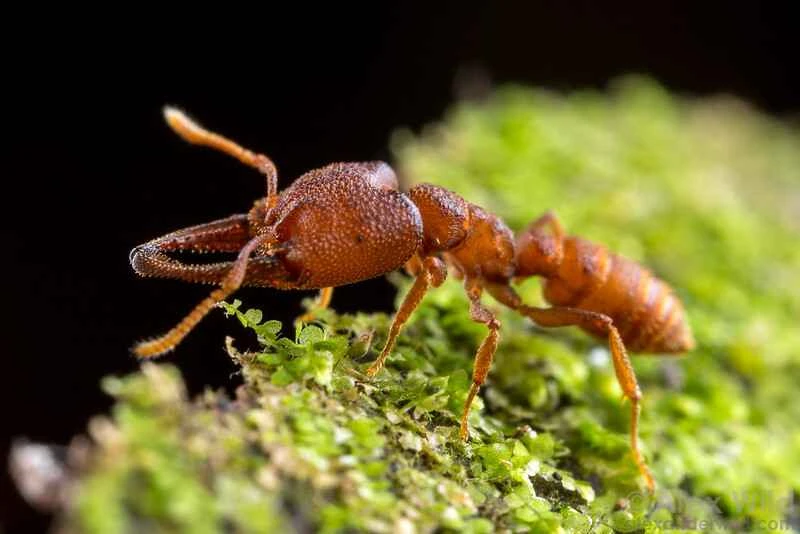
The Paleozoic Era, roughly from 541 million to 252 million years ago, was an era of astonishing biodiversity and evolutionary innovation. This period witnessed the emergence of many unique animals that laid the foundation for modern ecosystems. In this article, we will delve into some of the most incredible creatures of the Paleozoic Era, exploring their remarkable adaptations and the environments in which they lived.
The Cambrian Explosion: A Flourishing of Life
The Cambrian period (541 million to 485 million years ago) was a pivotal moment in Earth's history, known as the Cambrian Explosion. During this time, life underwent tremendous diversification, and the first complex multicellular organisms emerged.
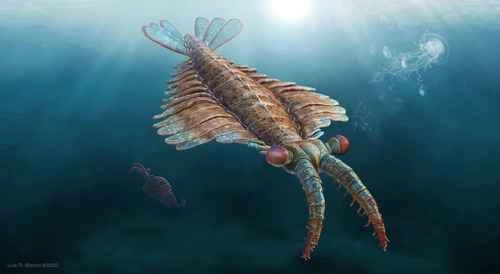
Anomalocaris : This remarkable predator can grow to over three feet long. With large eyes and powerful grasping appendages, Anomalocaris is one of the top hunters in the ocean, preying on smaller marine creatures.
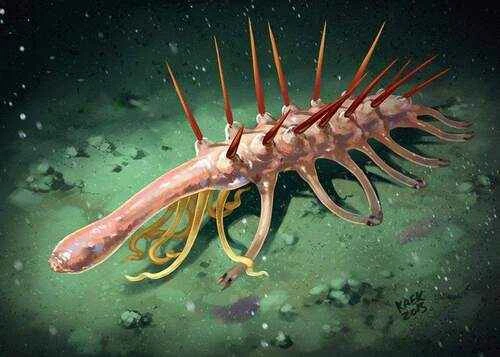
The Hanauma shrimp : With its pointed back and multiple legs, the Hanauma shrimp has long puzzled scientists. Its bizarre appearance, like a creature from a dream, showcases the peculiar forms of life during this explosive period.
The Silurian and Devonian Periods: The Age of Fish and Arthropods
As the Paleozoic Era progressed, the Silurian (443 million to 419 million years ago) and Devonian (419 million to 359 million years ago) periods brought about significant advancements in marine life and the emergence of early terrestrial life.
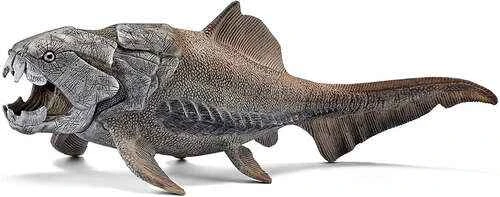
Dunkleosteus : Dunkleosteus was one of the largest placoderms, growing up to 33 feet long. Its armored body and powerful jaws, equipped with sharp bony plates, made it a fearsome predator in the ancient oceans.
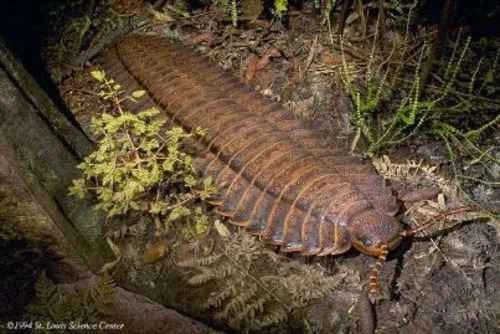
Arthropleura : These giant, millipede-like creatures roamed the land, reaching lengths of up to 8 feet. As one of the largest terrestrial arthropods, Arthropleura thrived in the lush, humid environments of its time.
Carboniferous Period: The Age of Giant Insects and Amphibians
The Carboniferous period (359 million to 299 million years ago) was characterized by vast swamp forests and high oxygen levels, which led to the evolution of giant insects and early amphibians.
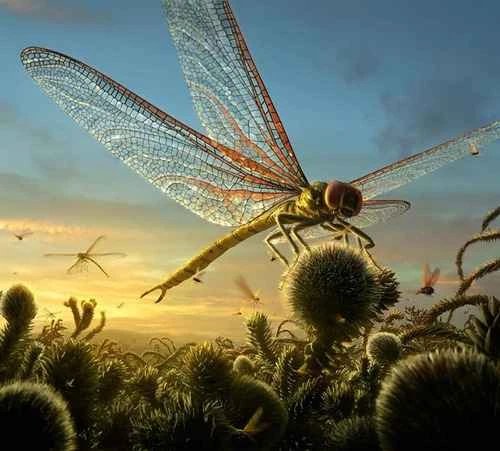
Meganeam : Meganeam was a giant dragonfly with a wingspan exceeding 2.5 feet, soaring through the skies of the Carboniferous period. Its large size was due to the high concentration of oxygen in the atmosphere.
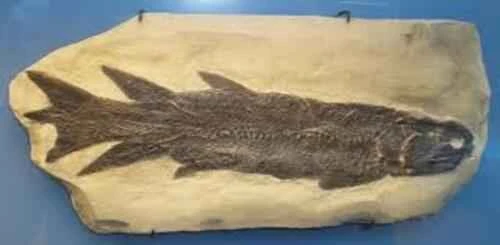
True-winged dragonflies : Often called "legged fish," true-winged dragonflies are an important link between fish and the first terrestrial tetrapods. Their four-limbed fins provided essential adaptations for terrestrial life.
The Permian: The Rise of Reptiles and Unique Ecosystems
The Permian period (299 to 252 million years ago) laid the foundation for the rise of reptiles and their eventual dominance in the Mesozoic era.
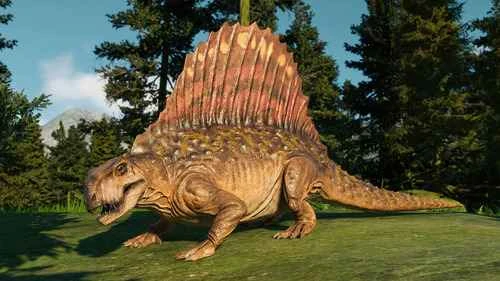
Dimetrodon : Often mistaken for a dinosaur, Dimetrodon is actually a synapsid with a unique sail on its back. This sail may have played a role in thermoregulation or mating displays.
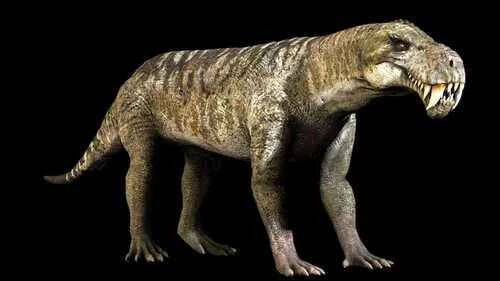
Gorgonops : These fearsome carnivorous reptiles were apex predators of their time, possessing sharp teeth and powerful jaws. Gorgonops illustrates the evolutionary transformation of mammals as we know them today.
Conclusion: Paleozoic heritage
The Paleozoic Era was an extraordinary period that laid the foundation for the evolution of life on Earth. From the bizarre creatures of the Cambrian to giant insects and early reptiles, the animals of this era demonstrated remarkable adaptability to their environments. Although many of these species are now extinct, their legacy continues to influence the biodiversity we see today. The amazing animals of the Paleozoic Era remind us that life on Earth is incredibly diverse, full of wonders and discoveries.